Clothes or cloths are both correct English words, but they have different meanings. Clothes refers to items people wear, such as shirts, pants, dresses, and jackets. Cloths is the plural of cloth and usually means pieces of fabric used for cleaning, covering, or making things.
Clothes or Cloths can be confusing because these words look and sound very similar. However, they have different meanings and uses. Clothes means items people wear, such as shirts, pants, dresses, and jackets. Cloths means pieces of fabric or material used for cleaning, covering, or other purposes.
Understanding the difference between Clothes or Cloths can help you avoid common spelling and grammar mistakes. In this guide, you will learn their meanings, correct usage, simple examples, and an easy way to remember the difference.
The confusion often comes from their similar spelling and pronunciation. However, the extra e in clothes makes a big difference in meaning. This guide explains the difference, common mistakes, examples, and an easy way to remember which word to use.
Quick Answer
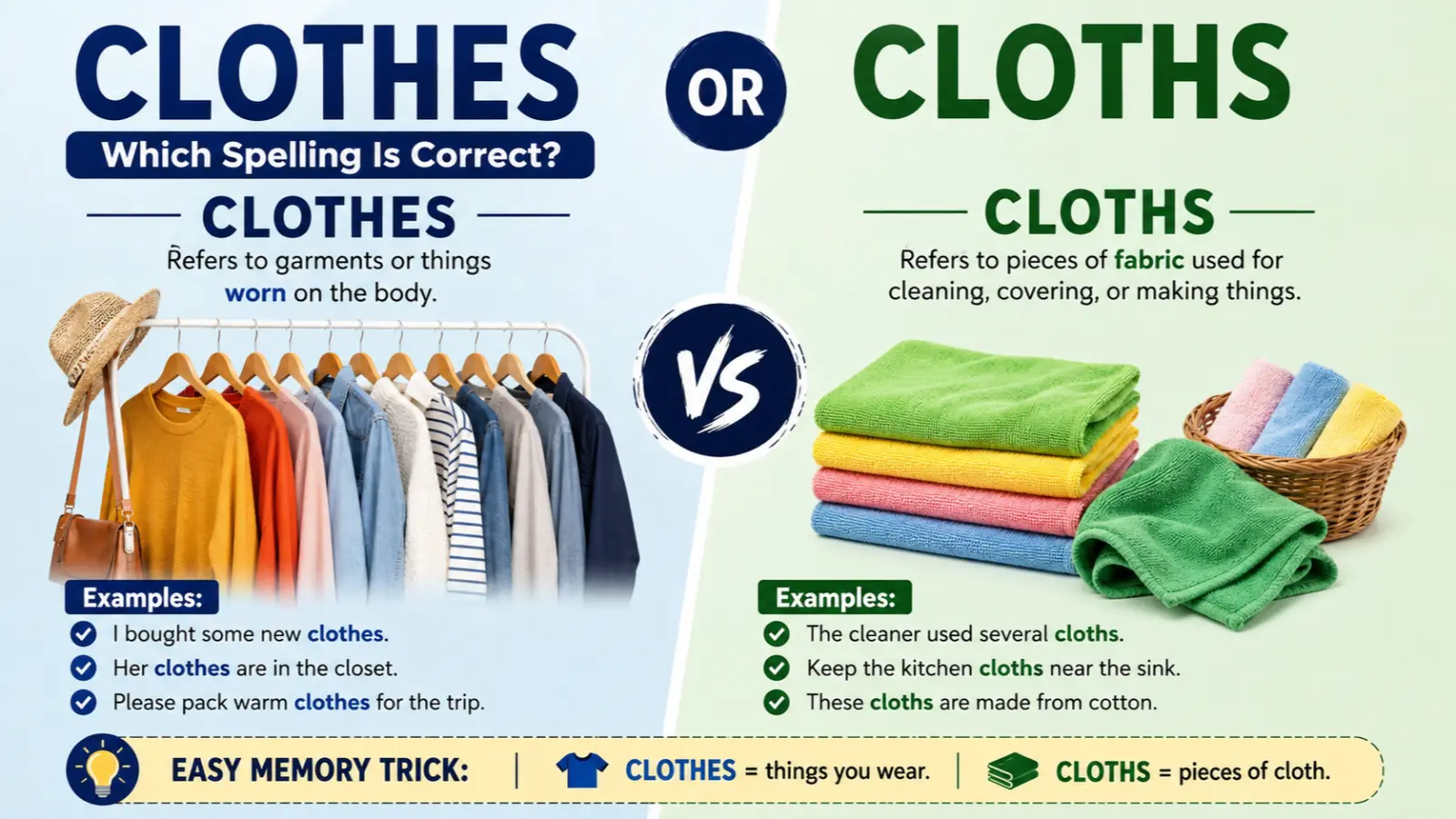
Clothes is the correct word when you mean things that people wear.
- I bought some new clothes.
- Her clothes are in the closet.
- Please pack warm clothes for the trip.
Cloths means separate pieces of fabric.
- The cleaner used several cloths.
- Keep the kitchen cloths near the sink.
- These cloths are made from cotton.
So, use clothes for clothing and cloths for pieces of fabric.
What Does Clothes Mean?
Clothes is a plural noun that means garments or things worn on the body.
Common examples include:
- Shirts.
- Pants.
- Dresses.
- Skirts.
- Jackets.
- Sweaters.
- Coats.
For example:
I need to wash my clothes.
Here, clothes refers to garments that someone wears.
One important point is that clothes normally does not have a singular form meaning one garment. For one item, use a word such as shirt, dress, or garment.
What Does Cloths Mean?
Cloths is the plural form of cloth. It refers to pieces or types of fabric.
People often use cloths for cleaning or wiping.
Examples include:
- Cleaning cloths.
- Polishing cloths.
- Kitchen cloths.
- Microfiber cloths.
- Dusting cloths.
For example:
She used two cloths to clean the windows.
The word cloths refers to two separate pieces of fabric.
Clothes vs Cloths Comparison
| Word | Meaning | Common Use | Example |
|---|---|---|---|
| Clothes | Garments worn on the body | Fashion and clothing | I packed my clothes. |
| Cloths | Pieces of fabric | Cleaning, covering, or material | I washed the cleaning cloths. |
The easiest distinction is simple: clothes are worn, while cloths are pieces of fabric.

Why Do People Confuse Clothes and Cloths?
The two words look and sound very similar. Both begin with cloth, so it is easy to mix them up when writing.
Their meanings, however, are clearly different.
Clothes developed as the plural form connected with clothing. Cloths follows the normal plural pattern of the noun cloth.
This difference also explains why these words cannot normally be substituted for each other.

Clothes in Real Life
Use clothes when talking about what someone wears.
Example sentences
- My clothes are ready for tomorrow.
- She donated her old clothes.
- His clothes were covered in mud.
- We need warm clothes for winter.
- The store sells children’s clothes.
In each sentence, the word refers to garments.

Cloths in Real Life
Use cloths when talking about multiple pieces of fabric.
Example sentences
- I bought three cleaning cloths.
- The mechanic keeps oily cloths in the garage.
- These cloths are soft and reusable.
- Wash the kitchen cloths separately.
- The artist used different cloths for the project.
Here, cloths means separate pieces of fabric.
Common Mistakes
A common mistake is using cloths when talking about clothing.
Incorrect:
I bought new cloths for school.
Correct:
I bought new clothes for school.
Another mistake happens when people use clothes for cleaning materials.
Incorrect:
Please bring some clothes to clean the table.
Correct:
Please bring some cloths to clean the table.
The context usually makes the correct choice clear.
A Simple Memory Trick
Remember this:
Clothes = things you wear.
Cloths = pieces of cloth.
You can also connect the e in clothes with everyday wear.
When you mean shirts, pants, dresses, or jackets, choose clothes.
When you mean pieces of fabric for cleaning or other purposes, choose cloths.
Professional Writing Recommendation
Use clothes when discussing garments, fashion, dressing, or personal wardrobes.
Use cloths when referring to multiple pieces of fabric, especially cleaning or polishing materials.
For formal writing, always choose the word based on its meaning rather than its appearance. Using cloths instead of clothes can change the meaning of a sentence and make your writing confusing.
FAQs:
Is clothes the correct spelling?
Yes. Clothes is the correct spelling when you mean garments worn on the body.
Is cloths a real word?
Yes. Cloths is the plural of cloth. It means multiple pieces or types of fabric.
What is the difference between clothes and cloths?
Clothes means garments people wear. Cloths means pieces of fabric.
Can clothes and cloths be used interchangeably?
No. They have different meanings and should not normally be substituted for each other.
Is cloth singular or plural?
Cloth is singular. Cloths is its regular plural form when referring to separate pieces or types of fabric.
What is the easiest way to remember clothes vs cloths?
Think clothes = wear and cloths = fabric pieces. This distinction works in most everyday situations.
Conclusion
Clothes and cloths are both correct words, but they describe different things. Use clothes for garments that people wear. Use cloths for separate pieces of fabric, such as cleaning or polishing cloths.
The key difference is easy to remember: you wear clothes, but you use cloths. Once you connect each word with its meaning, this common spelling confusion becomes much easier to avoid.

Olivia Bennett is a grammar expert and language content writer at GrammarWize.com. She specializes in English grammar, word usage, spelling differences, and writing improvement. Through clear explanations and practical examples, Olivia helps students, professionals, and language learners communicate more effectively. Her goal is to make English grammar simple, accessible, and easy to apply in everyday writing.