Sympathize or empathize can be confusing because both words describe how we respond to another person’s feelings or difficult situation. However, they do not express exactly the same kind of emotional response.
Sympathize or empathize can be confusing because both words relate to understanding someone’s feelings. However, they describe different ways of responding to another person’s emotions. Knowing the difference helps you choose the right word in conversations and writing.
In this guide, you’ll learn the meaning, usage, and key difference between sympathize and empathize with clear examples. Understanding these words can make your communication more accurate, natural, and emotionally aware.
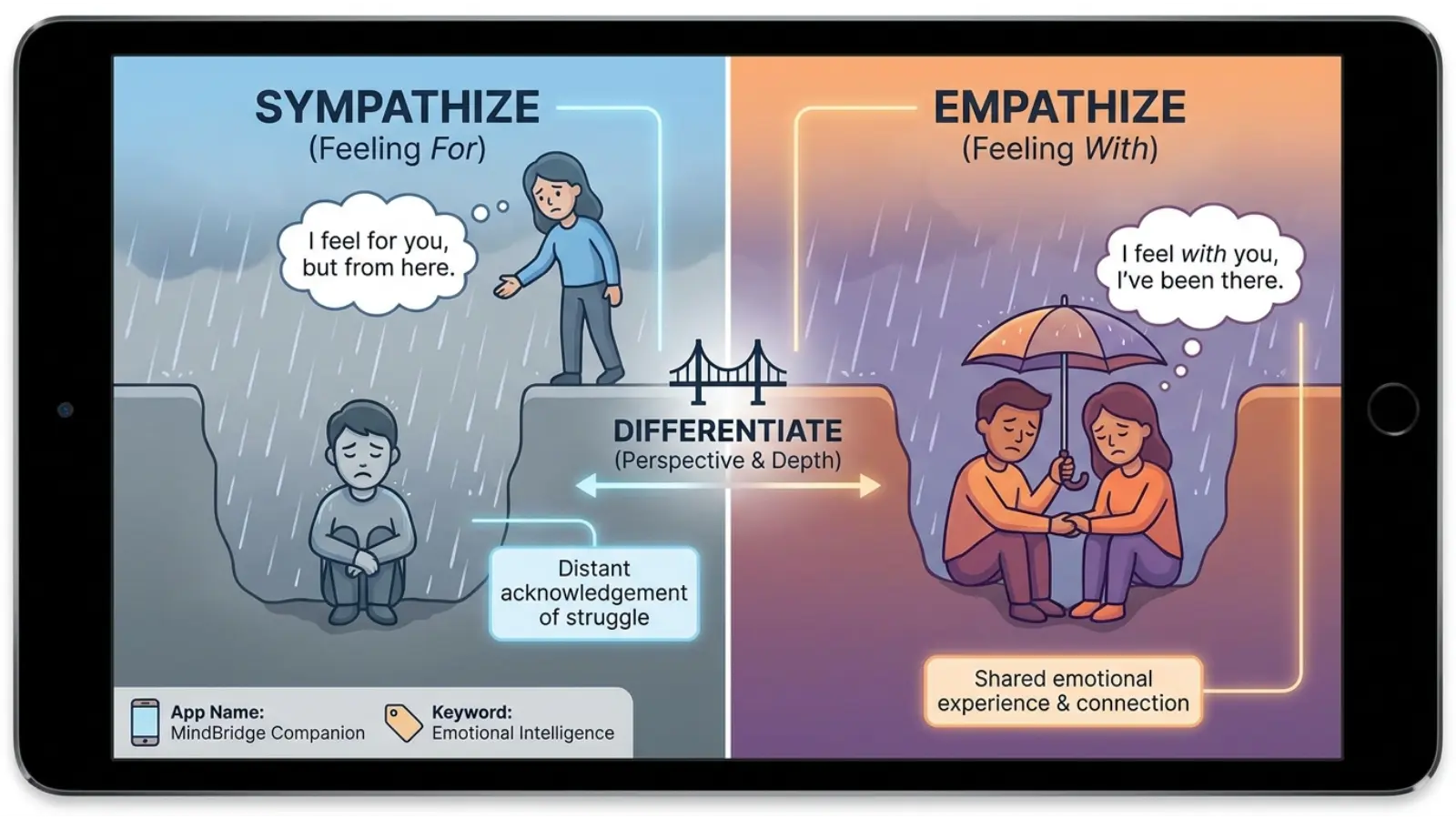
The main difference is simple. To sympathize means to feel concern or sorrow for someone, while to empathize means to understand and share their feelings from their point of view. Knowing this distinction helps you choose the right word in conversations, emails, essays, and professional writing.
Quick Answer
Sympathize means to feel sorry for someone or show concern about their situation.
Empathize means to understand another person’s feelings by imagining or recognizing what they are experiencing.
For example:
- I sympathize with you after your loss.
- I empathize with you because I experienced a similar loss.
Both words can show compassion, but empathy usually involves a deeper understanding of another person’s emotional experience.
Sympathize Meaning
Sympathize means to feel concern, sorrow, or compassion for someone who is experiencing difficulty.
When you sympathize with someone, you recognize that they are suffering and express care or support. You do not need to have experienced the same situation yourself.
For example:
I sympathize with you during this difficult time.
Here, the speaker expresses concern for another person’s pain.
Sympathy often creates emotional distance between the person offering support and the person experiencing the problem. You understand that someone is hurting, but you may not fully understand how the situation feels to them.
Common uses of sympathize
The verb commonly appears in phrases such as:
- sympathize with someone
- sympathize with a family
- sympathize with their situation
- sympathize with someone’s loss
- sympathize with someone’s problems
A natural example is:
We sympathize with the family after their loss.
Empathize Meaning
Empathize means to understand another person’s feelings and experiences from their perspective.
Empathy requires you to imagine what another person may be feeling. Personal experience can make this easier, but you do not need to have experienced the exact same situation.
For example:
I empathize with you because I went through something similar.
The speaker does more than express concern. They recognize the emotional experience and connect with it.
Empathy is often important in friendships, counseling, leadership, healthcare, teaching, and customer service.
Common uses of empathize
You can commonly use the verb in phrases such as:
- empathize with someone
- empathize with their feelings
- empathize with a person’s situation
- empathize with someone’s experience
- empathize with someone’s struggles
For example:
Good managers should empathize with their employees.
This means good managers should understand their employees’ feelings and experiences.
Sympathize vs Empathize
The clearest distinction is the level of emotional understanding.
Sympathy means you recognize another person’s suffering and feel concern for them.
Empathy means you try to understand that person’s feelings from their perspective.
Think of it this way:
- Sympathy says, “I feel sorry for what you are going through.”
- Empathy says, “I understand how this might feel for you.”
Someone can sympathize without having a personal connection to the experience. Empathy often involves a stronger emotional or perspective based connection.

Key Difference Between Sympathy and Empathy
| Word | Meaning | Main Focus | Example |
|---|---|---|---|
| Sympathize | Feel concern for someone’s difficulty | Concern for another person | I sympathize with your situation. |
| Empathize | Understand someone’s feelings | Understanding their experience | I empathize with your frustration. |
The important point is that sympathy focuses more on concern, while empathy focuses more on understanding.
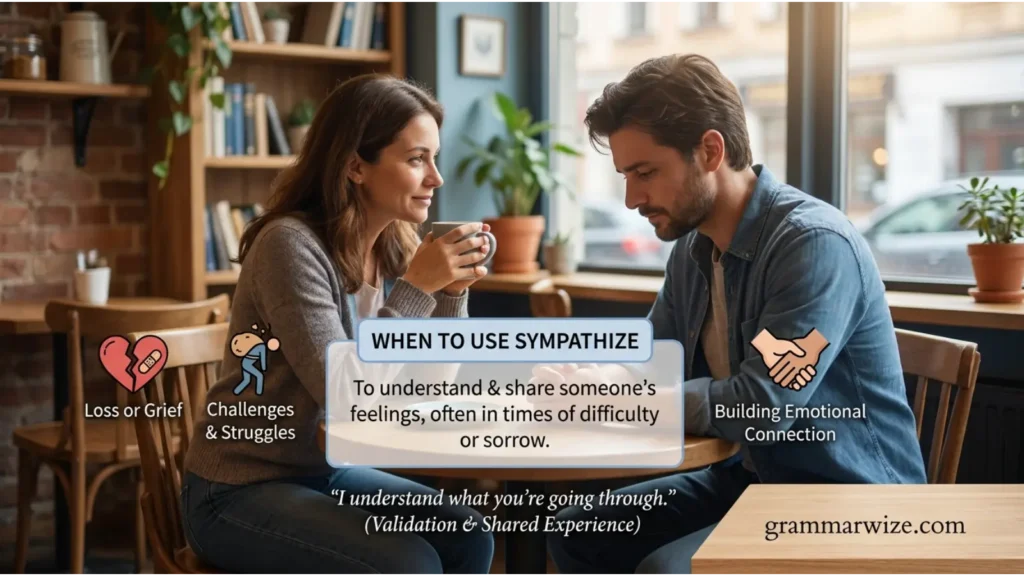
When to Use Sympathize
Use sympathize when you want to express sorrow, concern, or support for someone’s difficult situation.
For example:
I sympathize with everyone affected by the accident.
This sentence shows concern for the affected people.
You can also use sympathize in formal messages:
We sympathize with the family during this difficult period.
This usage is common in condolences and official statements.
Examples of sympathize
- I sympathize with your difficult situation.
- We sympathize with the victims and their families.
- She sympathized with her friend after the breakup.
- The teacher sympathized with the student.
- I truly sympathize with what you are facing.

When to Use Empathize
Use empathize when you want to show that you understand someone’s feelings or perspective.
For example:
I empathize with your frustration.
This tells the person that you understand why they feel frustrated.
Empathize works especially well when you have experienced something similar:
I empathize with your anxiety about starting a new job because I felt the same way.
The sentence connects the speaker’s experience with the other person’s emotional state.
Examples of empathize
- I empathize with your concerns.
- She empathized with her friend’s disappointment.
- He could empathize with the customer’s frustration.
- Parents often empathize with their children’s worries.
- I empathize with anyone facing a difficult decision.
Can You Sympathize and Empathize With Someone?
Yes. Both verbs can be used with with when referring to another person or their situation.
For example:
I sympathize with your situation.
I empathize with your feelings.
The grammar is similar, but the intended meaning changes.
Sympathize with emphasizes concern or compassion.
Empathize with emphasizes emotional understanding and perspective.
This is why replacing one word with the other can slightly change the tone of a sentence.
Real Life Examples
Consider someone who loses their job.
A person might say:
I sympathize with you. Losing a job can be very difficult.
This expresses concern.
Another person might say:
I empathize with you. I remember how stressful it was when I lost my job.
This expresses a deeper connection to the person’s emotional experience.
Now consider a customer who is angry about a delayed order.
A support agent might say:
I sympathize with your frustration.
This acknowledges the customer’s difficult experience.
An even more empathetic response could be:
I empathize with your frustration. Waiting longer than expected can be very stressful.
The second response shows an effort to understand the customer’s perspective.
Common Mistakes
One common mistake is treating sympathize and empathize as exact synonyms.
They are related, but their meanings are not identical.
Another mistake is using empathize simply to mean feeling sorry for someone. Empathy involves understanding another person’s emotional experience, not just expressing pity or concern.
A third mistake is forgetting the preposition with.
Correct:
I empathize with her.
Correct:
I sympathize with him.
Incorrect:
I empathize her.
Incorrect:
I sympathize him.
Use with after both verbs when you identify the person receiving the emotional response.
A Simple Memory Trick
Remember the difference with this idea:
Sympathy looks at someone’s pain. Empathy tries to understand that pain.
You can think of sympathy as “I care about what happened to you.”
Think of empathy as “I can understand how this feels to you.”
This simple distinction can help you select the right word quickly.
Professional Writing Recommendation
In professional writing, choose the word based on the message you want to communicate.
Use sympathize for condolences, formal expressions of concern, and statements about someone’s hardship.
For example:
We sympathize with the families affected by the tragedy.
Use empathize when discussing understanding, communication, customer service, leadership, or emotional awareness.
For example:
Our support team strives to empathize with customers and understand their concerns.
In workplace communication, empathize can suggest active understanding, while sympathize can sound more focused on compassion.
Sympathize or Empathize in a Sentence
Here are some quick examples that show the difference:
Sympathize:
I sympathize with Sarah because she is going through a difficult time.
Empathize:
I empathize with Sarah because I understand how difficult that experience can be.
Sympathy:
We expressed our sympathy after his loss.
Empathy:
Her empathy helped the patient feel understood.
These examples show how closely related the words are while highlighting their different meanings.
FAQs:
Is sympathize the same as empathize?
No. Sympathize means to feel concern or sorrow for someone. Empathize means to understand another person’s feelings or experience from their perspective.
Which is deeper, sympathy or empathy?
Empathy is generally considered deeper because it involves understanding another person’s emotional experience. Sympathy mainly expresses concern or compassion.
Do you sympathize with someone?
Yes. The standard construction is sympathize with someone.
Do you empathize with someone?
Yes. The standard construction is empathize with someone.
Can I use sympathize in a condolence message?
Yes. Sympathize is appropriate for expressing concern and sorrow after someone’s loss or hardship.
Can empathy come from personal experience?
Yes. A similar personal experience can help someone understand another person’s feelings. However, empathy does not require an identical experience.
Conclusion
The choice between sympathize or empathize depends on the type of emotional response you want to express. Sympathize focuses on concern and compassion for someone’s hardship. Empathize focuses on understanding their feelings and perspective.
Use sympathize when you want to express sorrow or support. Use empathize when you want to show that you understand what someone may be feeling. Once you remember this difference, choosing the right word becomes much easier.

Olivia Bennett is a grammar expert and language content writer at GrammarWize.com. She specializes in English grammar, word usage, spelling differences, and writing improvement. Through clear explanations and practical examples, Olivia helps students, professionals, and language learners communicate more effectively. Her goal is to make English grammar simple, accessible, and easy to apply in everyday writing.