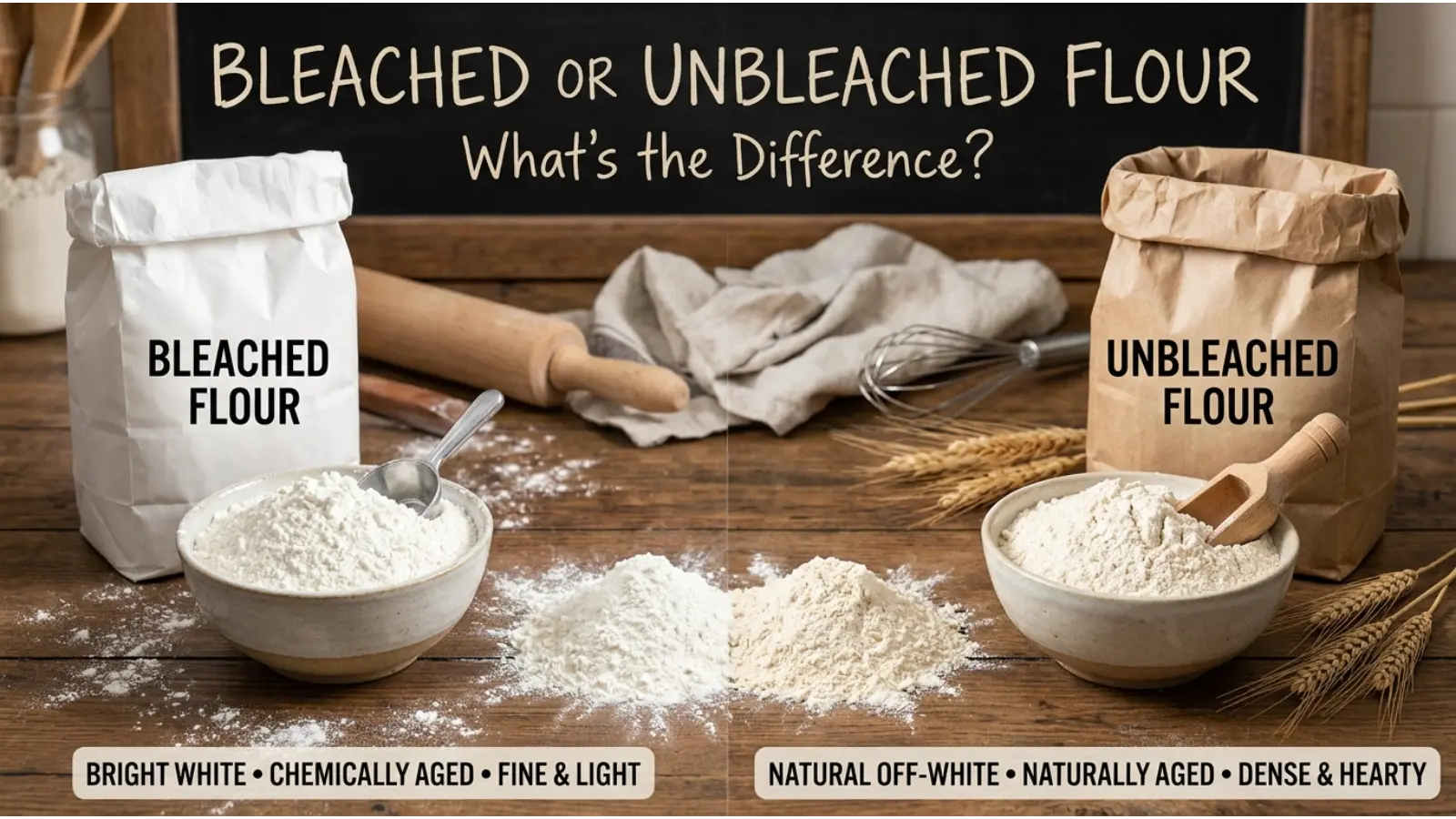
Bleached or unbleached flour can make a difference in your baking results. Both types come from wheat, but they go through different processing methods. Bleached flour receives a treatment that makes it whiter and changes some of its baking properties. Unbleached flour ages naturally after milling and keeps a slightly creamy color.
You may notice these options when shopping for all-purpose flour at the grocery store. However, choosing between them can be confusing, especially if you are preparing cakes, cookies, bread, or pastries. The good news is that both types work in many everyday recipes. Understanding their differences can help you select the right flour for your baking needs.
Quick Answer: Bleached or Unbleached Flour?
Bleached flour is treated with approved bleaching agents to create a whiter color and a finer texture. Unbleached flour ages naturally after milling and has a slightly darker appearance.
- Choose bleached flour for recipes that benefit from a softer texture and lighter color.
- Choose unbleached flour for everyday baking, bread, and recipes where natural aging is preferred.
Both types can work in many recipes. Your choice depends on the texture and appearance you want.
What Is Bleached Flour?
Bleached flour is refined wheat flour that receives a treatment to speed up the natural aging and whitening process. Manufacturers use permitted food-grade bleaching agents to change its color and, depending on the treatment, its baking properties.
Freshly milled wheat flour often has a yellowish appearance. Bleaching reduces some of these natural pigments and produces a brighter white color.
This flour usually has a finer texture and works well in certain delicate baked goods. Some treatments also change how flour absorbs water and how its proteins behave during baking.
You can commonly find bleached flour in all-purpose flour and cake flour products. Always check the package because not every brand uses the same processing method.

What Is Unbleached Flour?
Unbleached flour is refined wheat flour that ages naturally after milling. Exposure to oxygen gradually changes its color and improves its baking characteristics.
It usually has a creamy or slightly yellow appearance instead of the bright white color of bleached flour. Its natural aging process takes longer, but it produces flour suitable for many everyday baking tasks.
Many bakers prefer unbleached flour for bread, cookies, pastries, and general cooking. It can provide good structure in recipes that need a stronger flour.
Remember that unbleached does not mean completely untreated or chemical-free. Manufacturers may use other permitted ingredients or processing aids. Check the ingredient label if you want to know exactly what a product contains.
Bleached vs Unbleached Flour: Main Differences
Although both products come from refined wheat, their processing and baking characteristics are different.
| Feature | Bleached Flour | Unbleached Flour |
|---|---|---|
| Processing | Chemically treated | Naturally aged |
| Color | Bright white | Creamy or off-white |
| Texture | Usually finer | Usually slightly denser |
| Aging | Faster processing | Slower natural aging |
| Baking results | Can produce softer textures | Can provide good structure |
| Flavor | Usually mild | Usually mild |
| Common uses | Cakes, cookies, and pastries | Bread, cookies, and everyday baking |
| Appearance | Lighter | Slightly darker |
The exact results depend on the flour’s protein content, brand, and treatment method. These differences are not always noticeable in finished recipes.
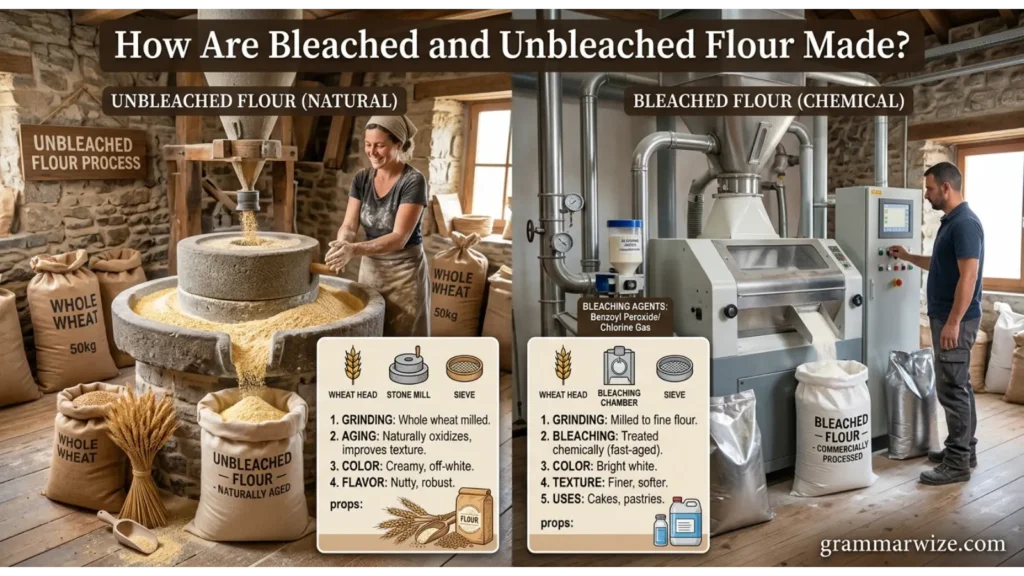
How Are Bleached and Unbleached Flour Made?
The main difference starts after wheat goes through milling.
During milling, manufacturers separate the bran and germ from the wheat kernel to produce refined white flour. The remaining flour contains mostly the starchy endosperm.
After milling, manufacturers can use different methods to prepare the flour.
Bleached flour production
Manufacturers use permitted bleaching agents, such as benzoyl peroxide or chlorine dioxide, depending on the product and applicable food regulations. These treatments speed up whitening and can change baking characteristics.
Unbleached flour production
Unbleached flour rests after milling and ages through natural oxidation. Exposure to air gradually changes its color and properties without the addition of bleaching agents.
Both processes prepare refined flour for different baking needs. The choice of treatment can influence the flour’s performance.
Which Flour Is Better for Cakes, Cookies, and Bread?
Your recipe can help you decide which type to buy. Different baked goods need different textures and structures.
Cakes: Bleached flour can work well in delicate cakes because some treatments create a softer crumb. Cake flour is often a better choice when a recipe needs a particularly tender texture.
Cookies: Both types work for cookies. The final texture depends more on ingredients, flour protein, butter, sugar, and baking time.
Bread: Unbleached flour is a popular option for bread because it can provide good structure. However, protein content matters more than the bleached or unbleached label alone.
Pastries: Both types can work in pastries. Choose according to the recipe’s texture requirements and the flour specification.
Pancakes: Either type can make good pancakes. Bleached flour may produce a softer result in some recipes, but mixing technique also affects texture.

Does Bleached or Unbleached Flour Have Better Nutrition?
Many people assume unbleached flour is automatically healthier. However, the difference is not that simple.
Both types are usually refined white flour. This means the milling process removes the bran and germ, leaving mainly the endosperm.
Bleaching changes the flour’s color and certain baking properties. It does not turn refined flour into whole wheat flour or automatically make unbleached flour more nutritious.
Another important detail is enrichment. Some white flours contain added iron and B vitamins to replace certain nutrients lost during milling.
Therefore, check the nutrition label and ingredient list when comparing products. If you want more fiber, whole wheat flour is generally a better option than either type of refined white flour.
Can You Substitute Bleached Flour for Unbleached Flour?
Yes, you can substitute bleached flour for unbleached flour in many everyday recipes. Both options work in common baking applications, including cookies, muffins, pancakes, and some cakes.
However, the results may vary slightly. A recipe made with bleached flour may have a lighter appearance or softer texture, depending on the treatment.
For bread and other recipes that depend on dough strength, pay attention to protein content. Switching flour types may change the final texture even when you use the same amount.
For the best results, follow the flour recommendation in your recipe, especially when making delicate cakes or professional baked goods.
Common Mistakes People Make When Choosing Flour
Choosing flour becomes easier when you understand what the package actually tells you. Avoid these common mistakes:
- Assuming unbleached means whole wheat: Both bleached and unbleached options can be refined white flour.
- Thinking bleached flour contains household bleach: Food-grade flour treatments are different from household cleaning products.
- Ignoring protein content: Protein affects gluten development and plays an important role in baking.
- Believing both types always produce identical results: Their appearance and baking properties can differ.
- Confusing enriched with unbleached: Enrichment refers to added nutrients, not the bleaching process.
- Choosing by color alone: A whiter appearance does not automatically indicate better quality.
Frequently Asked Questions About Bleached or Unbleached Flour
Is bleached flour better than unbleached flour?
Neither type is always better. Bleached flour can suit delicate baked goods, while unbleached flour works well for everyday baking and bread.
Is unbleached flour healthier than bleached flour?
Not necessarily. Both are commonly refined white flour. Check their nutrition labels and enrichment details to compare nutritional content.
Can I use unbleached flour instead of bleached flour?
Yes. You can substitute unbleached flour in many recipes. However, delicate baked goods may have slightly different textures or colors.
Why is bleached flour whiter?
Bleached flour receives approved treatments that reduce natural yellow pigments. This creates a brighter white appearance than naturally aged flour.
Does unbleached flour taste different?
Both types usually have a mild flavor. Some people may notice slight differences, but the taste is generally similar in most recipes.
Which flour is best for baking bread?
Unbleached bread flour is a popular choice because of its suitability for strong dough. However, protein content and the type of wheat are important factors.
Is bleached flour safe to use?
Bleached flour made with permitted food additives and sold according to applicable food regulations is intended for food use. Follow the package instructions and cook or bake flour before eating it.
Is bleached flour the same as all-purpose flour?
No. All-purpose describes the flour’s intended use, while bleached describes its processing. All-purpose flour can be bleached or unbleached.
Conclusion
Choosing between bleached or unbleached flour depends on your recipe and baking preferences. Bleached flour offers a brighter appearance and can create softer textures in certain baked goods. Unbleached flour ages naturally and works well in bread, cookies, pastries, and everyday recipes.
Neither option is automatically healthier or better for every purpose. Check the protein content, ingredients, and nutrition label before buying. Once you understand these differences, you can choose the flour that gives your recipe the results you want.

Olivia Bennett is a grammar expert and language content writer at GrammarWize.com. She specializes in English grammar, word usage, spelling differences, and writing improvement. Through clear explanations and practical examples, Olivia helps students, professionals, and language learners communicate more effectively. Her goal is to make English grammar simple, accessible, and easy to apply in everyday writing.