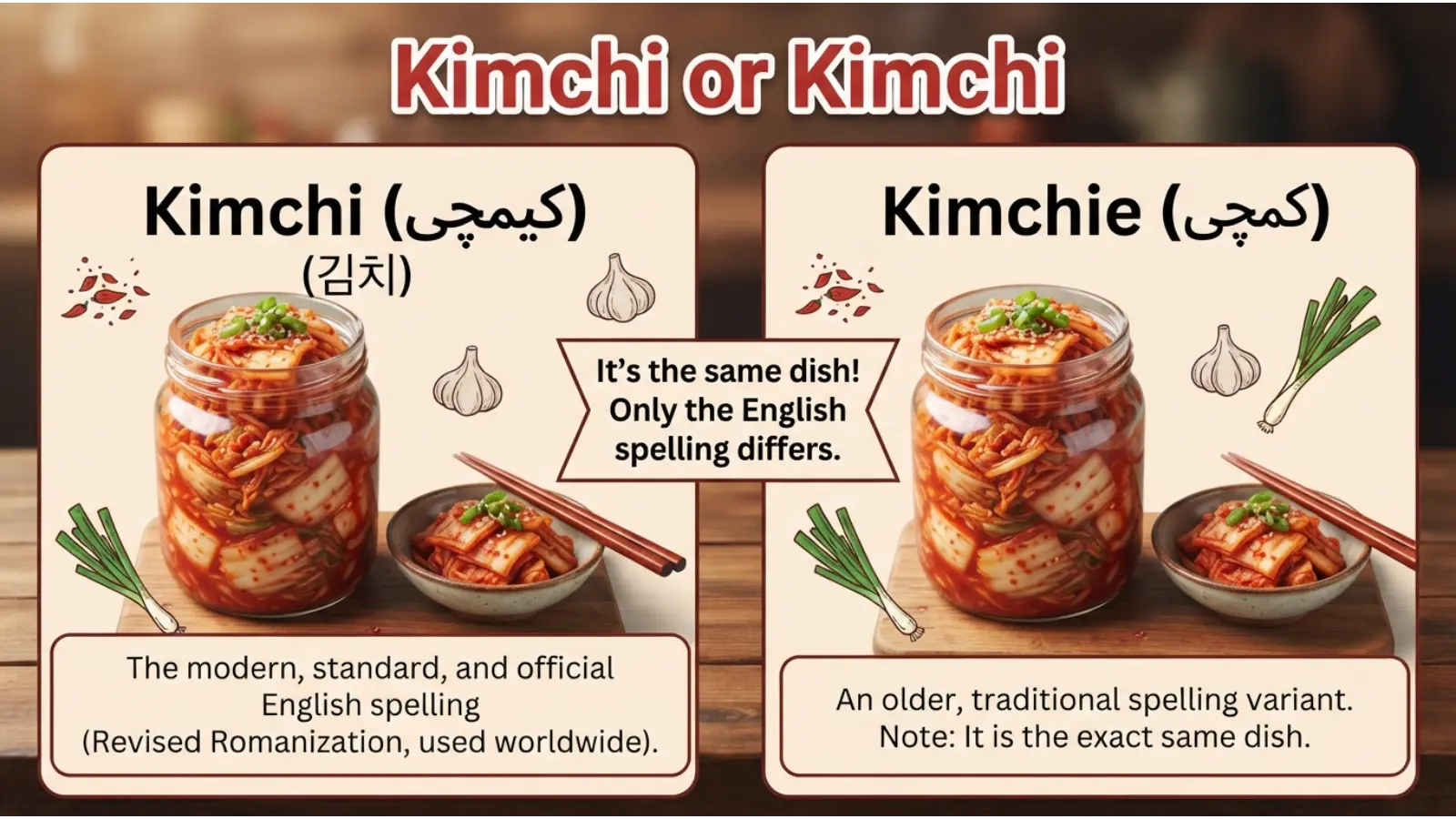
Kimchee or kimchi can both refer to the famous Korean fermented vegetable dish, so seeing two spellings can be confusing. If you are writing a menu, recipe, article, or professional document, you may wonder which form is best.
Kimchee or Kimchi is a common spelling question for people searching for the correct name of Korea’s famous fermented vegetable dish. Both forms appear in English, but kimchi is the standard and most widely used spelling today.
You may still see kimchee in older writing, restaurant menus, and some English sources. Understanding this small spelling difference can help you choose the right form for recipes, food articles, menus, and everyday writing. In this guide, we’ll explain the meaning, spelling, origin, and proper usage of Kimchee or Kimchi in simple terms.
The good news is that both kimchi and kimchee are accepted English spellings. Major dictionaries recognize kimchee as an alternative form of kimchi. However, kimchi is the preferred spelling in modern English and is the better choice for most writing.
Quick Answer
Kimchi is the preferred spelling.
Kimchee is also correct, but it is an alternative spelling. Cambridge and Oxford list it as another form of kimchi.
Example:
We ordered spicy kimchi with our Korean barbecue.
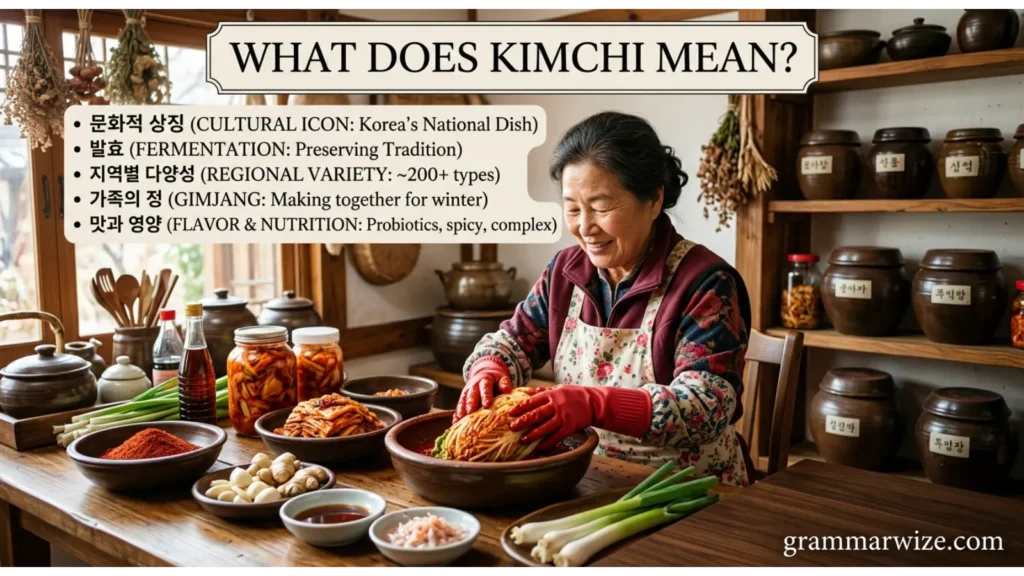
What Does Kimchi Mean?
Kimchi is a Korean dish made from vegetables that have been fermented. Cabbage, onions, peppers, and other vegetables can be used in different varieties.
Cambridge describes kimchi as a spicy and sour Korean dish made from fermented vegetables. Oxford also defines it as a spicy Korean dish made with ingredients such as pickled cabbage, onions, and peppers.
Examples of Kimchi
- I added kimchi to my rice bowl.
- This restaurant serves homemade kimchi with several meals.
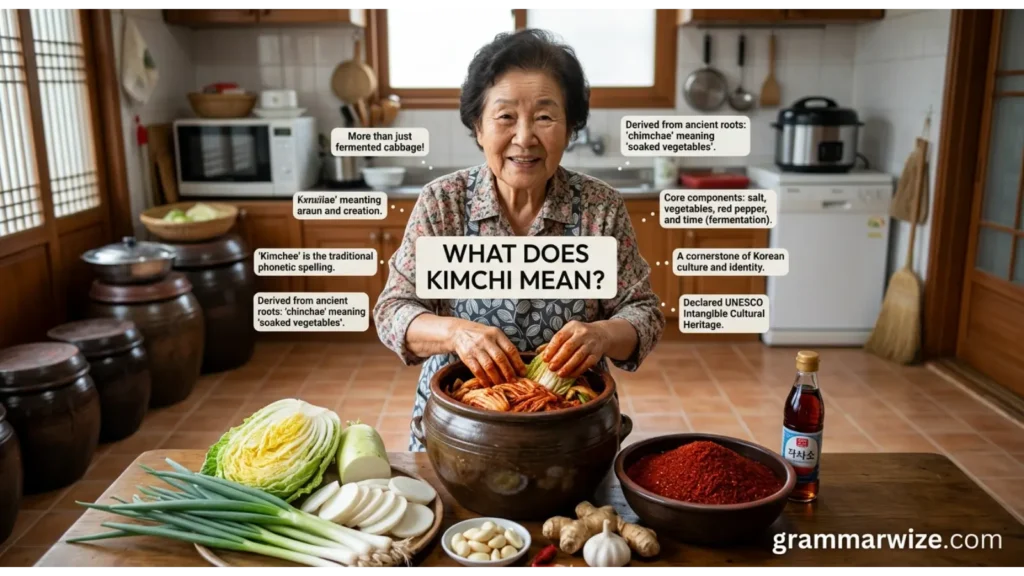
What Does Kimchee Mean?
Kimchee means the same thing as kimchi. It is an alternative English spelling of the word.
You may still see kimchee in older writing, restaurant names, recipes, or other English-language sources. Its meaning does not change simply because the spelling uses ee instead of i.
Examples of Kimchee
- The recipe calls for spicy kimchee.
- We tried homemade kimchee at the Korean restaurant.
Kimchee vs Kimchi
| Feature | Kimchi | Kimchee |
|---|---|---|
| Correct spelling | Yes | Yes |
| Meaning | Korean fermented vegetable dish | Same dish |
| Dictionary status | Main entry | Alternative spelling |
| Modern preference | Preferred | Less common |
| Best for professional writing | Yes | Usually avoid unless required |
| Pronunciation | /ˈkɪmtʃi/ | Similar |
| Origin | Korean | English variant |
Cambridge lists kimchee as an alternative spelling under its main kimchi entry. Oxford does the same.
Why Are There Two Spellings?
The difference comes from how Korean words are represented in English.
When words move between languages, their spelling can change because different writing systems do not always map neatly onto English letters. The Korean word is commonly written kimchi in English today.
The spelling kimchee represents an older or alternative English rendering. The added ee can help English readers understand the final vowel sound.
This does not mean that kimchee refers to a different food. The two forms identify the same dish.
Where Did the Word Kimchi Come From?
Kimchi comes from Korean. Oxford specifically labels the word as being from Korean.
The dish has a long history in Korean food culture. Different varieties use different vegetables, seasonings, and fermentation methods.
Modern English normally uses kimchi when referring to the dish.
Why Is Kimchi Better for Modern Writing?
Kimchi is the stronger choice because it is the standard modern spelling used by major English dictionaries.
Oxford lists kimchi as its main entry and gives kimchee as an alternative. Cambridge follows the same pattern.
That makes kimchi the safest option for:
- Websites
- Recipes
- Menus
- School assignments
- News articles
- Business writing
- Food blogs
- Academic writing
- Product descriptions
If you are not following a particular source or house style, choose kimchi.
Dictionary Recommendations
Major learner dictionaries support the distinction clearly.
Cambridge Dictionary: Lists kimchi as the main word and kimchee as an alternative spelling.
Oxford Advanced Learner’s Dictionary: Lists kimchi as the main entry and identifies kimchee as another form.
This dictionary evidence supports using kimchi as the default spelling while recognizing kimchee as valid.
Real Life Examples
Restaurant Menu
Kimchi fried rice is one of the most popular dishes on the menu.
Here, kimchi works naturally as the modern spelling.
Food Blog
This easy kimchi recipe uses cabbage, garlic, and chili peppers.
The standard spelling makes the recipe easy to recognize.
Casual Writing
I bought a jar of kimchee from the local market.
Kimchee is still understandable and accepted.
Professional Article
Kimchi is a traditional Korean fermented food with many regional varieties.
For formal writing, kimchi is the better choice.
Everyday Conversation
Would you like some kimchi with your rice?
This is the spelling most readers are likely to expect.
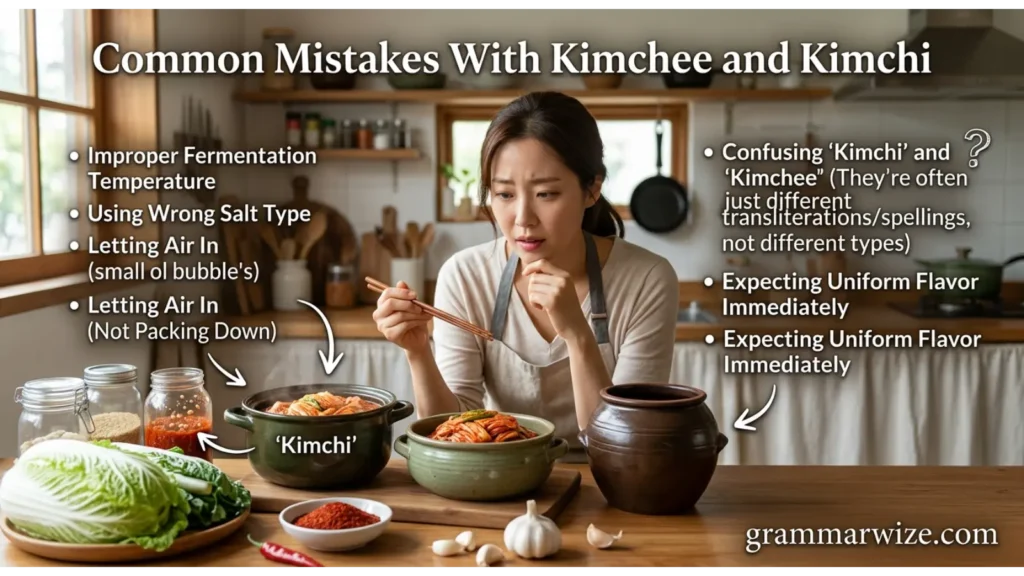
Common Mistakes With Kimchee and Kimchi
Treating Kimchee as a Different Food
Some writers assume the two spellings refer to different dishes.
They do not. Kimchee is an alternative spelling of kimchi.
Calling Kimchee Incorrect
It is inaccurate to say that kimchee is simply a misspelling.
Major dictionaries recognize it as an alternative form.
Using Kimchee as the Default Form
Although kimchee is accepted, kimchi is the stronger modern choice for general English writing.
Changing the Meaning
Changing kimchi to kimchee does not change the meaning.
Both refer to the Korean fermented vegetable dish.
Mixing Spellings in One Article
Choose one form and use it consistently unless you are discussing the spelling difference itself.
For most modern content, use kimchi throughout.
A Simple Memory Trick
Remember:
Kimchi = the modern preferred spelling.
Think of kimchi as the short, standard form used by major dictionaries.
If you see kimchee, remember that the extra ee does not create a new word. It is simply an accepted alternative spelling.
Which One Should You Use?
Use kimchi in most situations.
It is the main dictionary form in both Cambridge and Oxford. Kimchee remains acceptable, but it is better treated as an alternative spelling.
If you are writing for a professional audience, kimchi gives you the clearest and most current choice.
If you are reproducing an older source, brand name, recipe, or quotation that uses kimchee, keep its original spelling when accuracy requires it.
FAQs:
Is kimchee a correct spelling?
Yes. Kimchee is a recognized alternative spelling of kimchi. Cambridge and Oxford both list it as an alternative form.
Is kimchi or kimchee more common?
Kimchi is the preferred modern spelling. It is also the main entry used by Cambridge and Oxford.
Do kimchi and kimchee mean the same thing?
Yes. Both spellings refer to the Korean fermented vegetable dish.
Should I write kimchi in a formal article?
Yes. Kimchi is the best default choice for formal and professional writing.
Why do some people spell it kimchee?
Kimchee is an alternative English spelling. The spelling reflects an older or different way of representing the Korean word in English.
Final Verdict
Kimchi and kimchee are both correct.
However, kimchi is the preferred modern spelling and the better choice for most readers. Cambridge and Oxford both recognize kimchee as an alternative form rather than treating it as a separate word.
So, if you are unsure which spelling to use, choose kimchi.
Correct: Kimchi
Also accepted: Kimchee
Best modern choice: Kimchi
Conclusion
Kimchee or kimchi can both be correct, but kimchi is the preferred modern spelling. Major dictionaries recognize kimchee as an alternative form, so it should not be treated as a simple spelling mistake.
For websites, recipes, menus, academic work, and professional writing, kimchi is the safest choice. Use kimchee when you are following a source or style that specifically uses that spelling.

Olivia Bennett is a grammar expert and language content writer at GrammarWize.com. She specializes in English grammar, word usage, spelling differences, and writing improvement. Through clear explanations and practical examples, Olivia helps students, professionals, and language learners communicate more effectively. Her goal is to make English grammar simple, accessible, and easy to apply in everyday writing.