Fryed or fried is a common spelling question because both words look possible at first glance. Many people assume that adding -ed to the verb fry should create fryed, but English spelling follows a different rule for verbs ending in y after a consonant.
Fryed or Fried is a common spelling question that confuses many English learners and even native speakers. If you have ever wondered which spelling is correct, you are in the right place. This guide explains the correct form, its meaning, pronunciation, and how to use it in everyday writing with simple examples.
Discover the correct spelling in seconds and avoid this common English mistake with confidence. You will also find easy examples, grammar tips, and a quick comparison table to help you remember the correct word whenever you write or speak.
This guide explains which spelling dictionaries accept, why the confusion happens, how professionals write it, and how to remember the correct form in everyday English.
Quick Answer
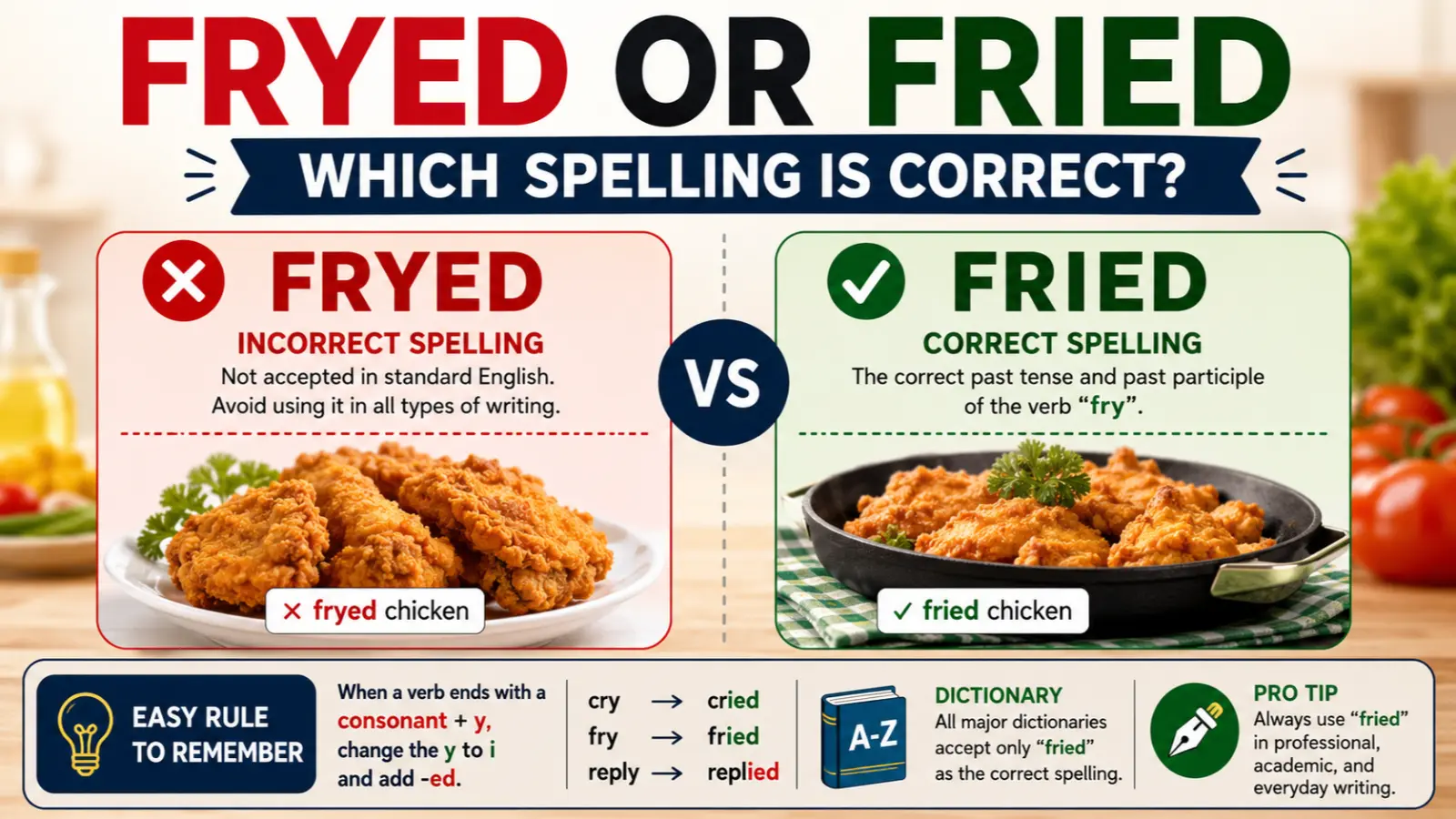
Fried is the correct past tense and past participle of fry.
❌ Fryed — Incorrect in standard English.
✅ Fried — Correct in American English, British English, academic writing, journalism, and professional communication.
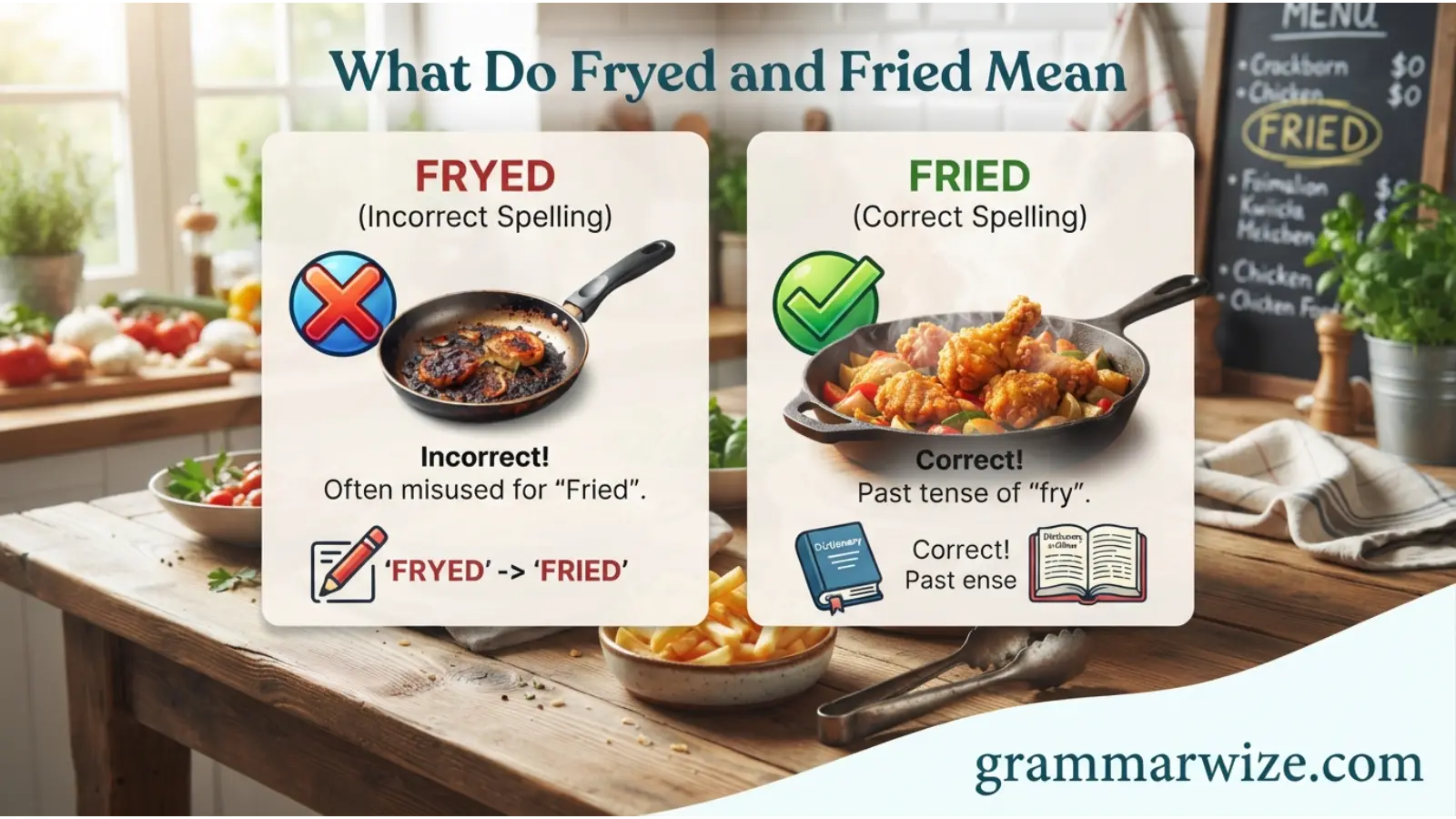
What Do Fryed and Fried Mean
Fried
Fried is the past tense and past participle of the verb fry. It means cooked in hot oil or fat.
Examples:
- She fried the potatoes.
- We enjoyed fried chicken.
- The onions were fried until golden brown.
Fryed
Fryed is not recognized as a correct English spelling. It occasionally appears because people incorrectly add -ed directly to the verb without applying the spelling rule.
Fryed vs Fried Comparison
| Feature | Fryed | Fried |
|---|---|---|
| Correct spelling | ❌ No | ✅ Yes |
| Dictionary accepted | ❌ No | ✅ Yes |
| Standard English | ❌ No | ✅ Yes |
| Professional writing | ❌ Avoid | ✅ Recommended |
| Academic writing | ❌ Incorrect | ✅ Correct |
| British English | ❌ No | ✅ Yes |
| American English | ❌ No | ✅ Yes |
Why Is Fried Correct
The verb fry ends with a consonant followed by y.
When forming the past tense:
- Change y to i
- Add -ed
Rule:
- fry → fried
- cry → cried
- carry → carried
- reply → replied
This is a standard English spelling rule.
Origin of the Word
The verb fry comes from Old French frire, which traces back to Latin frigere, meaning to roast or cook. As English spelling rules developed, verbs ending in a consonant plus y formed their past tense by changing y to i before adding -ed, giving us fried.
Why People Write Fryed

Several reasons cause this mistake.
The regular verb assumption
Many learners believe every verb simply adds -ed.
Example:
- walk → walked
- jump → jumped
They naturally write:
- fry → fryed
But verbs ending in consonant + y follow a different rule.
Pronunciation
Both spellings would sound almost identical, making the incorrect version seem reasonable.
Typing habits
Fast typing and autocorrect errors sometimes allow fryed to appear online even though it is not standard English.
What Dictionaries Recommend
Major English dictionaries recognize only fried as the correct spelling of the past tense and past participle of fry.
Professional editors, teachers, publishers, and style guides also use fried consistently.

Real Life Examples
Correct:
- The chef fried fresh fish for dinner.
- I fried the eggs this morning.
- They ordered fried shrimp.
- The vegetables were lightly fried.
- My grandmother fried bread in butter.
Incorrect:
- ❌ She fryed the chicken.
- ❌ We fryed onions for soup.
- ❌ He fryed potatoes yesterday.
Common Mistakes
Adding ed without changing y
❌ Fryed
✅ Fried
Mixing verb forms
❌ I have fryed the fish.
✅ I have fried the fish.
Using the wrong spelling in recipes
Professional recipes always use fried.
Example:
- Fried rice
- Fried chicken
- Fried eggs
- Fried fish
Easy Memory Trick
Think of another common verb.
- cry → cried
- fry → fried
If cry becomes cried, then fry becomes fried.
Remember:
Consonant + y changes to i before adding ed.
Professional Writing Recommendation
Use fried in every type of writing, including:
- School assignments
- Business emails
- Books
- News articles
- Food blogs
- Recipes
- Restaurant menus
- Academic papers
Avoid fryed, as readers may view it as a spelling mistake.
Frequently Asked Questions
Is fryed a real word?
No. It is considered a spelling error in standard English.
Why does fry become fried?
Because verbs ending with a consonant followed by y change y to i before adding -ed.
Is fried correct in British English?
Yes. Both British and American English use fried.
Is fried the past tense of fry?
Yes. Fried is both the past tense and the past participle of fry.
Why do people type fryed?
Most people apply the regular -ed rule without remembering the special spelling rule for verbs ending in y.
Is fried used as an adjective?
Yes.
Examples:
- fried chicken
- fried onions
- fried rice
Conclusion
Fried is the only correct spelling of the past tense and past participle of fry. The spelling fryed is a common mistake caused by misunderstanding the rule for verbs ending in a consonant followed by y. Dictionaries, grammar guides, publishers, and professional writers consistently use fried. If you want clear, accurate, and professional English, always choose fried.

Olivia Bennett is a grammar expert and language content writer at GrammarWize.com. She specializes in English grammar, word usage, spelling differences, and writing improvement. Through clear explanations and practical examples, Olivia helps students, professionals, and language learners communicate more effectively. Her goal is to make English grammar simple, accessible, and easy to apply in everyday writing.