Repellant or Repellent is a common spelling confusion, especially when writing about products that keep insects or animals away. Both forms look correct, but repellent is the standard and widely accepted spelling in modern English.
You may still see repellant in some dictionaries and contexts, which can make the choice confusing. This guide explains the difference between repellant and repellent, their meanings, correct usage, and real-world examples.
If you are unsure which spelling to use in professional or everyday writing, this comparison will help you choose the right word with confidence.
Repellant vs Repellent: Quick Answer
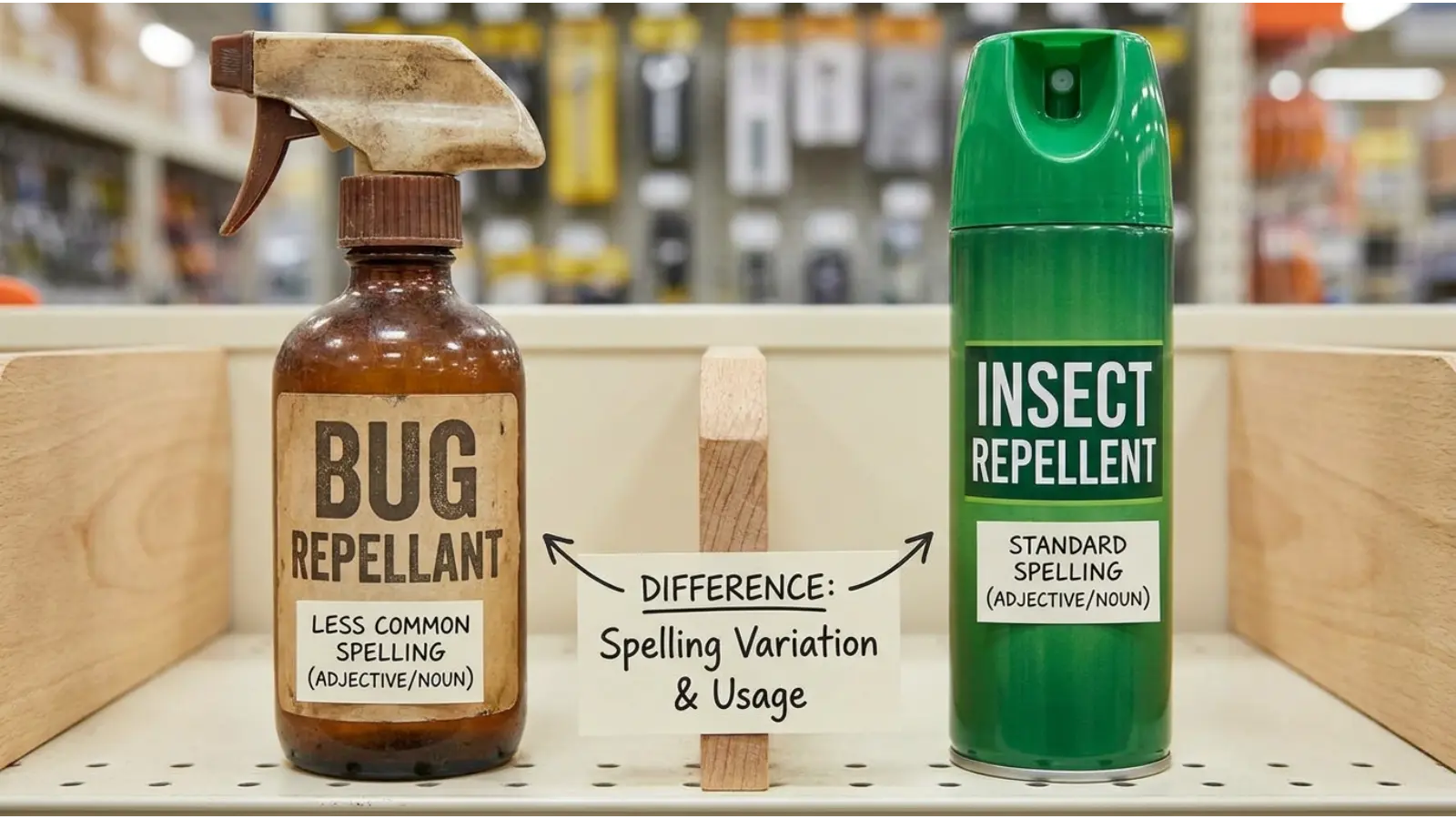
Repellent is the more common spelling, especially in American English. It can describe something that drives away insects, animals, or people.
Repellant is also correct, but it is less common. It often appears as a noun or adjective with the same general meaning.
Example:
- This insect repellent keeps mosquitoes away.
- The strong smell acts as a repellant to insects.
What Does Repellent Mean?
Repellent describes something that drives away or discourages something else.
It commonly refers to products that keep insects or animals away.
Examples:
- Apply mosquito repellent before going outside.
- The coating makes the fabric water repellent.
As a noun, repellent can refer to a substance used to keep something away.
What Does Repellant Mean?
Repellant has essentially the same basic meaning. It describes something that repels or drives away.
However, repellant is less common than repellent in modern general English.
Examples:
- The chemical works as an insect repellant.
- The odor acts as a natural repellant.
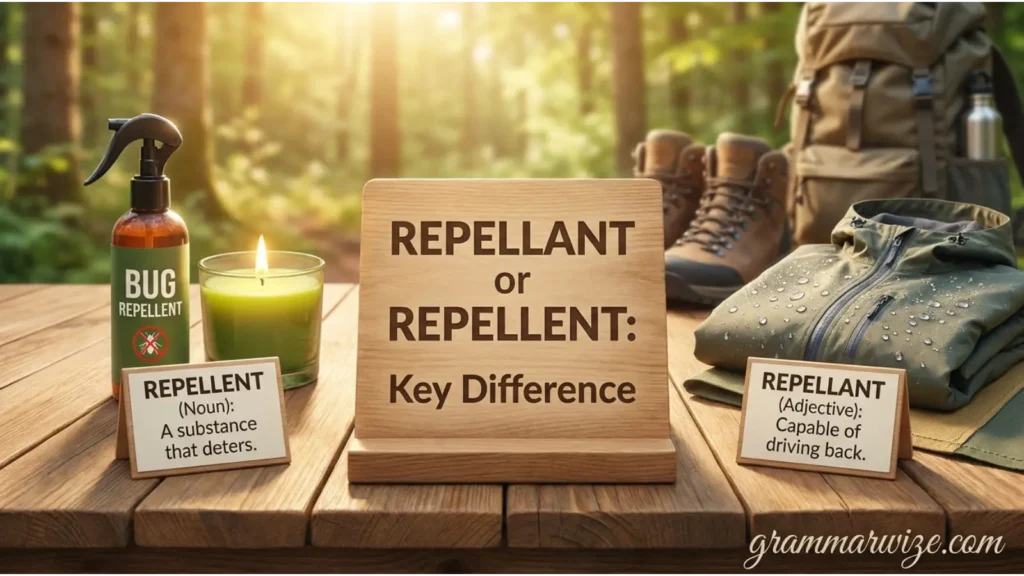
Repellant or Repellent: Key Difference
| Word | Meaning | Commonness | Typical Use |
|---|---|---|---|
| Repellent | Something that drives away | More common | Insect products, water resistant materials, general writing |
| Repellant | Something that drives away | Less common | Noun or adjective, often referring to something that repels |
The words have nearly identical meanings. The biggest practical difference is usage frequency.
When Should You Use Repellent?
Choose repellent when you want the most familiar and widely accepted form.
It is especially useful in:
- Everyday writing
- Product descriptions
- Health and outdoor advice
- Scientific writing
- Professional communication
- American English
For example:
Use an insect repellent when hiking.
This jacket has a water repellent surface.
When Is Repellant Appropriate?
Repellant is not necessarily a spelling mistake. It can be used when the context calls for it.
However, many readers will be more familiar with repellent, so it is usually the safer choice in general writing.
For example:
The plant produces a natural insect repellant.
This sentence is understandable and grammatically acceptable.
Grammar and Sentence Structure
Both words can function as adjectives and nouns.
Repellent as an adjective
Subject + be + repellent
- The material is water repellent.
- The smell is insect repellent.
Repellent as a noun
Subject + verb + repellent
- She bought mosquito repellent.
- We applied insect repellent.
Repellant as a noun
Subject + verb + repellant
- The product works as an insect repellant.
- The plant provides a natural repellant.
The exact grammatical role depends on how the word appears in the sentence.

Common Mistakes With Repellant and Repellent
Using repellant when repellent is more natural
Less natural:
I need mosquito repellant.
More common:
I need mosquito repellent.
Assuming repellant is always wrong
Repellant is a legitimate English word. It should not automatically be treated as a misspelling.
Confusing repellent with repel
Repel is a verb.
- Mosquitoes repel certain odors.
Repellent is commonly a noun or adjective.
- This spray is an insect repellent.
Using the wrong word in product writing
Product labels usually favor repellent, especially for insect and water protection products.
Professional Writing Recommendation
For professional, academic, website, and general-purpose writing, repellent is usually the best choice.
It is more familiar to readers and appears frequently in phrases such as:
- insect repellent
- mosquito repellent
- water repellent
- stain repellent
- animal repellent
Use repellant when a specific source, product name, or context uses that form.
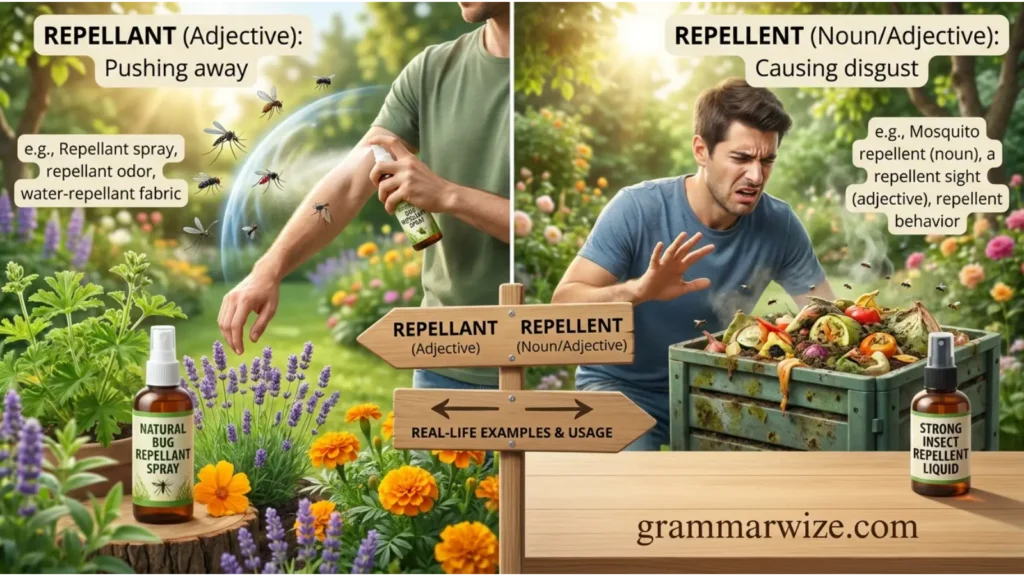
Repellant vs Repellent in Real-Life Examples
Outdoor activities
Bring mosquito repellent when camping.
Clothing
These boots have a water repellent coating.
Gardening
Some plants can act as a natural insect repellant.
Household products
The spray works as an effective insect repellent.
Animal control
The smell can serve as an animal repellant.
A Simple Memory Trick
Remember:
Repellent = the common choice.
Think of the familiar phrase insect repellent.
If you are unsure which form to use in everyday or professional writing, choose repellent.
Frequently Asked Questions
Is repellent or repellant correct?
Both repellent and repellant are correct English words. Repellent is more common.
Is repellant a misspelling?
No. Repellant is an accepted word, although it is less common than repellent.
Which is better for professional writing?
Repellent is generally the better choice because it is more widely recognized and commonly used.
Is mosquito repellent spelled with an e?
Yes. Mosquito repellent is the standard and highly common spelling.
Do repellent and repellant mean the same thing?
They have essentially the same meaning. Both describe something that drives away or discourages something.
Conclusion
Repellant and repellent are both correct. However, repellent is the more common and practical choice for most writing.
For websites, professional documents, product descriptions, and everyday English, repellent is usually the safest option.

Olivia Bennett is a grammar expert and language content writer at GrammarWize.com. She specializes in English grammar, word usage, spelling differences, and writing improvement. Through clear explanations and practical examples, Olivia helps students, professionals, and language learners communicate more effectively. Her goal is to make English grammar simple, accessible, and easy to apply in everyday writing.