
Stock or broth are two common cooking terms that often cause confusion. Both are flavorful liquids made by simmering ingredients in water. However, they are prepared differently and serve different purposes in the kitchen.
Stock or Broth is a common question for home cooks, food lovers, and anyone following a recipe. Both are flavorful liquids used in soups, sauces, gravies, and many other dishes. However, stock and broth are not exactly the same, even though people often use the words interchangeably.
The main difference comes from how they are prepared and what they contain. Stock is usually made by simmering bones and vegetables, while broth is commonly made with meat, vegetables, herbs, and seasonings. Understanding the difference between stock or broth can help you choose the right ingredient and get better flavor, texture, and results in your cooking.
Stock is usually made by simmering bones, vegetables, and aromatic ingredients. Broth is commonly made by simmering meat, vegetables, herbs, and seasonings. Stock often has a richer body because bones release collagen during cooking, while broth is generally lighter and seasoned enough to drink on its own.
Understanding the difference helps you choose the right liquid for soups, sauces, gravies, rice, and other dishes.
Quick Answer
Stock is usually made with bones and is valued for its rich body and gelatin content.
Broth is usually made with meat and vegetables and is often seasoned and ready to serve.
For example:
- Use chicken stock to add body to a sauce.
- Drink chicken broth as a warm, seasoned soup.
The terms can overlap in everyday cooking, so the difference is not always strict.

What Is Stock?
Stock is a cooking liquid made by slowly simmering bones, vegetables, and aromatic ingredients in water.
Chicken, beef, pork, and fish can all be used to make stock. Bones are especially important because they can release collagen as they cook. When cooled, a well made stock may become thick or jelly like.
Stock is often used as a building block for other recipes rather than served by itself.
Examples of Stock
- Chicken stock can form the base of gravy or soup.
- Beef stock can add depth to stews and sauces.
- Vegetable stock can be used in vegetarian soups and rice dishes.
- Fish stock can add flavor to seafood recipes.
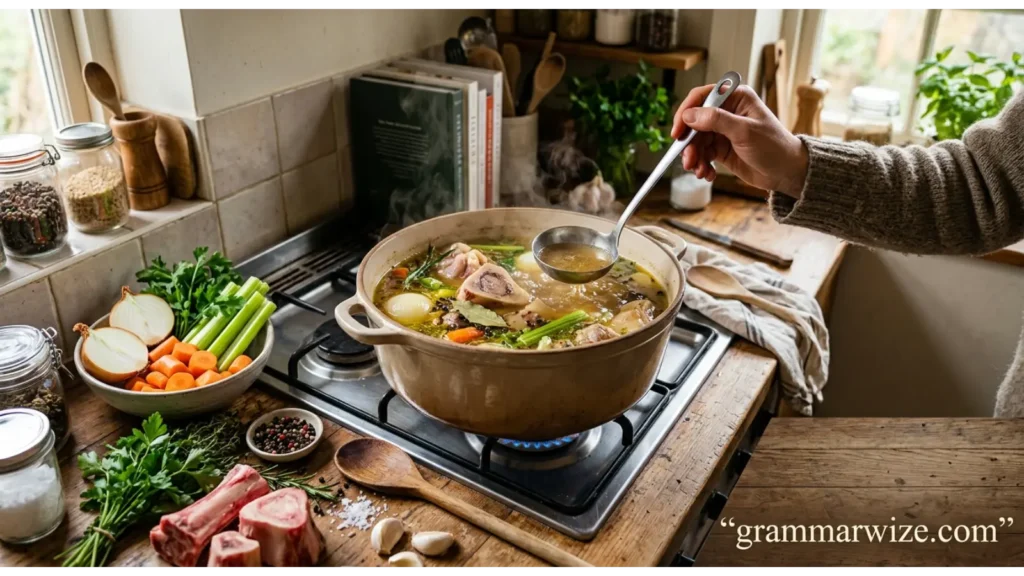
What Is Broth?
Broth is a flavorful liquid made by simmering meat, vegetables, herbs, and other ingredients in water.
Broth is commonly seasoned during cooking. Because of this, it can often be served directly as a soup or warm drink.
Broth may contain pieces of meat or vegetables. It can also be strained and used as a cooking liquid.
Examples of Broth
- Chicken broth can be served as a simple soup.
- Beef broth can be used in noodle dishes.
- Vegetable broth can flavor grains and soups.
- Mushroom broth can add savory flavor to vegetarian meals.
Stock vs Broth: Key Difference
| Feature | Stock | Broth |
|---|---|---|
| Main ingredients | Usually bones and vegetables | Usually meat, vegetables, and seasonings |
| Main purpose | Building flavor and body | Cooking or serving as a flavorful liquid |
| Seasoning | Often lightly seasoned or unseasoned | Usually seasoned |
| Texture | Often richer and thicker | Usually lighter |
| Gelatin | Often higher because of bones | Usually lower |
| Served alone | Less common | Very common |
| Common uses | Sauces, gravies, soups, stews | Soups, drinks, rice, noodles |
How Are Stock and Broth Made?
The preparation method explains much of the difference.
How Stock Is Made
Stock is generally prepared by simmering bones with vegetables and aromatic ingredients in water.
The bones may be roasted first. Roasting creates deeper flavors and gives some stocks a darker color.
The ingredients are then simmered slowly. This allows flavor and collagen to move into the liquid.
After cooking, the solid ingredients are usually removed. The finished stock can then be used in another recipe.
How Broth Is Made
Broth is generally prepared by simmering meat, vegetables, herbs, and seasonings in water.
The cooking time can vary depending on the ingredients. Once the liquid has developed enough flavor, it can be strained or served with some of the ingredients.
Because broth is commonly seasoned, it can be enjoyable on its own.
Why Does Stock Become Gelatinous?
One important difference between stock and broth comes from collagen.
Bones, cartilage, and connective tissues contain collagen. Long, slow cooking can break down this collagen and release it into the liquid.
When the stock cools, the collagen can turn into gelatin. This may give the stock a soft, jelly like texture.
When reheated, the gelatin melts again and creates a rich mouthfeel.
Broth can also contain gelatin if it is made with bones or connective tissue. Therefore, gelatin is a useful distinction, but it does not create an absolute rule.
Can You Drink Stock?
Yes, you can drink stock, but it may not taste as pleasant on its own as a well seasoned broth.
Stock is often designed to become part of another dish. It may contain little salt because the final recipe will provide additional seasoning.
If you want to drink stock, you can season it with salt, herbs, spices, or other ingredients.

Can You Use Broth Instead of Stock?
Yes, in many recipes you can use broth instead of stock.
However, the result may be slightly different.
Broth is often more heavily seasoned. It can therefore make a dish saltier or change its flavor.
Stock may also provide more body because of its gelatin content.
If a recipe calls for stock and you only have broth, you can usually make the substitution without a major problem. Just taste the dish before adding more salt.
Can You Use Stock Instead of Broth?
Yes, stock can often replace broth.
The main adjustment may be seasoning. Stock can be less salty and less seasoned than broth.
If you use stock in a soup recipe that calls for broth, taste the finished liquid and adjust the seasoning.
This simple step can prevent a bland result.
When Should You Use Stock?
Stock works especially well when you want body, depth, and a strong base.
Use stock for:
- Gravies
- Sauces
- Risotto
- Soups
- Stews
- Braised dishes
- Pan sauces
- Rice dishes
For example:
The chef used beef stock to make a rich gravy.
Here, stock acts as a foundation for another preparation.
When Should You Use Broth?
Broth works especially well when you want a ready to eat, seasoned liquid.
Use broth for:
- Simple soups
- Noodle dishes
- Rice
- Dumplings
- Warm drinks
- Quick sauces
- Cooking grains
For example:
She warmed chicken broth and served it with noodles.
Here, the broth is already flavorful enough to form part of the finished dish.
Stock or Broth for Soup
Both can be used for soup.
Stock is useful when you want a richer base and plan to add your own seasonings and ingredients.
Broth is convenient when you want a flavorful liquid that needs little additional seasoning.
For a homemade soup, either option can work well. Your choice depends on the flavor and texture you want.
Stock or Broth for Gravy
Stock is often a natural choice for gravy because it can provide body and depth.
Beef stock is commonly used for beef based gravies. Chicken stock can be used for poultry dishes.
Broth can also work, especially when you want a lighter gravy. However, check its salt level before adding more seasoning.
Stock or Broth for Cooking Rice
Both stock and broth can be used to cook rice.
Using either one instead of plain water can add extra flavor.
Choose stock when you want a deeper base without too much seasoning. Choose broth when you want the cooking liquid itself to contribute more seasoning.
For example:
The rice was cooked in chicken broth for extra flavor.
Are Stock and Broth the Same?
No, stock and broth are traditionally different, but the terms overlap.
Stock is generally associated with bones and a rich, gelatinous body. Broth is generally associated with meat, vegetables, and seasoning.
Modern food products do not always follow these traditional distinctions. A packaged product labeled “broth” may contain bones, while a product labeled “stock” may be seasoned.
This means the label alone does not always tell you exactly how the liquid was made.
Common Mistakes
Mistake 1: Thinking Stock Is Always Unseasoned
Stock is often less seasoned than broth, but this is not an absolute rule.
Some commercial stocks contain salt and other seasonings.
Mistake 2: Thinking Broth Never Contains Bones
Broth can contain bones.
The traditional distinction is based on typical preparation, not a strict ingredient law.
Mistake 3: Assuming Stock Is Always Thick
Stock can be rich and gelatinous, but it may also be quite thin when hot.
Its texture depends on the ingredients, cooking time, and concentration.
Mistake 4: Believing You Cannot Substitute Them
Stock and broth can often be substituted for one another.
The biggest concerns are flavor, salt, and texture.
Mistake 5: Adding Too Much Salt
This is especially important when replacing stock with broth.
Broth is often already seasoned. Taste your dish before adding extra salt.
Stock or Broth in Professional Cooking
Professional kitchens often use stock as a foundation for sauces, soups, reductions, and other preparations.
Chefs may prepare stocks in advance and use them throughout service.
Broth can also have an important role in professional cooking. It may be served directly, used in soups, or added to dishes for extra flavor.
In professional writing, recipes should identify the specific liquid when the distinction affects the result.
For example, “unsalted chicken stock” gives more useful information than simply saying “liquid.”
Stock or Broth in Everyday Conversation
In everyday English, people often use stock and broth loosely.
A person may call a homemade bone based liquid broth. Another person may call it stock.
Food companies also use the terms differently across products and markets.
Therefore, context matters.
If you are discussing traditional culinary techniques, the distinction is useful. In casual conversation, the two terms may be treated as interchangeable.
A Simple Way to Remember the Difference
Think of stock as a foundation and broth as a finished flavor.
Stock = body and base
Broth = flavor and serving
This is not a perfect rule, but it is an easy way to remember the traditional difference.
Another memory trick is:
Stock supports a recipe. Broth can stand on its own.
Real Life Examples
Making Gravy
Use stock when making gravy from meat drippings.
Stock can add body and depth to the finished sauce.
Making Chicken Soup
Use broth when you want a quick, flavorful soup.
Seasoned chicken broth can provide an easy starting point.
Cooking Risotto
Use stock to gradually cook the rice.
The liquid adds flavor while the rice releases starch and develops its creamy texture.
Making Noodles
Use broth when you want the cooking liquid to become part of the dish.
A seasoned broth can become the base of a noodle soup.
Preparing a Sauce
Use stock when you want to build a sauce from the ground up.
You can reduce the stock and add other ingredients to create the desired flavor.
Stock or Broth: Which Word Should You Use?
Use stock when you mean a cooking liquid traditionally made with bones and used as a base for other foods.
Use broth when you mean a seasoned liquid commonly made with meat and vegetables that can be served by itself.
However, do not assume that every product follows these traditional definitions.
When buying packaged products, check the ingredients, sodium content, and intended use instead of relying only on the name.
Frequently Asked Questions
Is stock healthier than broth?
Neither is automatically healthier. Nutrition depends on the ingredients, preparation method, serving size, and amount of sodium.
Is broth more flavorful than stock?
Broth is often more heavily seasoned, so it may taste more flavorful when served alone. Stock can have a deeper body and can develop more flavor when used in a finished recipe.
Can I substitute broth for stock?
Yes. Broth can usually replace stock in many recipes. Check the salt level before adding additional seasoning.
Can I substitute stock for broth?
Yes. Stock can replace broth in many dishes. You may need to add seasoning because stock can be less seasoned.
Which is better for soup, stock or broth?
Both can work. Use stock for a richer base and broth for a seasoned liquid that can be served more directly.
Does stock contain more gelatin than broth?
Traditional stock often contains more gelatin because it is commonly made with bones and connective tissue. However, the actual amount depends on how the liquid is prepared.
Is bone broth the same as stock?
Bone broth and stock are closely related, but the terms are not always used in exactly the same way. Bone broth is generally made by simmering bones for an extended period and is commonly prepared as a food that can be consumed on its own.
Conclusion
Stock and broth are closely related, but they have traditionally served different purposes.
Stock is generally made with bones and is valued for its body, richness, and gelatin. It is often used as a foundation for soups, sauces, gravies, and other dishes.
Broth is generally made with meat, vegetables, herbs, and seasonings. It is commonly flavorful enough to serve on its own.
The distinction is useful, but modern recipes and commercial products often blur the line. When choosing between them, consider the recipe, seasoning, texture, and final result you want.

Olivia Bennett is a grammar expert and language content writer at GrammarWize.com. She specializes in English grammar, word usage, spelling differences, and writing improvement. Through clear explanations and practical examples, Olivia helps students, professionals, and language learners communicate more effectively. Her goal is to make English grammar simple, accessible, and easy to apply in everyday writing.