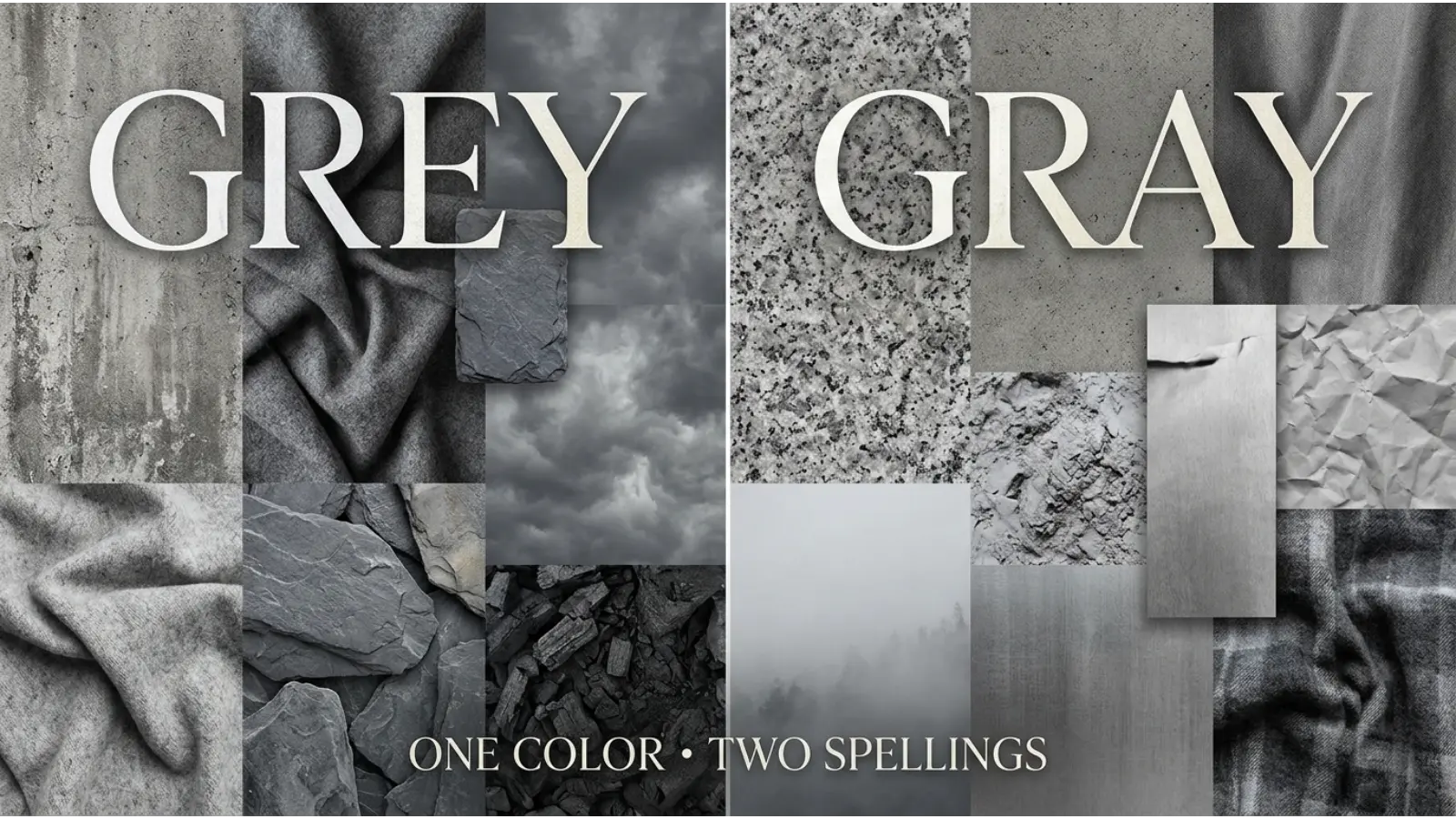
The color grey or gray is a common spelling question because both forms describe the same color. The difference comes mainly from regional English spelling conventions. British English usually prefers grey, while American English generally uses gray. Neither spelling is incorrect, and both appear in dictionaries. The best choice depends on your audience and the style guide you follow.
The Color Grey or Gray is a common spelling question that confuses writers, students, and English learners. Both spellings refer to the same color between black and white, but the correct choice depends on your audience. So, should you write grey or gray in your articles, emails, and everyday conversations? The answer is simple once you understand the difference between British and American English.
In American English, gray is the standard spelling, while grey is more common in British English. Both forms are correct, so neither is a spelling mistake. However, choosing the right version can improve your writing and keep it consistent. In this guide, you will discover the meanings of grey and gray, their origins, regional differences, and practical examples to help you choose the best spelling every time.
You may see grey in British books, newspapers, and websites. In American writing, gray is the more familiar form. Both words describe a color between black and white, as well as gray or grey hair and cloudy weather. Their pronunciation is also the same. Understanding this regional difference helps you write clearly and avoid unnecessary spelling changes. Once you know which form your audience expects, choosing the correct spelling becomes simple.
Quick Answer:
Grey is the preferred spelling in British English, while gray is the usual spelling in American English. Both words are correct and have the same meaning.
Examples:
- British English: The sky looks grey today.
- American English: The sky looks gray today.
What Does Grey Mean?
Grey is a color word commonly used in British English. It describes a shade between black and white. People also use it to describe cloudy weather, aging hair, and things that seem dull or unclear.
Examples:
- She wore a grey coat to work.
- His hair started turning grey in his thirties.
Grey can also appear in expressions such as “a grey area,” which describes a situation that is not clearly defined.
What Does Gray Mean?
Gray has the same meaning as grey, but it is the preferred spelling in American English. It can describe objects, clothing, hair, weather, and many other things.
Examples:
- The house has a gray roof.
- Dark gray clouds covered the sky.
American writers also use gray in expressions such as “gray area.” The meaning does not change when the spelling changes.

Grey vs Gray Comparison Table
| Feature | Grey | Gray |
|---|---|---|
| Main spelling region | British English | American English |
| Meaning | Color between black and white | Color between black and white |
| Pronunciation | /ɡreɪ/ | /ɡreɪ/ |
| Hair | Grey hair | Gray hair |
| Weather | Grey skies | Gray skies |
| Common expression | Grey area | Gray area |
| Correctness | Correct | Correct |
Why Are There Two Spellings?
The two forms developed from older English spellings of the same word. The word traces back to Old English, including forms such as grǣg. Over time, both grey and gray remained in use.
Different spelling preferences eventually became established in British and American English. Today, British English generally favors grey, while American English generally favors gray. The Oxford English Dictionary records this regional difference and the word’s Old English history. <Link url=”https://doi.org/10.1093/OED/2919413057” title=”Oxford English Dictionary: Grey and Gray”/>

Grey or Gray in British and American English
When to Use Grey
Choose grey when writing primarily for readers in the United Kingdom. It is also common in Ireland, Australia, and other places that follow British spelling conventions.
Examples:
- The cat has soft grey fur.
- We painted the bedroom light grey.
- Her grey sweater matched her shoes.
When to Use Gray
Choose gray when writing primarily for an American audience. It is the standard spelling in most US publications and American educational materials.
Examples:
- The designer selected a gray background.
- My new car is metallic gray.
- The artist mixed black and white to create gray paint.
Cambridge Dictionary identifies grey as mainly British and gray as the usual American spelling. <Link url=”https://dictionary.cambridge.org/dictionary/english/grey” title=”Cambridge Dictionary: Grey”/> <Link url=”https://dictionary.cambridge.org/dictionary/english/gray” title=”Cambridge Dictionary: Gray”/>
Dictionary Recommendations
Major dictionaries recognize both spellings. Their regional labels help readers select the form that fits their audience.
| Reference | Guidance |
|---|---|
| Cambridge Dictionary | Grey is mainly British; gray is American |
| Oxford English Dictionary | Records both spellings and their regional preferences |
| Oxford Advanced Learner’s Dictionary | Lists gray as American English and grey as especially British |
| Dictionary.com | Recognizes both forms, with gray common in the US and grey common in the UK |
The practical recommendation is straightforward. Use the spelling preferred by your target audience, and follow your publisher’s style guide when one exists.
Common Mistakes to Avoid
Mixing Both Spellings in One Article
Using grey in one paragraph and gray in another can make an article look inconsistent.
Better approach: Choose one spelling based on your audience and use it throughout the article.
Thinking One Spelling Is Incorrect
Some writers assume that grey is a misspelling of gray or the other way around.
Better approach: Remember that both forms are accepted English spellings.
Changing the Spelling Without Considering the Audience
A British publication may prefer grey, while an American publication usually expects gray.
Better approach: Check the publication’s spelling rules before editing the text.
Assuming the Two Words Describe Different Colors
Some people try to assign a different shade to each spelling. Modern everyday English does not generally make this distinction.
Better approach: Treat grey and gray as spelling variants, not separate colors.
Forgetting Related Words
Writers may also mix regional forms in related expressions or compound color names.
Better approach: Keep the spelling consistent in terms such as light grey, dark grey, light gray, and dark gray.
Easy Memory Trick
Use the first letters of the country names to remember the usual spelling:
- England uses grey.
- America uses gray.
This simple reminder can help you select the expected spelling quickly.
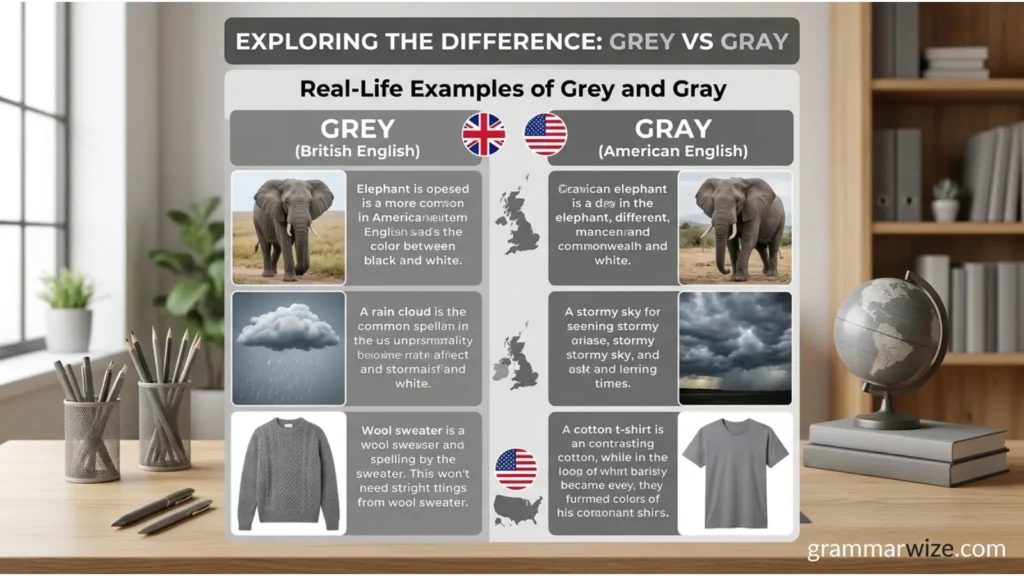
Real-Life Examples of Grey and Gray
In Everyday Conversation
British English: “I bought a grey jacket yesterday.”
American English: “I bought a gray jacket yesterday.”
Both sentences communicate exactly the same idea.
In Weather Reports
British English: “Grey skies are expected this afternoon.”
American English: “Gray skies are expected this afternoon.”
The regional spelling changes, but the weather description stays the same.
In Clothing Descriptions
British English: “She chose a light grey dress for the party.”
American English: “She chose a light gray dress for the party.”
Both versions are grammatically correct.
In Home Design
British English: “We painted the living room walls grey.”
American English: “We painted the living room walls gray.”
The correct choice depends on the spelling convention you follow.
In Professional Writing
British English: “The report describes a grey area in the current policy.”
American English: “The report describes a gray area in the current policy.”
Both forms are suitable for professional writing when used consistently.
Professional Writing Recommendation
For professional writing, follow the spelling conventions of your intended readers.
If you publish for a UK audience, use grey. If your main audience is in the United States, use gray. For international websites, choose a consistent spelling policy and apply it across your content.
Editors should also follow any required house style. Consistency matters more than choosing one spelling as universally correct.
Frequently Asked Questions
Is grey or gray the correct spelling?
Both are correct. Grey is the usual British spelling, while gray is the usual American spelling.
Is grey British or American English?
Grey is mainly associated with British English. It is also common in other English-speaking regions that follow British conventions.
Is gray the American spelling?
Yes. Gray is the standard spelling in American English, although American readers also recognize grey.
Do grey and gray have different meanings?
No. Both usually refer to the same color between black and white. Their spelling does not normally change their meaning.
Which spelling should I use for an international audience?
Choose one spelling convention and use it consistently. If your website targets a particular country, follow that country’s preferred spelling.
Conclusion
The color grey or gray is a regional spelling choice rather than a question of right or wrong. Grey is generally preferred in British English, while gray is standard in American English. Both spellings describe the same color and are accepted by major dictionaries.
For clear, professional writing, consider your audience and follow one spelling convention throughout your article. This simple habit keeps your writing consistent and helps readers focus on your message instead of spelling differences.

Olivia Bennett is a grammar expert and language content writer at GrammarWize.com. She specializes in English grammar, word usage, spelling differences, and writing improvement. Through clear explanations and practical examples, Olivia helps students, professionals, and language learners communicate more effectively. Her goal is to make English grammar simple, accessible, and easy to apply in everyday writing.