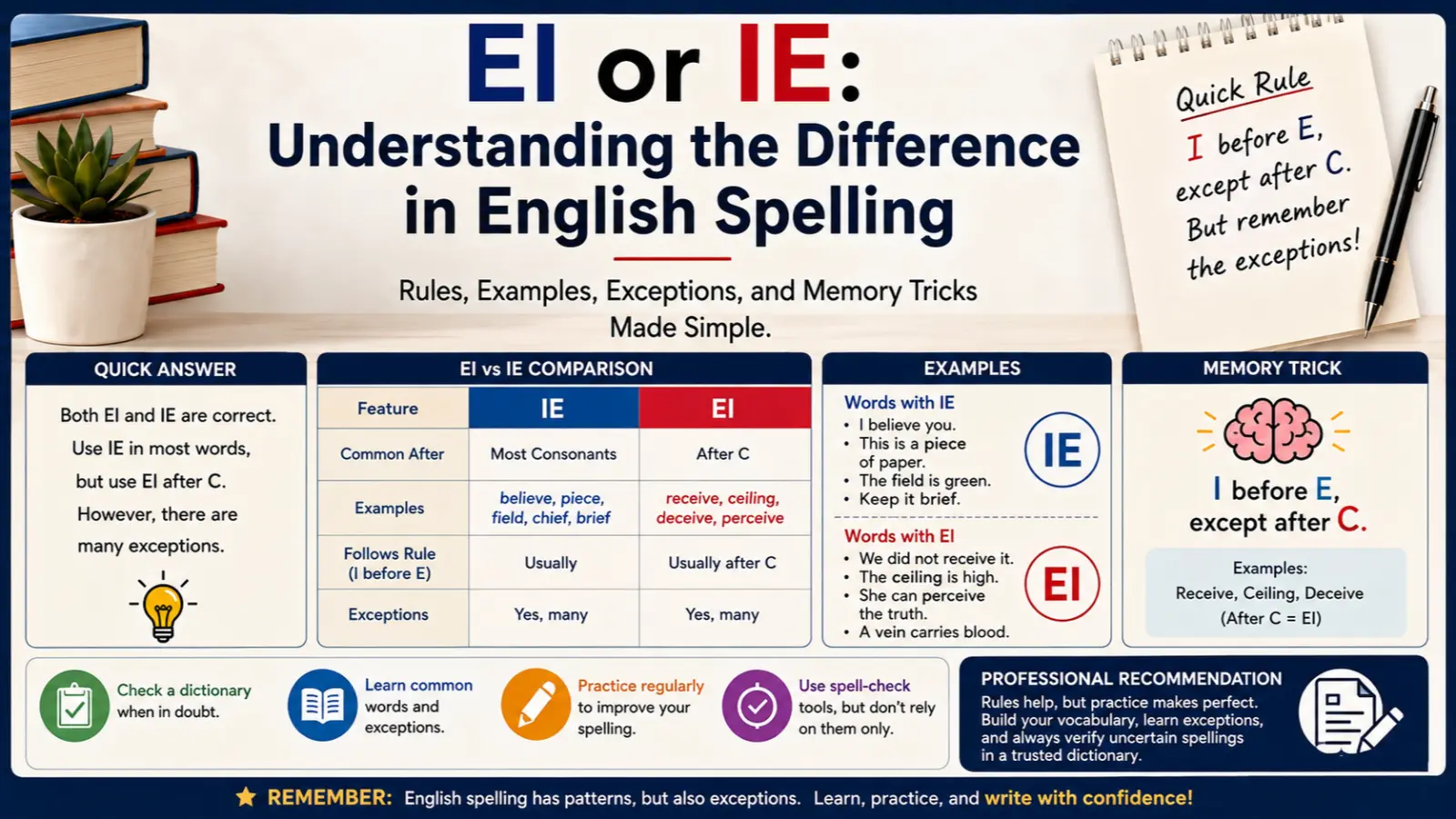
EI or IE is one of the most confusing spelling questions in English. Many writers hesitate when spelling words like receive, believe, friend, or ceiling because they are unsure which letter comes first.
EI or IE is a common spelling confusion that affects many English learners and native speakers alike. Words like receive, believe, their, and friend often make people wonder which letter combination is correct. Understanding the difference between EI and IE can help you avoid spelling mistakes and write with greater confidence.
In this guide, you’ll learn the simple rules behind EI or IE, explore common exceptions, and see real examples that make the concept easy to remember. By the end, you’ll have a clearer understanding of when to use each spelling pattern in everyday writing.
The confusion exists because English spelling developed from several languages over centuries. While there are useful spelling rules, there are also many exceptions. Understanding the patterns behind ei and ie can make spelling much easier and improve your writing accuracy.
Quick Answer
There is no single correct choice between ei and ie.
Both letter combinations are correct and appear in many English words.
A common guideline is:
I before E, except after C.
Examples:
- Believe
- Friend
- Piece
But:
- Receive
- Ceiling
- Deceive
Unfortunately, English contains many exceptions, so the rule is helpful but not perfect.
What Do EI and IE Mean?
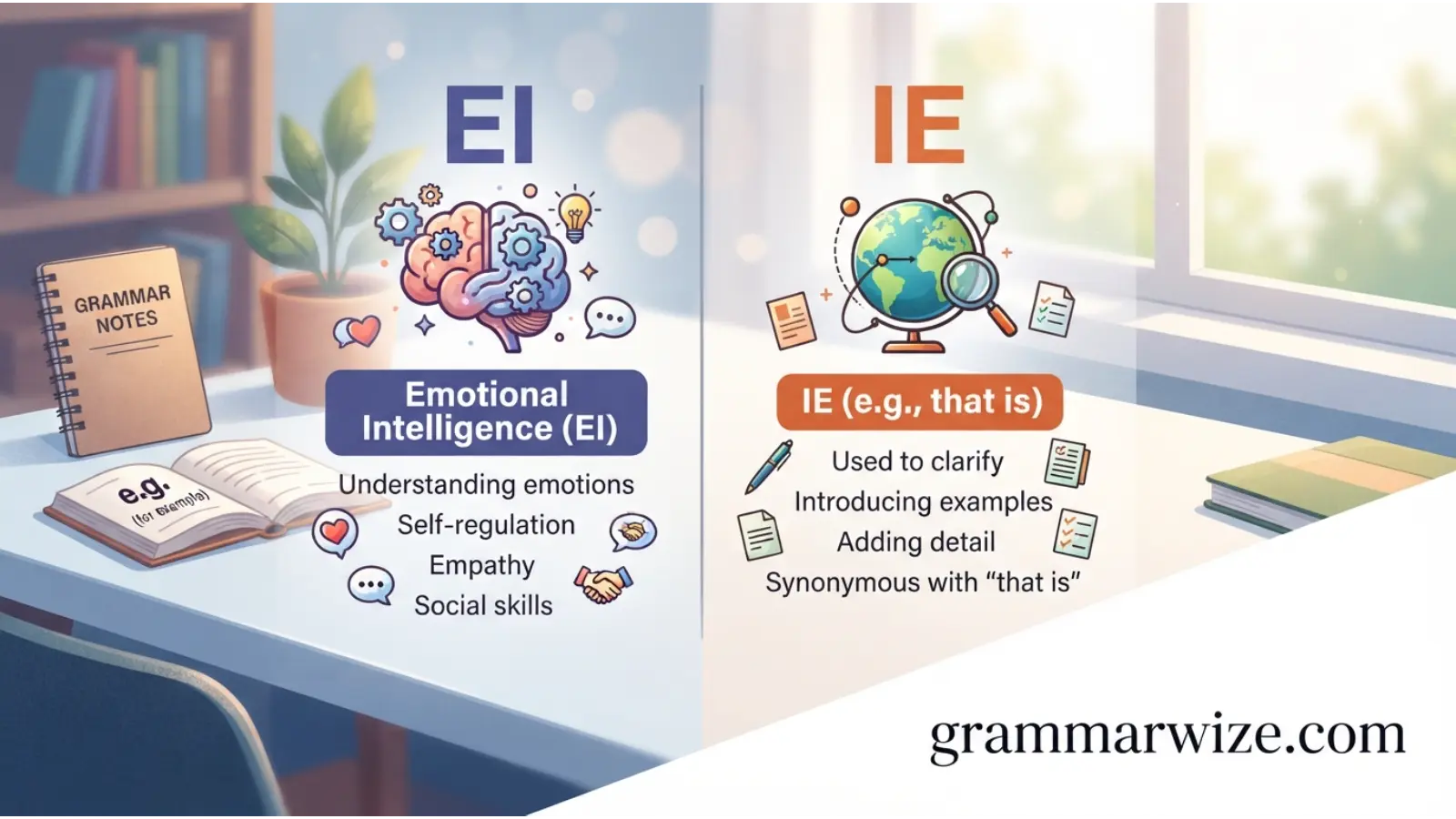
EI and IE are letter combinations used within English words. They do not have meanings by themselves.
Examples with IE:
- Believe
- Field
- Brief
- Piece
Examples with EI:
- Receive
- Ceiling
- Perceive
- Vein
The challenge comes from remembering which combination belongs in a specific word.
EI vs IE Comparison Table
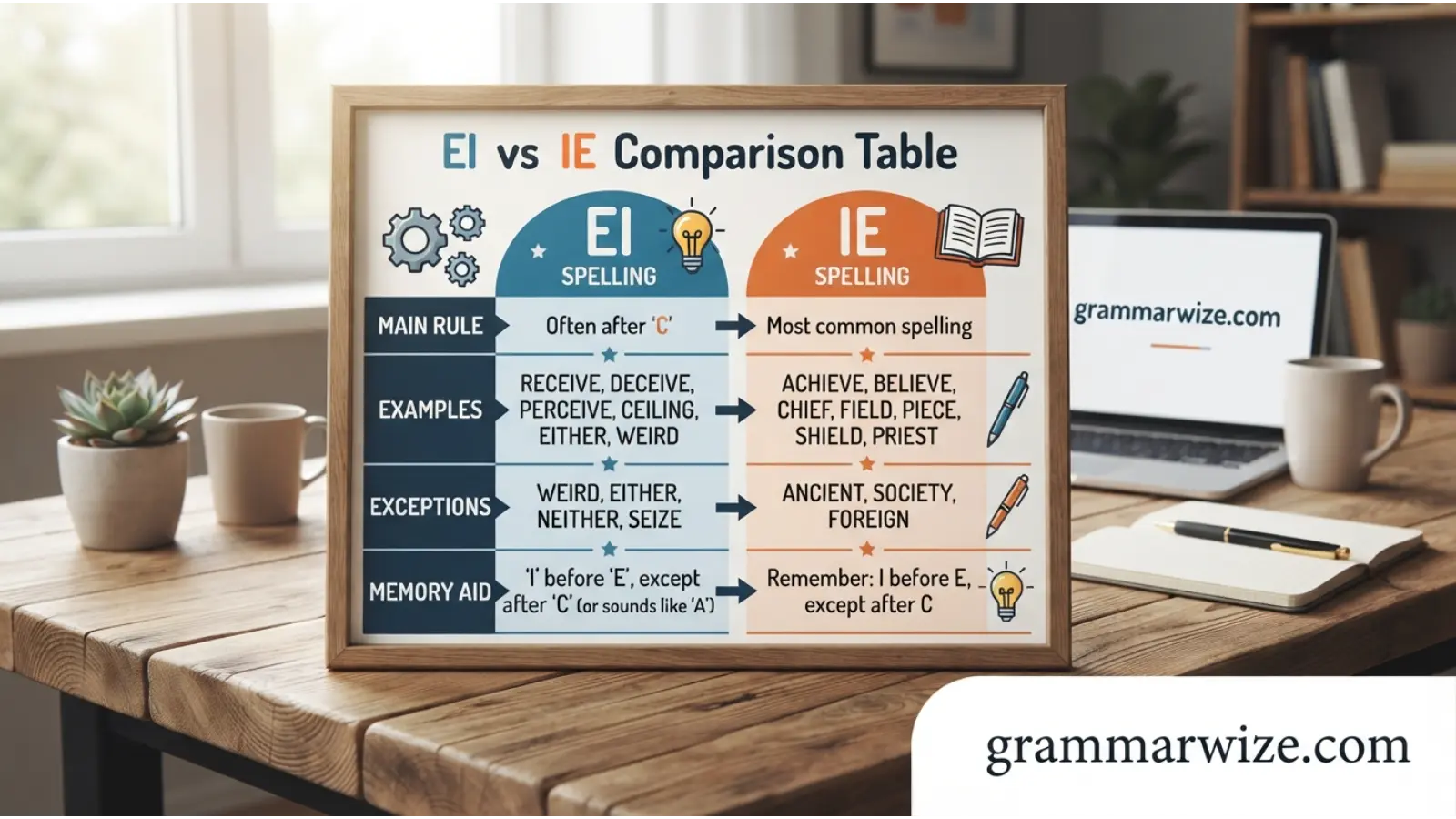
| Feature | IE | EI |
|---|---|---|
| Common after most consonants | Yes | Sometimes |
| Common after the letter C | Rare | Yes |
| Examples | believe, field, piece | receive, ceiling, deceive |
| Follows traditional spelling rule | Usually | Usually after C |
| Has exceptions | Yes | Yes |
Origin of the EI and IE Rule

The famous spelling rule originated as a teaching aid rather than an official grammar rule.
The traditional version is:
“I before E except after C.”
Teachers used this rule to help students remember common spelling patterns. Over time, it became one of the most widely taught English spelling guidelines.
However, because English borrowed words from French, German, Latin, and many other languages, numerous exceptions appeared.
Why the Confusion Exists
Several factors make ei and ie difficult.
Multiple Language Origins
English words come from different languages. Each language brought its own spelling patterns.
Inconsistent Pronunciation
The same letter combinations can produce different sounds.
Examples:
- Piece
- Friend
- Height
- Vein
Many Exceptions
Words such as:
- Weird
- Seize
- Their
- Foreign
do not follow the traditional spelling rule.
Because of these exceptions, writers often rely on memory rather than rules alone.
Dictionary Recommendations
Major dictionaries recognize both ei and ie as valid spelling patterns depending on the word.
There is no dictionary preference for one combination over the other.
Instead, dictionaries list the accepted spelling for each individual word.
For example:
| Correct Word | Correct Pattern |
|---|---|
| Believe | IE |
| Receive | EI |
| Friend | IE |
| Ceiling | EI |
| Weird | EI |
| Piece | IE |
Professional writers should always verify uncertain spellings in a trusted dictionary.
Real Life Examples
Words Using IE
- I believe your answer is correct.
- She carried a piece of cake.
- The field looked beautiful in spring.
- Please keep this brief.
Words Using EI
- We did not receive the package.
- The ceiling needs painting.
- They could perceive the difference.
- A vein carries blood through the body.
Common Mistakes
Incorrect
- Recieve
- Beleive
- Freind
- Percieve
Correct
- Receive
- Believe
- Friend
- Perceive
These errors appear frequently in emails, assignments, and professional documents.
Memory Trick
A useful starting point is:
I before E, except after C.
Examples:
- Believe
- Piece
- Chief
After C:
- Receive
- Ceiling
- Conceit
Then remember that English has exceptions such as:
- Weird
- Their
- Foreign
- Seize
Treat the rule as a guide rather than an absolute law.
Professional Writing Recommendation
For professional writing, avoid guessing.
If you are uncertain about a spelling:
- Check a dictionary.
- Use spell-check tools.
- Learn commonly used words individually.
Professional editors rarely depend solely on the “I before E” rule because exceptions are too common.
Frequently Asked Questions
Is EI more correct than IE?
No. Both are correct spelling patterns depending on the word.
Does the rule “I before E except after C” always work?
No. It works for many words but has several well-known exceptions.
Why is “weird” spelled with EI?
The word comes from historical spelling patterns that do not follow the traditional rule.
Is “receive” spelled with EI or IE?
The correct spelling is receive with EI.
Is “believe” spelled with EI or IE?
The correct spelling is believe with IE.
What is the easiest way to remember EI and IE?
Learn the common rule, then memorize frequently used exceptions separately.
Conclusion
The question of EI or IE does not have a single answer because both spelling patterns are correct in English. The traditional rule “I before E except after C” can help with many words, but exceptions are common. The best approach is to understand the pattern, learn frequently used words, and confirm uncertain spellings with a reliable dictionary. Doing so will improve accuracy and confidence in both academic and professional writing.

Olivia Bennett is a grammar expert and language content writer at GrammarWize.com. She specializes in English grammar, word usage, spelling differences, and writing improvement. Through clear explanations and practical examples, Olivia helps students, professionals, and language learners communicate more effectively. Her goal is to make English grammar simple, accessible, and easy to apply in everyday writing.