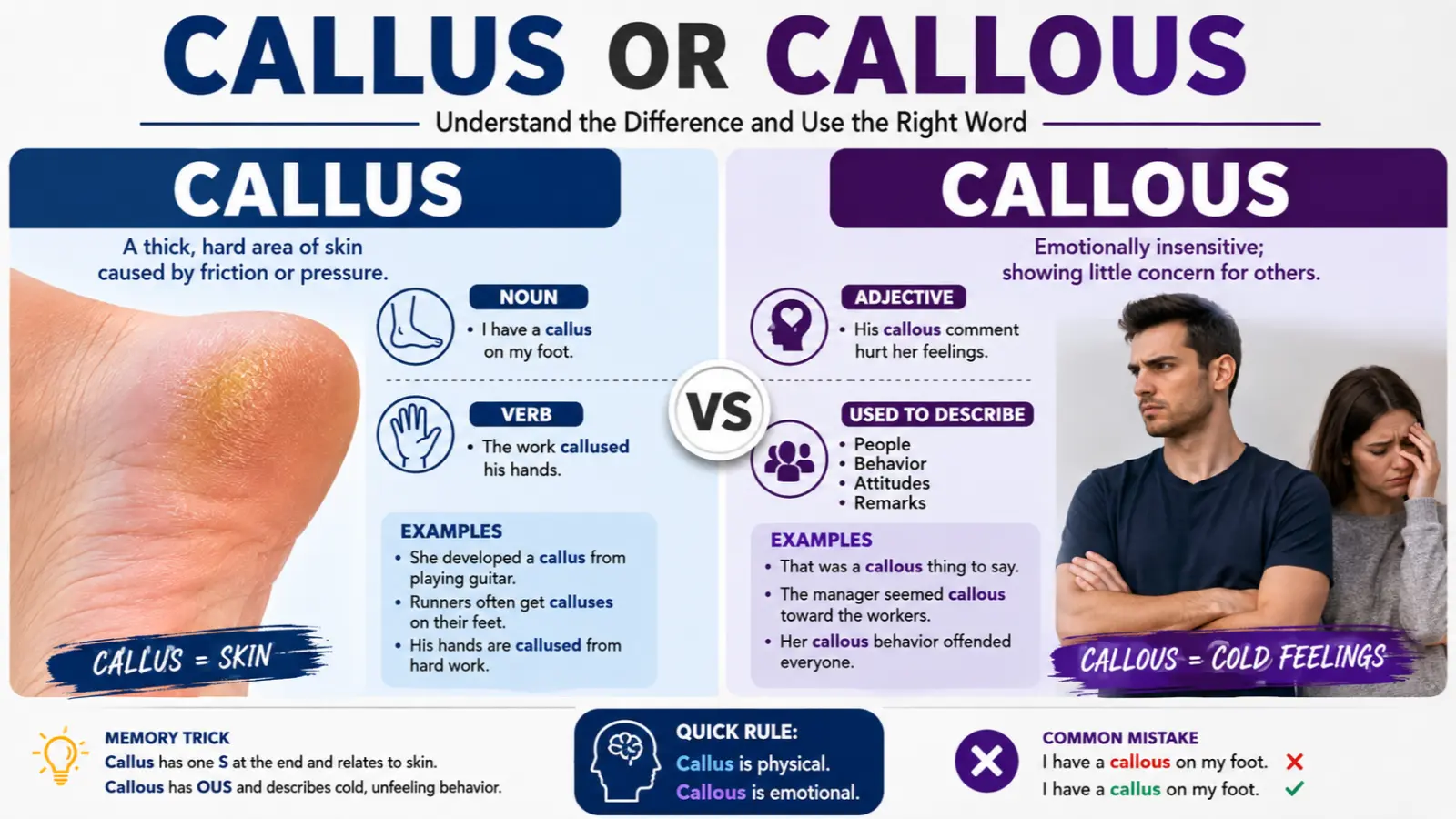
Callus and callous look and sound similar, but they have different meanings and uses. The main difference is simple: callus is usually a thickened area of skin, while callous describes someone or something that is emotionally insensitive or unfeeling.
Callus or Callous can be confusing because these words sound almost the same but have different meanings. Callus usually refers to a thick, hardened area of skin, while callous describes someone who is emotionally insensitive or uncaring.
Understanding the difference between callus and callous helps you choose the right word in writing. This guide explains their meanings, spelling, pronunciation, and simple examples so you can use each word correctly.
This guide explains the difference between callus or callous with simple rules, examples, common mistakes, and memory tips. By the end, you will know exactly which word fits your sentence.
Callus Meaning
Callus is mainly a noun that means a thick, hard area of skin. It often develops because of repeated pressure, friction, or rubbing.
For example:
- The runner developed a callus on his foot.
- She has a small callus on her finger.
- Wearing tight shoes can cause calluses.
The plural form is calluses.
Callus as a Verb
Callus can also work as a verb. It means to make the skin become thick and hard.
For example:
- Repeated lifting callused his hands.
- Her fingers became callused from playing the guitar.
So, callus can refer to both the hardened skin and the process of making skin harder.
Callous Meaning
Callous is an adjective. It describes someone who shows little concern for other people’s feelings or suffering.
For example:
- His callous comment upset everyone.
- The manager seemed callous toward the workers.
- It was callous to laugh at someone’s problem.
Callous can also describe behavior, remarks, decisions, or attitudes.
The related noun is callousness, which means a lack of sympathy or concern.
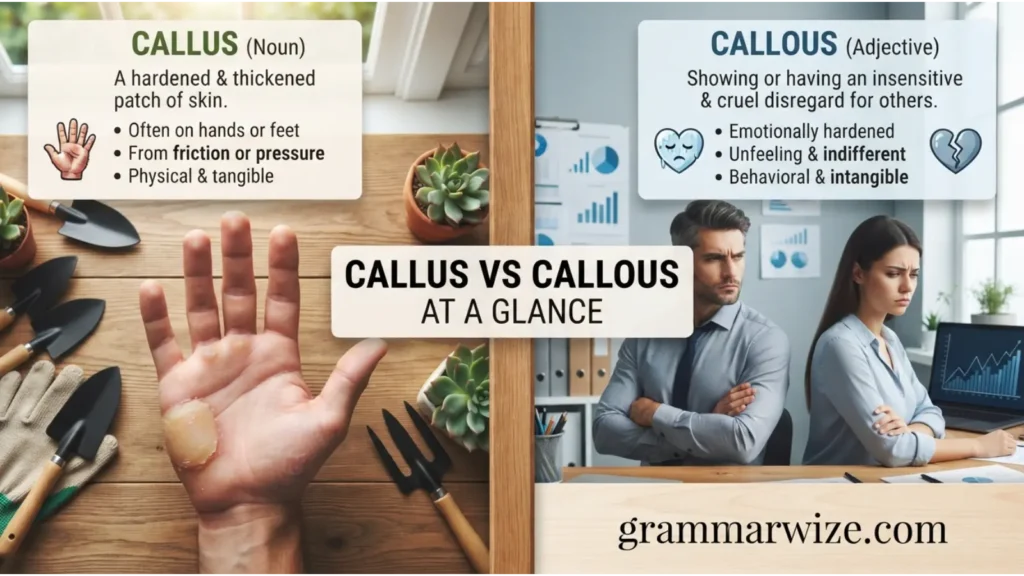
Callus vs Callous at a Glance
| Word | Part of Speech | Main Meaning | Example |
|---|---|---|---|
| Callus | Noun | A thick area of skin | I have a callus on my heel. |
| Callus | Verb | To make skin thick or hard | Hard work callused his hands. |
| Callous | Adjective | Emotionally insensitive | His callous words hurt her. |
The easiest rule is:
Callus = skin.
Callous = feelings.
The Grammar Difference
The two words do not normally serve the same grammatical purpose.
Callus is commonly used as a noun.
The doctor examined the callus on my foot.
It can also be used as a verb.
The repeated friction callused her hands.
Callous is an adjective.
That was a callous decision.
You can use callous before a noun to describe a person, action, comment, or attitude.
He made a callous remark.
This grammatical difference helps you choose the correct spelling.

How to Use Callus in a Sentence
Use callus when you are talking about thick or hardened skin.
Examples
- The dancer had a callus on her toe.
- I developed a callus after using the tools every day.
- His hands were covered with calluses.
- The shoes caused a painful callus.
- Guitar players sometimes develop calluses on their fingertips.
Here, the word is connected to physical skin.

How to Use Callous in a Sentence
Use callous when you are describing a lack of sympathy, kindness, or emotional concern.
Examples
- Her callous response surprised me.
- The company made a callous decision.
- His callous behavior offended his friends.
- That was a callous thing to say.
- The character appears cold and callous.
Here, the word is connected to emotions, attitudes, or behavior.
Common Mistakes With Callus and Callous
A common mistake is using callous when talking about hardened skin.
Incorrect:
I have a callous on my foot.
Correct:
I have a callus on my foot.
Another mistake is using callus when describing an insensitive person.
Incorrect:
He is very callus toward other people.
Correct:
He is very callous toward other people.
The spelling changes because the meanings are different.
Callus or Callous in Professional Writing
In professional writing, choosing the correct word matters because the two words can completely change the meaning of a sentence.
Use callus in contexts involving:
- Skin care.
- Medicine.
- Sports.
- Exercise.
- Manual work.
- Foot health.
Use callous in contexts involving:
- Workplace behavior.
- Social situations.
- Emotional responses.
- Leadership.
- Ethics.
- Personal relationships.
For example:
The athlete developed a callus from regular training.
But:
The supervisor made a callous decision.
Both sentences are correct, but they discuss completely different ideas.
Callus and Callous in Everyday Conversation
These words can appear in ordinary conversations.
Talking about skin:
“I have a painful callus on my heel.”
Talking about someone’s behavior:
“That was a really callous thing to say.”
The surrounding meaning usually makes the correct word clear.
A Simple Memory Trick
Use this memory trick:
Callus has one S at the end and relates to skin.
Think:
Callus = skin.
Callous has OUS and describes someone who is emotionally cold or insensitive.
Think:
Callous = cold feelings.
Another quick reminder is:
Callus is physical. Callous is emotional.
This distinction can help you remember the spelling and meaning.
Why Are Callus and Callous Confused?
The confusion comes from their similar spelling, pronunciation, and shared historical connection.
Both words are related to the idea of hardness. A callus is physically hardened skin. Callous developed an emotional meaning connected with being hardened or insensitive.
Today, however, they have clearly different uses.
Callus usually refers to physical skin.
Callous usually refers to emotional or social insensitivity.
Callus or Callous: Which One Is Correct?
Both words are correct. The right choice depends on your meaning.
Use callus when you mean a thick or hardened area of skin.
She has a callus on her hand.
Use callous when you mean insensitive, cruel, or lacking sympathy.
His callous attitude disappointed his team.
So, neither spelling is simply wrong. They are separate words with different meanings and grammatical roles.
Quick Comparison Examples
| Meaning | Correct Word | Example |
|---|---|---|
| Thick skin | Callus | A callus formed on my heel. |
| Hardened skin | Callus | The worker has calluses on his hands. |
| Make skin harder | Callus | The work callused his palms. |
| Emotionally insensitive | Callous | His callous response was hurtful. |
| Lacking sympathy | Callous | She criticized his callous behavior. |
| Unkind or uncaring | Callous | It was a callous remark. |
Frequently Asked Questions
Is callus or callous correct?
Both are correct words, but they have different meanings. Callus refers mainly to thickened skin, while callous describes emotional insensitivity.
Is a callus on your foot correct?
Yes. A callus is a thickened area of skin that can develop from repeated pressure or friction.
What does callous mean?
Callous means emotionally insensitive, uncaring, or lacking sympathy for others.
Is callous a noun or adjective?
Callous is an adjective. It describes a person, attitude, action, comment, or behavior.
Is callus a noun or verb?
Callus can be a noun or a verb. As a noun, it means hardened skin. As a verb, it means to make skin become thick or hard.
What is the plural of callus?
The common plural form is calluses.
Can callous describe a person?
Yes. You can describe someone as callous when they show little concern for other people’s feelings or suffering.
Conclusion
Callus and callous are both correct words, but they should not be used interchangeably. Callus relates mainly to thickened or hardened skin, while callous describes an insensitive or uncaring attitude.
Remember the simple rule: callus means hardened skin, while callous means emotionally hardened. This quick distinction will help you choose the right word in everyday, academic, and professional writing.

Olivia Bennett is a grammar expert and language content writer at GrammarWize.com. She specializes in English grammar, word usage, spelling differences, and writing improvement. Through clear explanations and practical examples, Olivia helps students, professionals, and language learners communicate more effectively. Her goal is to make English grammar simple, accessible, and easy to apply in everyday writing.