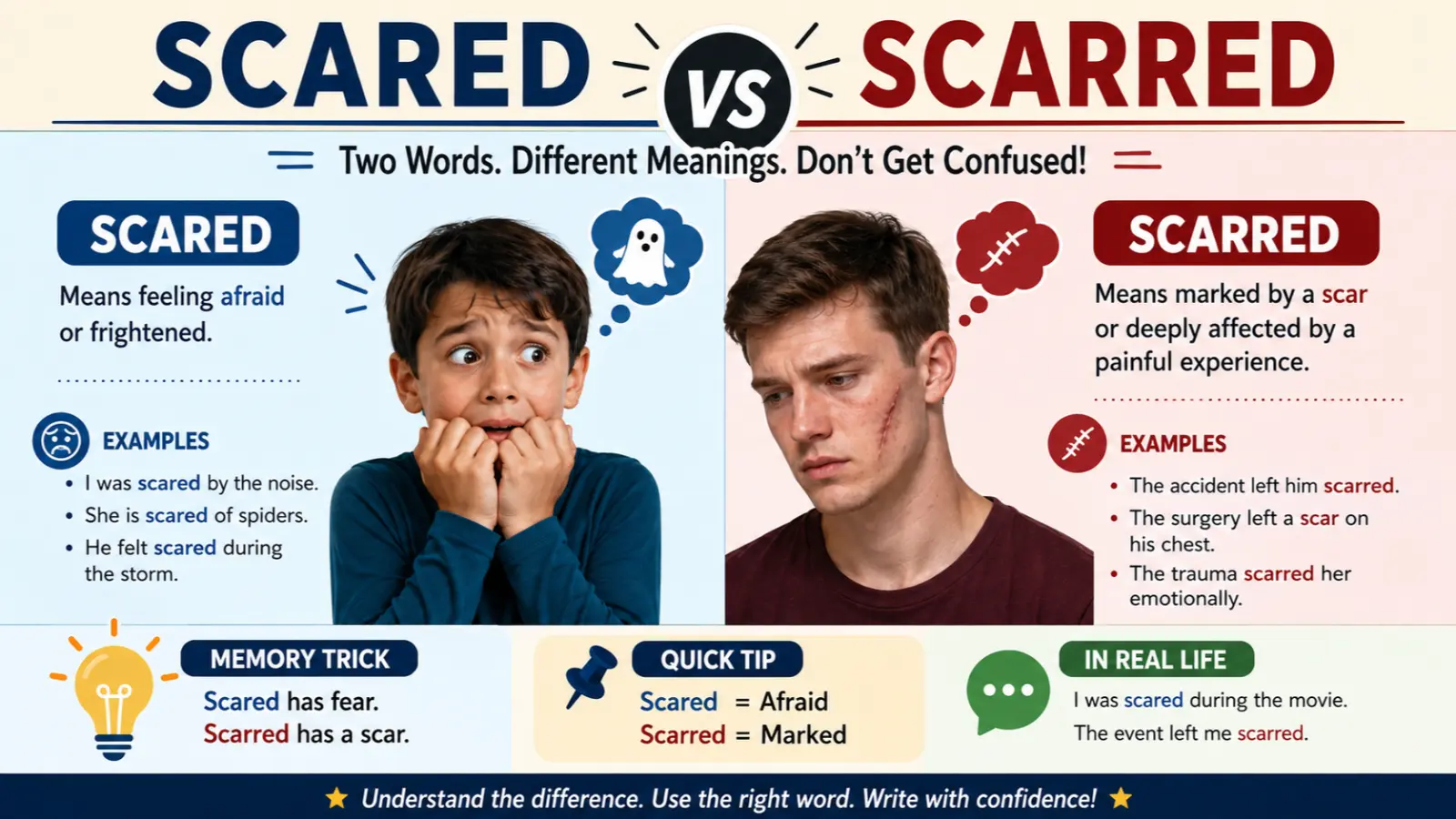
Scared or scarred are both correct English words, but they have very different meanings. This describes a feeling of fear, while scarred describes a lasting mark or damage caused by an injury, experience, or event.
Scared or scarred can be confusing because both words sound similar but have very different meanings.
Understanding the difference between scared and scarred helps you use each word correctly in everyday writing. In this guide, you will learn their meanings, examples, and simple ways to remember which word fits your sentence
These words are easy to confuse because they sound similar. The key is to connect scared with fear and scarred with a scar or lasting damage. This guide explains their meanings, grammar, sentence patterns, common mistakes, and everyday uses in simple English.
Scared Meaning and Usage
Scared is an adjective that means feeling afraid, frightened, or worried about something.
It describes an emotional reaction to a person, situation, event, or possible danger.
Examples:
- I was scared by the loud noise.
- The child is scared of dogs.
- She felt scared during the storm.
- He looks scared right now.
The word scared commonly appears with of when naming the thing that causes fear.
Common pattern:
scared + of + noun
- scared of spiders.
- scared of heights.
- scared of the dark.
- scared of flying.
It can also appear with to + verb.
- I am scared to ask.
- She was scared to drive.
- They were scared to go outside.
Scarred Meaning and Usage
Scarred is the past tense and past participle of scar. It can describe a physical mark left on the skin after an injury.
It can also describe emotional or psychological damage caused by a painful experience.
Examples:
- His face was scarred after the accident.
- The surgery left her with a small scar.
- The experience scarred him emotionally.
- The traumatic event scarred the child.
In simple terms, scarred means marked or deeply affected by something painful.
The word can describe both physical and emotional effects.
Scared vs Scarred at a Glance
| Word | Meaning | Part of Speech | Example |
|---|---|---|---|
| Scared | Feeling afraid | Adjective | I am scared of snakes. |
| Scarred | Having a physical or emotional mark | Adjective or verb form | The accident left him scarred. |
The extra r in scarred is an important clue. Think of scarred as connected to scar.
The Main Difference Between Scared and Scarred
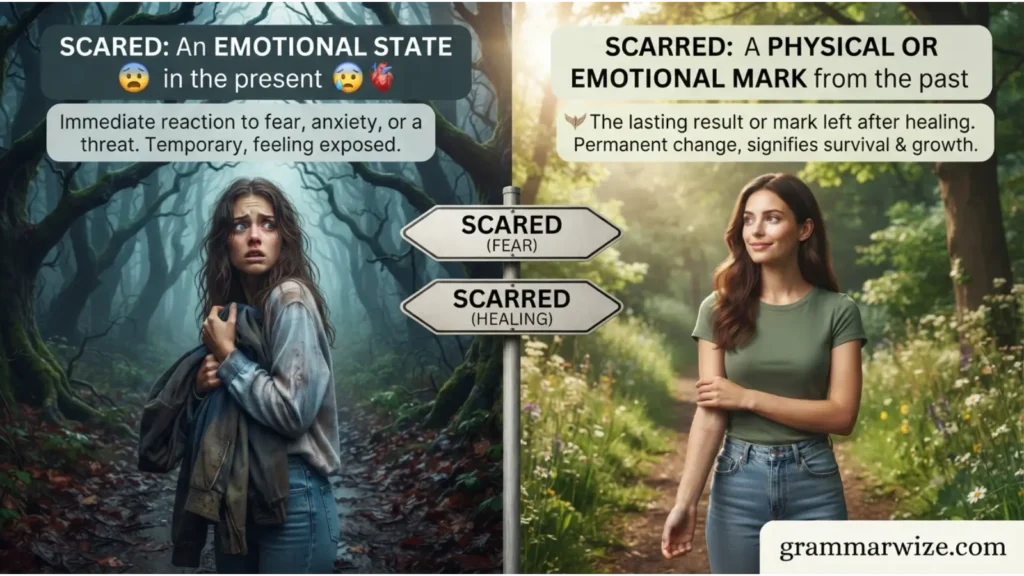
The simplest distinction is:
Scared = afraid.
Scarred = marked or deeply affected by something.
Consider these examples:
- I felt scared when I heard the crash.
- The accident scarred me.
In the first sentence, the person feels fear.
In the second sentence, the accident has left a lasting effect.
This difference makes the words easier to remember.
How Scared Works in a Sentence
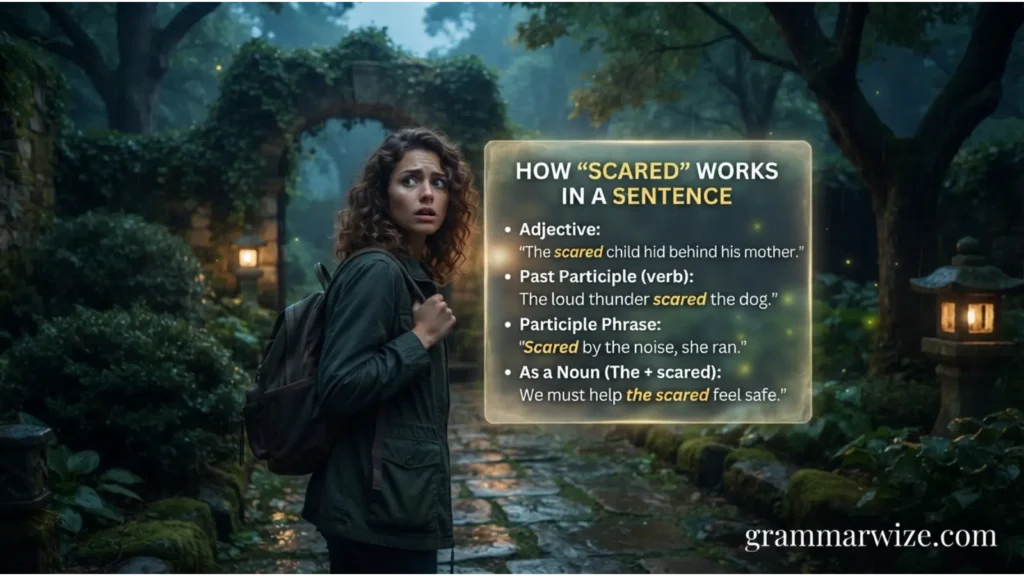
Scared usually functions as an adjective.
It can come after linking verbs such as be, feel, look, seem, and become.
Examples:
- She is scared.
- I feel scared.
- He looks scared.
- They became scared.
It can also modify a noun in some structures.
- A scared child ran toward her mother.
- The scared dog hid under the table.
The word often describes a temporary emotional state.
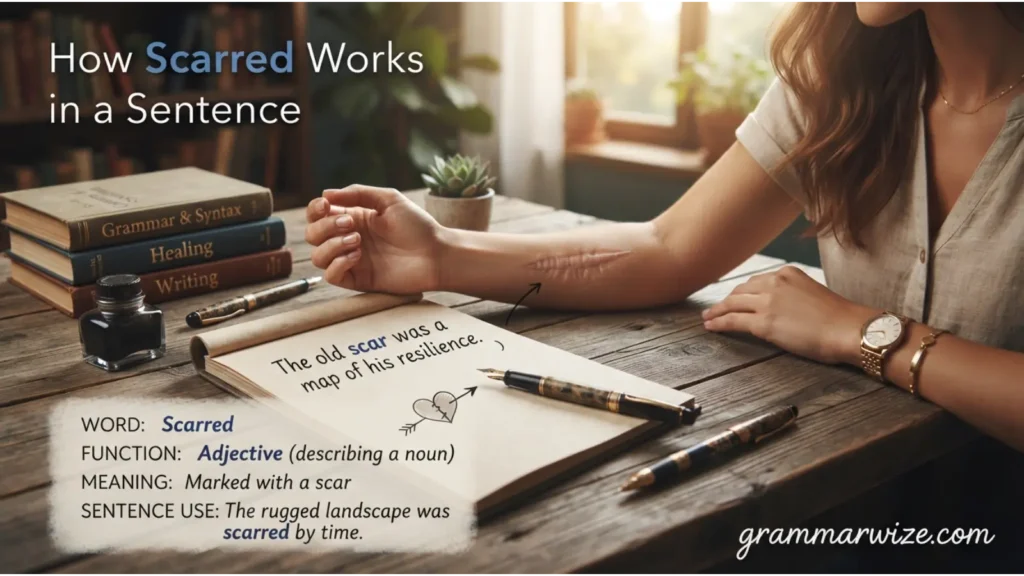
How Scarred Works in a Sentence
Scarred can work as an adjective or as the past form of the verb scar.
As an adjective:
- The experience emotionally scarred him.
- The injury badly scarred her hand.
As a verb:
- The accident scarred him.
- The injury scarred her face.
The context tells you if scarred refers to a physical mark or an emotional effect.
Common Mistakes With Scared and Scarred
A common mistake is using scarred when the intended meaning is fear.
Incorrect:
I was scarred when I saw the snake.
Correct:
I was scared when I saw the snake.
Another mistake is using scared when talking about a lasting mark.
Incorrect:
His arm was scared after the accident.
Correct:
His arm was scarred after the accident.
Remember that scared relates to fear, while scarred relates to scars or lasting harm.
Scared and Scarred in Professional Writing
Both words can appear in professional writing, but the meaning must remain clear.
Scared is more common in personal, conversational, and emotional contexts.
- The witness said, “I felt scared during the incident.”
Scarred may appear in medical, psychological, social, or descriptive writing.
- The injury left the patient permanently scarred.
In formal writing, choose the word that accurately describes the person’s condition or experience.
Scared or Scarred in Everyday Conversations
These words are common in daily speech.
Scared:
I was scared when the lights suddenly went out.
Scarred:
The accident left him scarred for years.
You can also use them together in one sentence.
She was scared during the accident and emotionally scarred afterward.
Here, scared describes the immediate feeling, while scarred describes the lasting effect.
Easy Memory Trick for Scared and Scarred
Use this simple trick:
Scared has fear.
Scarred has a scar.
The word scarred contains scar, which makes the meaning easier to remember.
Think:
Scared → afraid.
Scarred → scar.
If someone is afraid right now, use scared.
If something has left a lasting physical or emotional mark, use scarred.
Quick Comparison Examples
Here are some clear examples to reinforce the difference.
Fear:
- The movie scared me.
- The thunder scared her.
- The puppy looked scared.
- I am scared to speak in public.
Physical or emotional damage:
- The accident scarred his face.
- The injury scarred her arm.
- The experience left him emotionally scarred.
- Years of bullying scarred her confidence.
The meaning changes completely when you switch the words.
Scared or Scarred in Questions
Both words can naturally appear in questions.
Scared:
- Are you scared?
- What are you scared of?
- Why were you scared?
- Are you scared to go alone?
Scarred:
- Was his face scarred?
- Did the accident leave her scarred?
- Did the injury leave a bad scar?
- Did the experience emotionally scar him?
Use the question structure that matches the intended meaning.
Frequently Asked Questions
Is scared the same as scarred?
No. Scared means afraid or frightened. Scarred means physically marked or emotionally affected by something painful.
“Is scared the correct word?”
Yes. Scared is a standard English adjective that describes fear or worry.
The accident scarred his face.
Yes. Scarred is the past form of scar and can also function as an adjective.
How do I remember the difference?
Connect scared with fear and scarred with scar. The extra r in scarred helps you remember the connection.
A person can be both scared and scarred.
Yes. A person can feel scared during an event and become scarred by its lasting effects.
Which word describes fear?
Scared describes fear.
Which word describes an injury mark?
Scarred can describe a person or body part that has a scar or lasting mark.
Conclusion
Scared and scarred are both correct words, but they describe different ideas. Scared means feeling afraid, while scarred means having a physical or emotional mark caused by something harmful.
The easiest memory trick is simple: scared means afraid, and scarred connects to scar. Once you remember that difference, choosing the correct word becomes much easier.

Olivia Bennett is a grammar expert and language content writer at GrammarWize.com. She specializes in English grammar, word usage, spelling differences, and writing improvement. Through clear explanations and practical examples, Olivia helps students, professionals, and language learners communicate more effectively. Her goal is to make English grammar simple, accessible, and easy to apply in everyday writing.