The words signor and signer look similar, but they are not interchangeable. Their meanings, origins, and uses are different.
Signor is a title used for an Italian man. It is similar to Mr. in English. Signer, on the other hand, refers to someone who signs a document or uses sign language.
Signor or Signer can be confusing because both words look and sound similar, but they have completely different meanings. Signor is an Italian title used for a man, similar to “Mr.” in English, while signer refers to a person who signs a document, agreement, or other written material. Knowing this difference helps you choose the right word in formal writing, business communication, and everyday English.
If you are searching for Signor or Signer, you likely want to know which spelling is correct and when to use each word. In this guide, we explain their meanings, differences, common examples, and simple ways to remember them. By the end, you will know exactly when to use Signor and when signer is the right choice.
Knowing this difference can help you avoid confusing a person’s title with the person who signs something.
Quick Answer
Use signor when referring to an Italian man as a polite title.
Use signer for a person, organization, or country that signs a document. It can also mean a person who uses sign language.
Examples
- Signor Rossi will attend the meeting.
- The signer must complete the contract.
Signor Meaning
Signor is an Italian title for an adult man. In English, it can be translated as Mr. or used to refer to an Italian gentleman. Cambridge lists it as a polite title for a male adult.
It is commonly used before a man’s surname or name.
Examples
- Signor Bianchi arrived at the restaurant.
- The letter was addressed to Signor Romano.
When to Use Signor
Use signor when the context involves an Italian title or form of address.
It is not the word to use for someone who has signed a contract, form, petition, or agreement.
Signer Meaning
Signer is an English noun formed from the verb sign. It means a person who signs something, such as a document, letter, petition, or agreement. It can also describe someone who uses sign language.
Examples
- The signer must provide identification.
- Every signer received a copy of the agreement.
- The petition had hundreds of signers.
In formal writing, signatory can also be used for a person, country, or organization that has signed an official agreement.
Signor vs Signer
| Word | Meaning | Typical Use | Example |
|---|---|---|---|
| Signor | An Italian title for a man | Names and forms of address | Signor Rossi entered the room. |
| Signer | Someone who signs something | Documents and agreements | The signer approved the contract. |
| Signer | Someone who uses sign language | Communication | The signer communicated with the audience. |
The main difference is simple: signor is a title, while signer describes a person who signs or uses sign language.

Grammar and Sentence Structure
Both words function mainly as nouns, but they appear in different sentence patterns.
Signor as a Title
Signor normally appears before a man’s name or surname.
- Signor Ferrari is waiting outside.
- I spoke with Signor Conti yesterday.
It works much like other titles used before names.
Signer as a Noun
Signer can appear as the subject or object of a sentence.
- The signer completed the form.
- We contacted the signer of the agreement.
- The document requires two signers.
Oxford defines signer as a person who signs a document or letter.
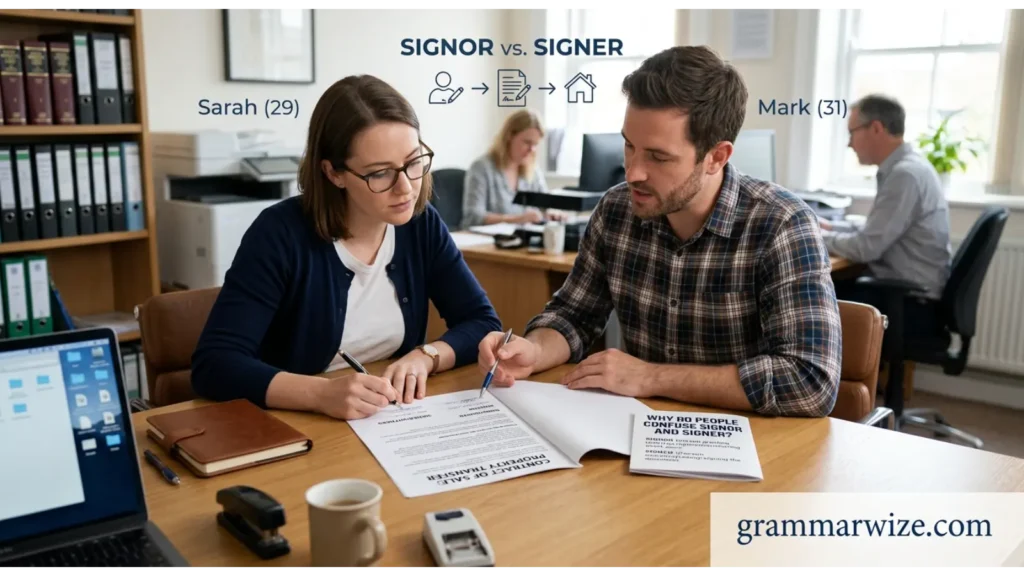
Why Do People Confuse Signor and Signer?
The confusion mainly comes from their similar spelling.
Both words begin with sign, and their pronunciation can also cause uncertainty. However, their histories and meanings are different.
Signor comes from Italian signore, ultimately related to Latin senior, meaning older. Signer developed in English from sign, referring to someone who signs.
So, the shared letters do not mean that the words have the same function.
Common Mistakes
Using Signor for Someone Who Signed a Document
Incorrect idea:
- The signor of the contract must provide identification.
Better:
- The signer of the contract must provide identification.
Using Signer as an Italian Title
Incorrect idea:
- Signer Rossi greeted the guests.
Better:
- Signor Rossi greeted the guests.
Confusing Signer With Signatory
Signer and signatory can both refer to someone who has signed an agreement. However, signatory is often preferred in formal contexts, especially for official agreements.
Assuming Signor Means Someone Who Signs
The spelling may suggest a connection with sign, but signor is an Italian title. It does not mean “person who signs.”
Professional and Formal Usage
For business documents, contracts, forms, and agreements, use signer when you mean the person who signs.
For highly formal legal or diplomatic writing, signatory may be more suitable when referring to a person, organization, or country that has signed an agreement.
Use signor only when the intended meaning is the Italian title.
Examples in Professional Writing
- The signer must initial every page.
- Each signer received a final copy.
- The authorized signatory approved the agreement.
- Signor Bianchi attended the formal dinner.
Real Life Examples
At a Restaurant
“Signor Romano, your table is ready.”
Here, signor is a title.
In a Contract
“The signer must agree to all terms.”
Here, signer means the person signing the contract.
With a Petition
“The petition had more than 500 signers.”
Here, signers are people who added their signatures.
In Formal International Writing
“The country became a signatory to the agreement.”
Here, signatory refers to a country that signed an official agreement.
In a Conversation
“Please ask the signer to complete this section.”
Here, signer refers to the person responsible for signing.

Signor, Signer, and Signatory
These three words are easy to separate once their meanings are clear.
Signor means an Italian title for a man.
Signer means someone who signs something or uses sign language.
Signatory means a person, organization, or country that has signed an official agreement.
For example:
Signor Rossi is the signer of the agreement.
This sentence uses both words correctly. Signor identifies the man’s title, while signer identifies his role in the document.
A Simple Memory Trick
Remember:
Signor = Mr.
Signer = signs
If you can replace the word with Mr., choose signor.
If you can replace it with a person who signs, choose signer.
For example:
- Signor Smith → Mr. Smith
- Signer Smith → Smith is the person who signed
This quick test can prevent most mistakes.
Dictionary Guidance
Cambridge identifies signor as an Italian title meaning “Mister” and signer as someone who has signed an official document or someone who uses sign language.
Oxford also defines signer as a person who signs a document or letter and includes its sign language meaning.
For formal documents, signatory is another established term. Oxford marks it as formal and defines it as a person, country, or organization that has signed an official agreement.
FAQs:
Is Signor the same as Signer?
No. Signor is an Italian title for a man. Signer refers to someone who signs something or uses sign language.
Is Signor a correct English word?
Yes. English uses signor as a borrowed Italian title, although it is specifically associated with Italian usage.
What does Signer mean?
A signer is someone who signs a document, letter, petition, or agreement. It can also mean someone who uses sign language.
Is Signatory the same as Signer?
They can have the same basic meaning when referring to someone who has signed an agreement. Signatory is often more formal.
How can I remember the difference?
Think Signor = Mr. and Signer = someone who signs.
Conclusion
Signor and signer are both correct words, but they serve different purposes.
Use signor for an Italian male title. Use signer for someone who signs a document or uses sign language. For formal agreements, signatory can be a suitable formal alternative to signer.
The easiest memory rule is Signor means Mr., while signer means someone who signs.

Olivia Bennett is a grammar expert and language content writer at GrammarWize.com. She specializes in English grammar, word usage, spelling differences, and writing improvement. Through clear explanations and practical examples, Olivia helps students, professionals, and language learners communicate more effectively. Her goal is to make English grammar simple, accessible, and easy to apply in everyday writing.