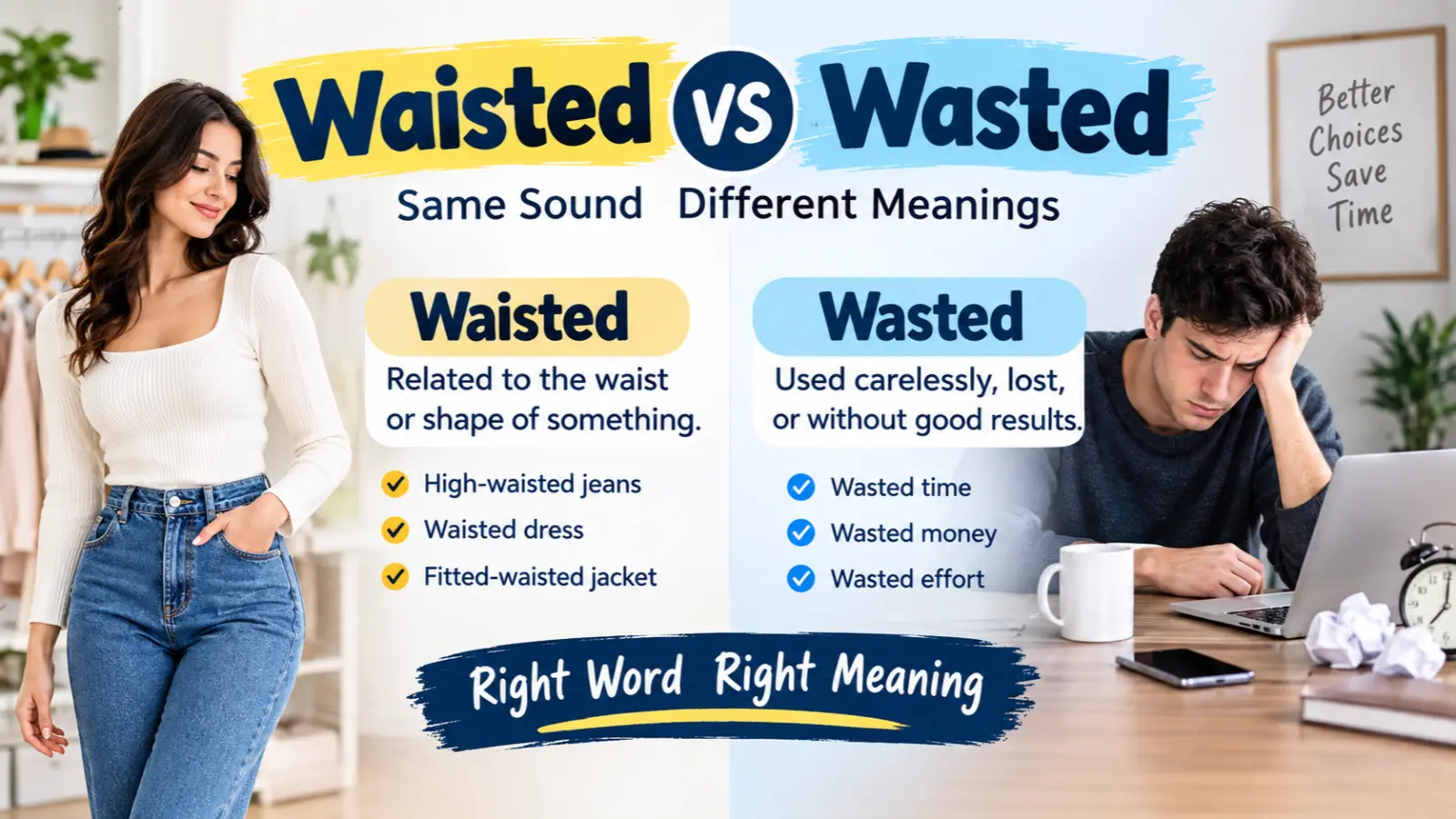
Waisted vs wasted is a common spelling comparison because both words sound alike but have different meanings. Waisted describes the shape or design of something around the waist. Wasted usually means something was used carelessly, lost, or spent without good results.
Waisted vs Wasted is a common spelling confusion because both words sound alike but have completely different meanings. If you are unsure which spelling to use, understanding their meanings can help you avoid mistakes in everyday writing.
Wasted is the correct word when talking about something used carelessly, lost, or consumed excessively. Waisted refers to something related to the waist, such as a dress that fits tightly around the waist. Knowing the difference between waisted vs wasted will help you choose the right word in emails, social media posts, and professional writing.
Both spellings are correct in English, but you cannot use them interchangeably. For example, a high-waisted dress describes clothing, while wasted time refers to time that was not used well. Understanding this difference helps you avoid mistakes in everyday conversations, school assignments, and professional writing.
Quick Answer
- Waisted: Describes something with a particular waist or waistline.
- Wasted: Means squandered, used without good results, depleted, or intoxicated, depending on context.
Examples:
- She wore a high-waisted skirt.
- We wasted an entire afternoon waiting.
What Does Waisted Mean?
Waisted is an adjective that describes something with a waist or a particular waist shape. It often appears in clothing and fashion descriptions.
It can refer to garments that have a defined, high, low, or narrow waistline.
Examples of Waisted
- She bought a beautiful high-waisted pair of jeans.
- The designer created a fitted, waisted jacket.
- The dress has a narrow, well-defined waist.
- He chose a low-waisted costume for the performance.
Common Expressions With Waisted
- High-waisted jeans
- High-waisted trousers
- Fitted-waisted dress
- Narrow-waisted design
- Low-waisted pants
The word often works as part of a compound adjective, especially when describing clothing styles.

What Does Wasted Mean?
Wasted is the past tense and past participle of the verb waste. It can describe something that was used carelessly, lost, or spent without achieving a useful result.
It also has other meanings, including becoming weak or depleted and being intoxicated in informal language.
Examples of Wasted
- I wasted too much money on unnecessary items.
- She felt that her effort had been wasted.
- The team wasted several chances to score.
- He was exhausted and looked completely wasted after the long journey.
Common Expressions With Wasted
- Wasted time
- Wasted money
- Wasted effort
- Wasted opportunity
- Wasted energy
In informal speech, wasted can also mean very drunk or under the influence of drugs.
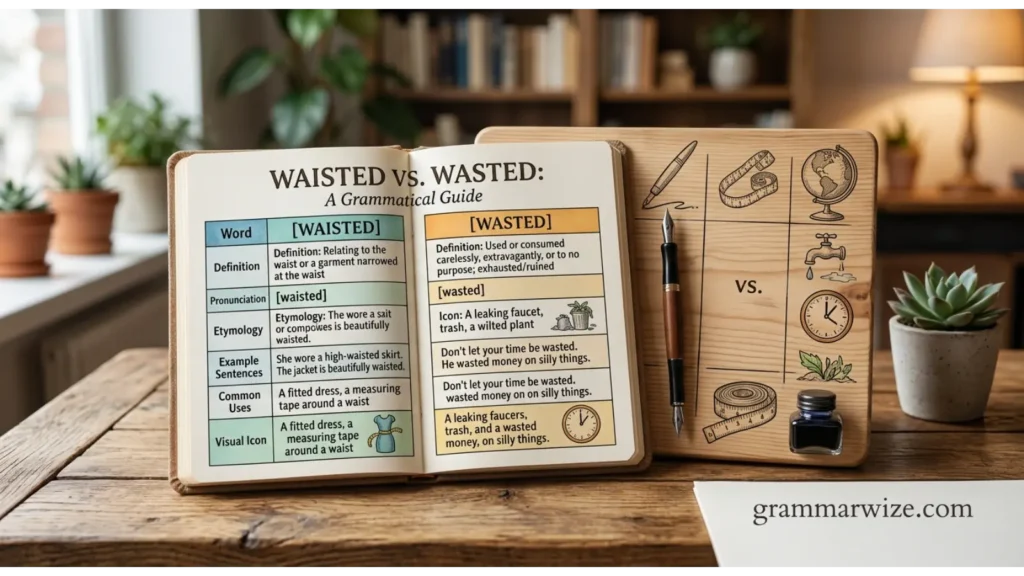
Waisted vs Wasted Comparison Table
|
Feature
|
Waisted
|
Wasted
|
| — | — | — |
|
Part of speech
|
Adjective
|
Verb form or adjective
|
|
Main meaning
|
Having a particular waist shape
|
Squandered, depleted, or intoxicated
|
|
Common context
|
Clothing, fashion, design
|
Time, money, effort, opportunities
|
|
Example
|
A high-waisted skirt
|
Wasted money
|
|
Correct spelling
|
Yes
|
Yes
|
Origin and Word Formation
Origin of Waisted
Waisted comes from the noun waist, which refers to the part of the body between the ribs and hips. Adding the suffix -ed forms an adjective describing something with a particular waist shape.
This construction is common in clothing terms, such as high-waisted and narrow-waisted.
Origin of Wasted
Wasted comes from the verb waste, which refers to using something carelessly or without a useful result. Adding -ed forms its regular past tense and past participle.
For example:
- Present: I waste time.
- Past: I wasted time.
- Past participle: I have wasted time.
The different roots explain why these words have separate meanings despite sounding alike.
Why Does the Confusion Exist?
Waisted and wasted are easy to confuse for several reasons.
1. They Sound the Same
In most English accents, both words are pronounced alike. This makes it difficult to identify the correct spelling by listening alone.
2. They Differ by One Letter
The only spelling difference is the letter i in waisted. When typing quickly, writers may overlook this small change.
3. Both Are Correct Words
Neither spelling is automatically wrong. The intended meaning determines which word belongs in the sentence.
4. Spellcheck May Not Catch the Error
A spelling checker may accept both words because they are legitimate English words. It may not recognize that you chose the wrong meaning.
Dictionary Recommendations
Standard English dictionaries recognize both words, but they define them differently.
|
Word
|
Dictionary meaning
|
| — | — |
|
Waisted
|
Having a waist of a particular type or shape
|
|
Wasted
|
The past tense or past participle of waste; also used as an adjective
|
For reliable spelling and usage checks, consult:
- Merriam-Webster for definitions, pronunciation, and word forms.
- Dictionary.com for meanings and example sentences.
- Oxford Learner’s Dictionaries for learner-friendly explanations and usage examples.
The key point is that neither word replaces the other. Choose according to the meaning you intend.
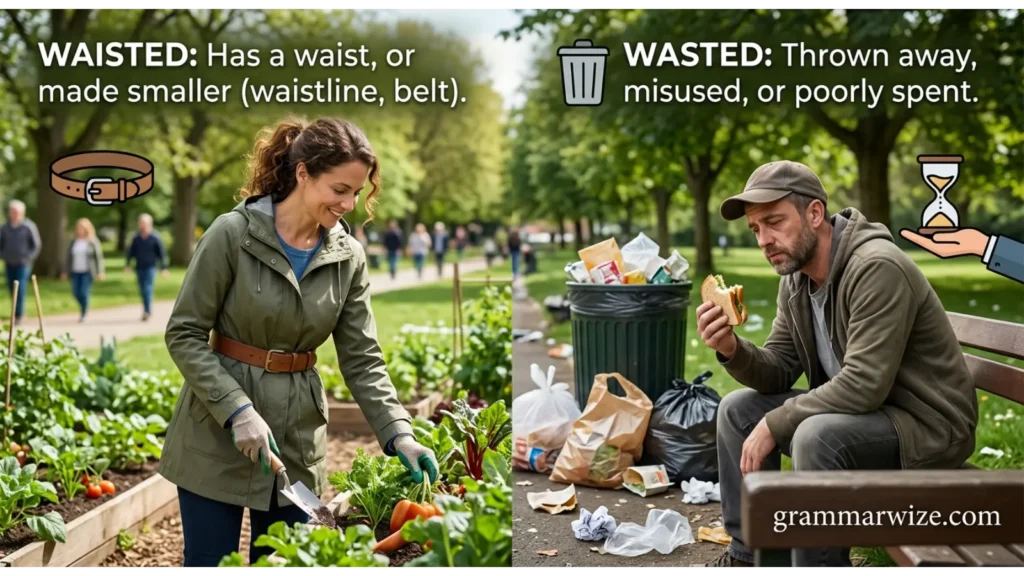
Real-Life Examples of Waisted vs Wasted
Fashion and Clothing
The word waisted describes clothing with a particular waistline.
- She wore high-waisted jeans with a white shirt.
- The waisted coat gave her outfit a tailored appearance.
Time and Productivity
Use wasted when someone spends time without achieving anything useful.
- I wasted an hour scrolling through social media.
- We wasted valuable time discussing unrelated topics.
Money and Shopping
Use wasted when money is spent carelessly or on something unwanted.
- He wasted his money on a broken gadget.
- I regret the money I wasted on unnecessary subscriptions.
Work and Opportunities
The word wasted can describe effort or opportunities that did not produce useful results.
- She felt her hard work had been wasted.
- The player wasted a clear opportunity to score.
Informal Conversations
In casual speech, wasted can describe someone who is extremely intoxicated.
– His friends said he was wasted after the party.
This usage is informal and differs from the clothing-related meaning of waisted.
Common Mistakes to Avoid
Mistake 1: Writing Wasted Jeans
Incorrect: She bought a pair of wasted jeans.
Correct: She bought a pair of high-waisted jeans.
Waisted describes the jeans’ waistline.
Mistake 2: Writing Waisted Time
Incorrect: I waisted my entire afternoon.
Correct: I wasted my entire afternoon.
Wasted describes time that was used without a useful result.
Mistake 3: Confusing the Words in Fashion Descriptions
Incorrect: The dress has a beautifully wasted design.
Correct: The dress has a beautifully waisted design.
Use waisted when describing the shape or construction of a garment.
Mistake 4: Using Waisted for Money
Incorrect: She waisted her savings on unnecessary purchases.
Correct: She wasted her savings on unnecessary purchases.
Use wasted when someone spends money carelessly.
Mistake 5: Assuming One Spelling Is Always Wrong
Both words are legitimate English words. The mistake happens when you choose a correct spelling with the wrong meaning.
Easy Memory Trick
Remember this simple rule:
Waisted has “waist” in it.
If you are talking about clothing, body shape, or a waistline, choose waisted.
Wasted has “waste” in it.
If you are talking about lost time, money, effort, or an opportunity, choose wasted.
Examples:
- High-waisted pants → Waistline
- Wasted time → Time used poorly
Professional Writing Recommendation
In professional writing, select the word that matches your intended meaning.
Use waisted in fashion descriptions, product listings, clothing reviews, and design articles. For example, “These high-waisted trousers offer a comfortable fit.”
Use wasted when discussing productivity, expenses, missed opportunities, or unnecessary effort. For example, “The company wasted valuable resources on an ineffective process.”
For business documents, academic writing, and website content, check the full sentence rather than relying only on spellcheck. Both spellings can pass a basic spelling check, so context matters.
Frequently Asked Questions
Is waisted a real word?
Yes. Waisted is a real English word that describes something with a particular waist or waistline. It commonly appears in fashion terms such as high-waisted jeans.
Is wasted the correct spelling?
Wasted is correct when you mean that something was squandered, used carelessly, or lost. It is also used informally to describe intoxication.
What is the difference between waisted and wasted?
Waisted relates to the waist or shape of something. Wasted relates to waste, loss, or something used without a useful result.
Is high-waisted or high-wasted correct?
High-waisted is correct when describing clothing with a high waistline. High-wasted is incorrect for this meaning.
Why do waisted and wasted sound alike?
They are homophones in most English accents, meaning they have the same pronunciation but different spellings and meanings.
Conclusion
Waisted vs wasted comes down to meaning, not spelling alone. Both words are correct, but they serve different purposes.
Use waisted to describe a waistline or the shape of clothing. Use wasted when talking about lost time, money, effort, or other forms of waste.
Remembering the connection between waisted and waist makes the distinction easier. With the right word in context, your writing will be clearer and more accurate.

Olivia Bennett is a grammar expert and language content writer at GrammarWize.com. She specializes in English grammar, word usage, spelling differences, and writing improvement. Through clear explanations and practical examples, Olivia helps students, professionals, and language learners communicate more effectively. Her goal is to make English grammar simple, accessible, and easy to apply in everyday writing.