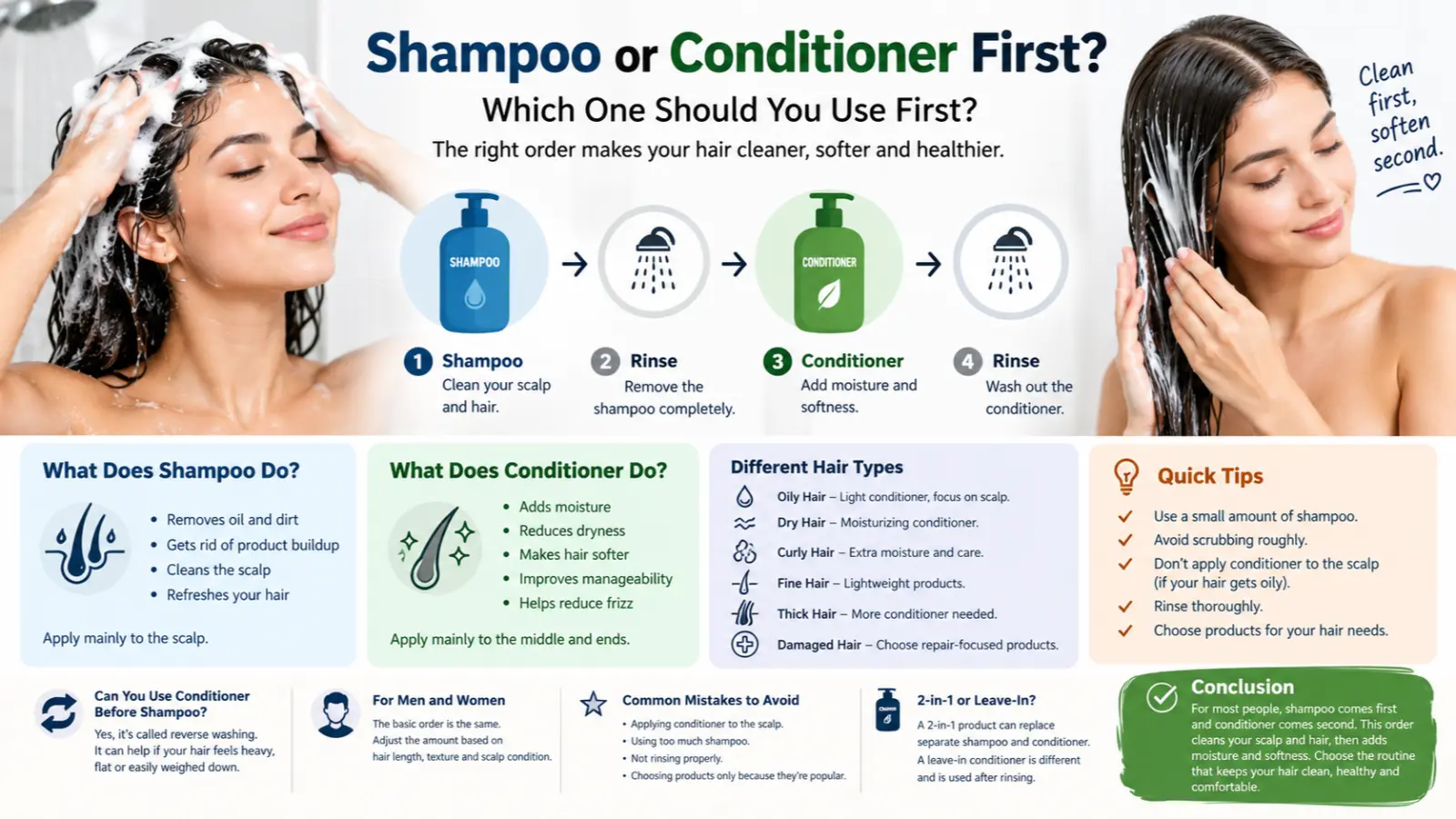
If you are wondering shampoo or conditioner first, the usual answer is simple: use shampoo first and conditioner second. This order works because shampoo cleans your scalp and hair, while conditioner adds moisture and helps make the hair smoother.
Shampoo or Conditioner First is a common hair care question that can make your routine more effective. The usual recommendation is to shampoo first and apply conditioner afterward. Shampoo removes dirt, oil, and product buildup from your scalp and hair, while conditioner helps restore moisture and softness. However, some hair types may benefit from using conditioner before shampoo. Understanding the difference can help you choose the right order for healthier looking hair.
Your hair type, scalp condition, and styling routine can also affect which method works best. In this guide, we explain when to use shampoo or conditioner first, the benefits of each method, and simple tips for getting better results from your hair care routine.
Using the products in the right order can make your hair care routine more effective. Shampoo removes oil, sweat, dirt, and product buildup. Conditioner then helps soften the hair and reduce dryness after cleansing.
Quick Answer
Shampoo should usually come before conditioner.
Apply shampoo to your scalp and hair first. Rinse it well, then apply conditioner mainly to the middle and ends of your hair.
For example:
Shampoo → Rinse → Conditioner → Rinse
This traditional order works well for most people and most hair types.
Why Does Shampoo Come First?
Shampoo is designed to clean your hair and scalp. It removes excess oil, sweat, dirt, and styling product buildup.
Because shampoo cleans the hair, it can also remove some of its natural moisture. Conditioner helps restore softness after cleansing.
Using conditioner before shampoo may reduce how well shampoo cleans the hair. It can also make it harder to remove excess oil and buildup.
That is why shampoo normally comes first.
What Does Shampoo Do?
Shampoo is mainly used for cleansing.
It can help remove:
- Excess scalp oil
- Sweat
- Dirt
- Styling products
- Environmental buildup
- Dead skin and other residue
Shampoo is usually applied to the scalp because that is where most oil and buildup collect.
You do not need to scrub the ends aggressively. The shampoo that runs through your hair while rinsing is often enough to clean them.
What Does Conditioner Do?
Conditioner is designed to make hair feel softer and easier to manage.
It can help:
- Reduce dryness
- Improve softness
- Make hair easier to comb
- Reduce friction
- Improve smoothness
- Reduce the appearance of frizz
- Make hair feel less rough
Conditioner is especially useful for dry, damaged, curly, thick, or chemically treated hair.
For most people, it works best on the middle and ends rather than directly on the scalp.
The Correct Order for Washing Your Hair
A simple hair washing routine can look like this.
Step One: Wet Your Hair
Start by thoroughly wetting your hair with lukewarm water.
Make sure the water reaches your scalp and the full length of your hair.
Step Two: Apply Shampoo
Place a small amount of shampoo in your hands.
Apply it mainly to your scalp and gently massage with your fingertips.
Avoid using your fingernails because they can irritate the scalp.
Step Three: Rinse the Shampoo
Rinse your hair thoroughly.
Make sure most of the shampoo is removed before moving to the next step.
Step Four: Apply Conditioner
Apply conditioner to the middle and ends of your hair.
If your scalp becomes oily easily, avoid applying large amounts of conditioner directly to the roots.
Step Five: Let the Conditioner Sit
Follow the product instructions.
Many conditioners only need a short amount of time to work.
Step Six: Rinse Thoroughly
Rinse the conditioner from your hair.
You should not leave a normal rinse-out conditioner in your hair unless the product specifically says it is designed for that purpose.
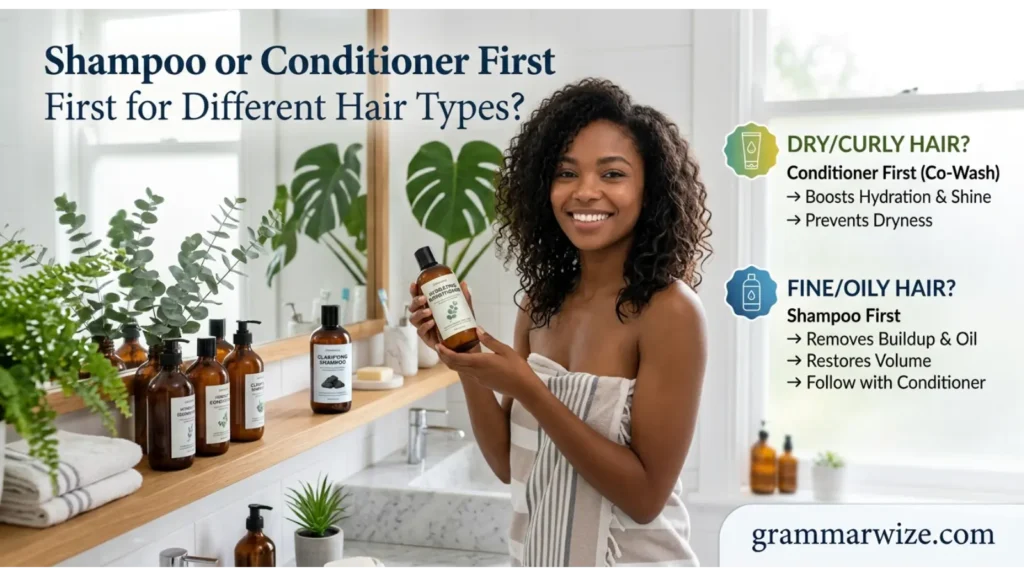
Shampoo or Conditioner First for Different Hair Types?
The best routine can vary depending on your hair and scalp.
For Oily Hair
Shampoo first and focus on cleaning the scalp.
Use a lighter conditioner on the ends if your hair needs moisture.
Avoid putting too much conditioner near the roots if it makes your hair look greasy.
For Dry Hair
Use shampoo first, followed by a moisturizing conditioner.
You may also benefit from washing less frequently if frequent washing makes your hair feel dry.
For Curly Hair
Curly hair often needs extra moisture.
Use shampoo according to your hair’s needs, then apply conditioner generously to the lengths and ends.
Some curly hair routines also use co-washing or other cleansing methods.
For Fine Hair
Use shampoo first and choose a lightweight conditioner.
Apply conditioner mainly to the ends.
Heavy products can make fine hair look flat or weighed down.
For Thick Hair
Shampoo the scalp carefully and make sure the conditioner reaches the dry areas.
Thick hair may need more conditioner than fine hair.
For Damaged Hair
Conditioner can be especially helpful after shampooing.
Choose products designed for your hair’s needs and avoid excessive heat styling when possible.
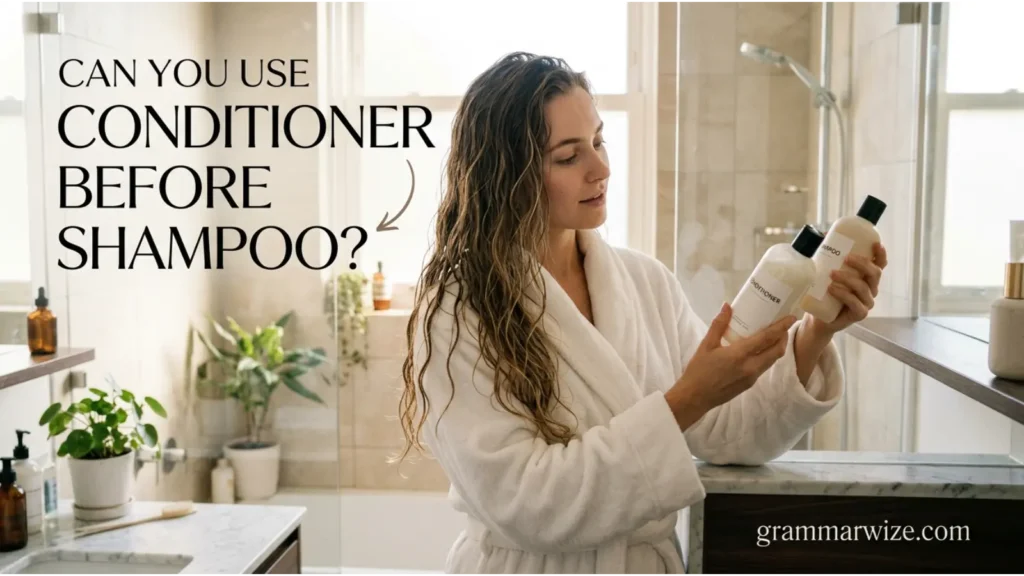
Can You Use Conditioner Before Shampoo?
Yes, you can.
This method is often called reverse hair washing or reverse conditioning.
In this routine, you use conditioner first and shampoo afterward.
The idea is that conditioner can add some softness before shampoo cleans the hair.
Some people with fine or easily weighed-down hair find this routine useful.
However, it is not necessary for everyone.
If your normal routine works well, there is no strong reason to change it simply because conditioner-first washing is popular online.
When Might Conditioner First Help?
Conditioner-first washing may be worth trying if your hair often feels:
- Heavy after conditioning
- Flat at the roots
- Difficult to style
- Coated with product
- Easily weighed down
It can be particularly useful for people who find traditional conditioning leaves their hair too soft or limp.
Your results will depend on your hair type and the products you use.
Shampoo or Conditioner First for Men
The basic order is the same for men.
Use shampoo first to cleanse the scalp and hair. Then use conditioner if your hair needs additional moisture or softness.
Short hair may require less conditioner than long hair.
If your scalp is oily but your hair ends are dry, focus shampoo on the scalp and conditioner on the ends.
Shampoo or Conditioner First for Women
The same basic order applies to women.
Hair length, texture, scalp condition, coloring, heat styling, and product use can affect the best routine.
Long or dry hair may benefit from more conditioning, while fine or oily hair may need lighter products.
The important point is to choose the routine based on your hair’s needs rather than gender.
Common Mistakes to Avoid
Applying Conditioner Mainly to the Scalp
Many people apply conditioner from the roots to the ends.
This can make the roots look greasy, especially if the scalp is already oily.
For many hair types, the middle and ends need more conditioning than the scalp.
Using Too Much Shampoo
More shampoo does not always mean cleaner hair.
Using too much can leave the hair feeling dry.
Start with a small amount and add more only when needed.
Scrubbing the Hair Aggressively
Your scalp needs gentle cleansing.
Roughly scrubbing the lengths can increase friction and leave the hair feeling rough.
Not Rinsing Properly
Product residue can leave the hair feeling heavy or coated.
Take enough time to rinse shampoo and conditioner thoroughly.
Choosing Products Only Because They Are Popular
A popular product may not suit your hair.
Consider your scalp, hair texture, dryness, oiliness, and styling habits when choosing products.
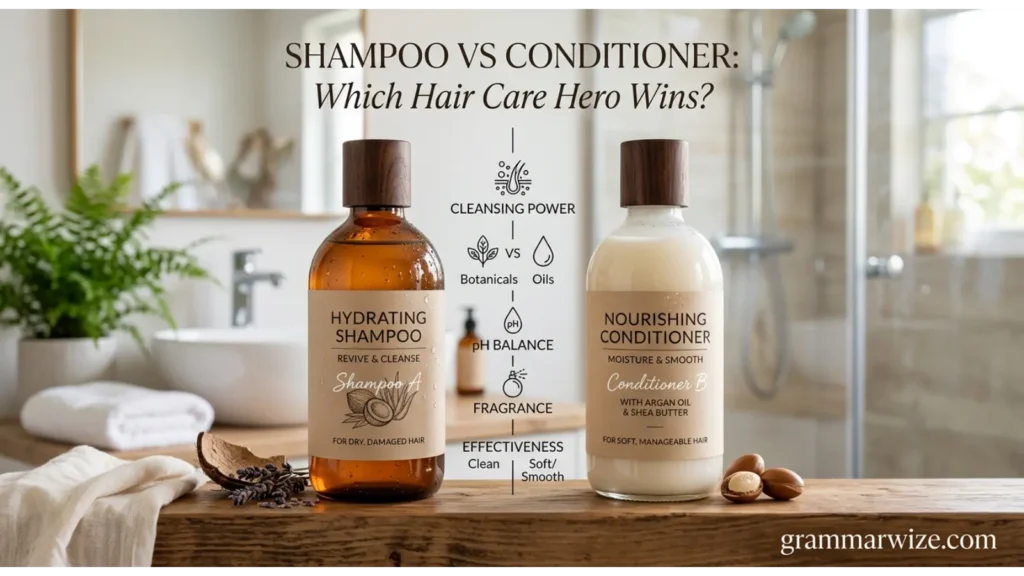
Shampoo and Conditioner Comparison
| Product | Main Purpose | Where to Apply | Usual Order |
|---|---|---|---|
| Shampoo | Cleans scalp and hair | Mainly scalp | First |
| Conditioner | Softens and moisturizes hair | Mainly middle and ends | Second |
The products have different jobs, so using them in this order makes sense for most people.
Real-Life Examples
Example One: Normal Hair
You wash your hair with shampoo, rinse it, apply conditioner to the ends, and rinse again.
This is the standard routine.
Example Two: Oily Scalp
You apply shampoo mainly to the scalp.
After rinsing, you use a small amount of lightweight conditioner on the ends.
Example Three: Dry Ends
You shampoo the scalp gently.
You then apply conditioner to the middle and ends to improve softness.
Example Four: Fine Hair
You use a small amount of shampoo.
After rinsing, you apply lightweight conditioner only to the ends.
Example Five: Curly Hair
You cleanse according to your hair’s needs.
You then use enough conditioner to help the curls stay soft and manageable.
A Simple Memory Trick
Remember:
Clean first, soften second.
Shampoo cleans.
Conditioner softens.
So the easiest order to remember is:
Shampoo → Conditioner
What If You Use a 2-in-1 Product?
A 2-in-1 shampoo combines cleansing and conditioning functions in one product.
If you use a 2-in-1 product, you generally do not need to follow it with a separate conditioner unless your hair needs additional conditioning.
People with dry, long, curly, or damaged hair may still prefer separate shampoo and conditioner.
What If You Use a Leave-In Conditioner?
A leave-in conditioner is different from a normal rinse-out conditioner.
After shampooing, you can use a regular conditioner and rinse it out.
Afterward, a leave-in conditioner can be applied according to its instructions.
Do not automatically treat a leave-in product like a rinse-out conditioner.
Professional Hair Care Recommendation
For most people, the safest starting routine is:
Shampoo first, conditioner second.
Use shampoo mainly where cleansing is needed, especially around the scalp.
Apply conditioner mainly where the hair needs softness and moisture.
If this routine leaves your hair too heavy, you can experiment with a lighter conditioner, less product, or conditioner-first washing.
Your scalp and hair condition matter more than following a single routine blindly.
Frequently Asked Questions
Should I shampoo or condition first?
Shampoo should usually come first. Conditioner normally follows after the shampoo has been rinsed out.
Can I use conditioner before shampoo?
Yes. Conditioner-first washing is an option that some people use, especially when traditional conditioning makes their hair feel heavy.
Should conditioner go on the scalp?
Usually, conditioner is best applied to the middle and ends of the hair. However, some products are specifically designed for scalp use.
Is shampoo bad for dry hair?
Shampoo is not automatically bad for dry hair. The type of shampoo, washing frequency, water temperature, and hair condition can all affect dryness.
Can I skip conditioner?
You can, but many people benefit from conditioner because it helps improve softness and manageability. Dry or damaged hair often benefits more from regular conditioning.
Should I shampoo every day?
Not necessarily. How often you shampoo depends on your scalp, hair type, activity level, product use, and personal needs.
Is conditioner more important than shampoo?
They have different purposes. Shampoo cleans the scalp and hair, while conditioner helps improve softness and manageability. Neither replaces the other for everyone.
Final Verdict
For most people, shampoo comes first and conditioner comes second.
Shampoo cleans away oil, dirt, sweat, and buildup. Conditioner follows to help the hair feel softer and easier to manage.
The basic routine is simple:
Wet hair → Shampoo → Rinse → Conditioner → Rinse
If your hair becomes heavy or greasy after conditioning, you can experiment with a lighter conditioner or try conditioner before shampoo.
The best routine is the one that keeps your scalp clean and your hair comfortable, soft, and manageable.
Conclusion
When deciding shampoo or conditioner first, shampoo is usually the right starting point. Shampoo cleans the scalp and removes oil, dirt, sweat, and product buildup. Conditioner then helps soften the hair and improve manageability.
For most people, the simple order is shampoo first, conditioner second. Apply shampoo mainly to the scalp and conditioner mainly to the middle and ends. However, hair type and personal needs can change the best routine. If traditional conditioning makes your hair feel heavy, conditioner-first washing is another option worth trying.
The goal is not to follow one rule blindly. Choose products and a washing routine that keep your scalp clean and your hair healthy, comfortable, and easy to manage.

Olivia Bennett is a grammar expert and language content writer at GrammarWize.com. She specializes in English grammar, word usage, spelling differences, and writing improvement. Through clear explanations and practical examples, Olivia helps students, professionals, and language learners communicate more effectively. Her goal is to make English grammar simple, accessible, and easy to apply in everyday writing.