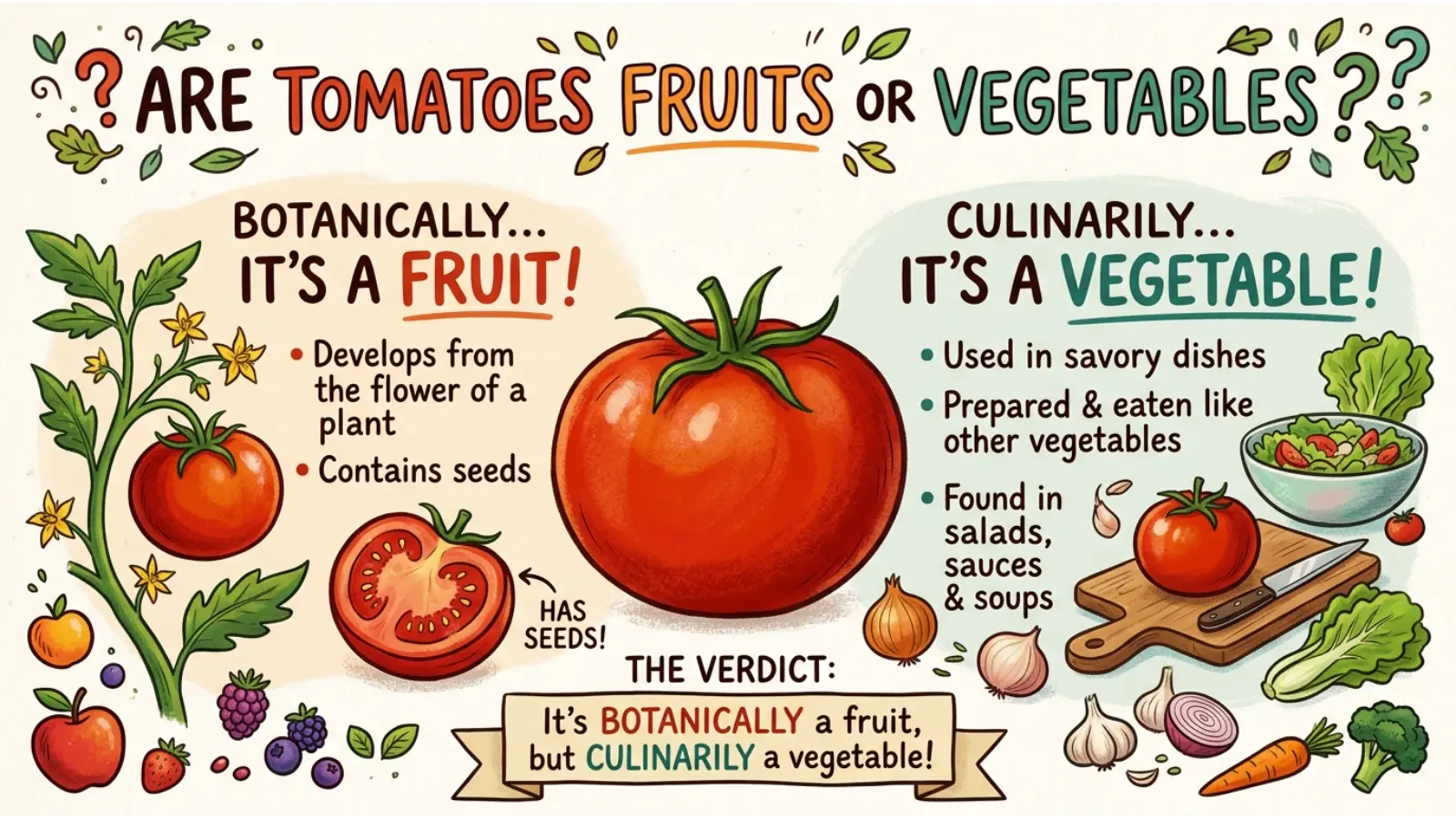
If you have ever wondered are tomatoes fruits or vegetables, the answer depends on how you classify them. Botanically, a tomato is a fruit because it develops from a flower’s ovary and contains seeds. In everyday cooking, however, tomatoes are treated as vegetables because they are commonly used in savory dishes.
Are Tomatoes Fruits or Vegetables is a common question in cooking, gardening, and everyday conversations. Tomatoes are often treated like vegetables because we use them in salads, sauces, soups, and savory dishes. However, botanically, tomatoes are classified as fruits because they develop from the flower of a tomato plant and contain seeds.
The confusion comes from the difference between botanical and culinary classifications. In this guide, you will learn why tomatoes are fruits, why many people call them vegetables, and how both definitions apply in real life.
This difference is not a contradiction. Botanists classify plants based on their structure and reproduction, while culinary traditions classify foods based on how they are prepared and eaten. The USDA also lists tomatoes among vegetables for agricultural and culinary purposes.
Quick Answer
Tomatoes are botanically fruits but are commonly considered vegetables in cooking.
A tomato develops from the flowering part of the plant and contains seeds, which makes it a botanical fruit. In the kitchen, it is usually used in salads, sauces, soups, and savory meals.
Why Are Tomatoes Fruits?
Botany uses a specific definition of fruit.
A botanical fruit develops from the ovary of a flowering plant after fertilization. It usually contains seeds or develops around them.
Tomatoes meet these conditions. The tomato fruit develops from the flower of the tomato plant and contains seeds.
For this reason, scientists classify the tomato as a fruit. USDA agricultural material also describes the edible portion of a tomato as botanically a fruit.
Tomatoes Are Technically Berries
There is another interesting detail.
Botanically, a tomato is a type of berry. It is a fleshy fruit that develops from a single flower and contains seeds.
This classification may sound surprising because people usually associate berries with foods such as strawberries or blueberries.
Botanical definitions do not always match everyday food names.
Why Are Tomatoes Called Vegetables?
The answer comes from culinary use.
Vegetables are commonly associated with savory foods. Tomatoes are often eaten with lettuce, onions, cucumbers, peppers, meat, pasta, and other savory ingredients.
They are also widely used to make:
- Tomato sauce
- Pasta sauce
- Salsa
- Soup
- Pizza sauce
- Ketchup
- Salads
- Sandwiches
- Curries
Because of this common use, tomatoes are generally treated as vegetables in cooking.
The USDA includes tomatoes and tomatillos in its list of vegetables for agricultural classification.
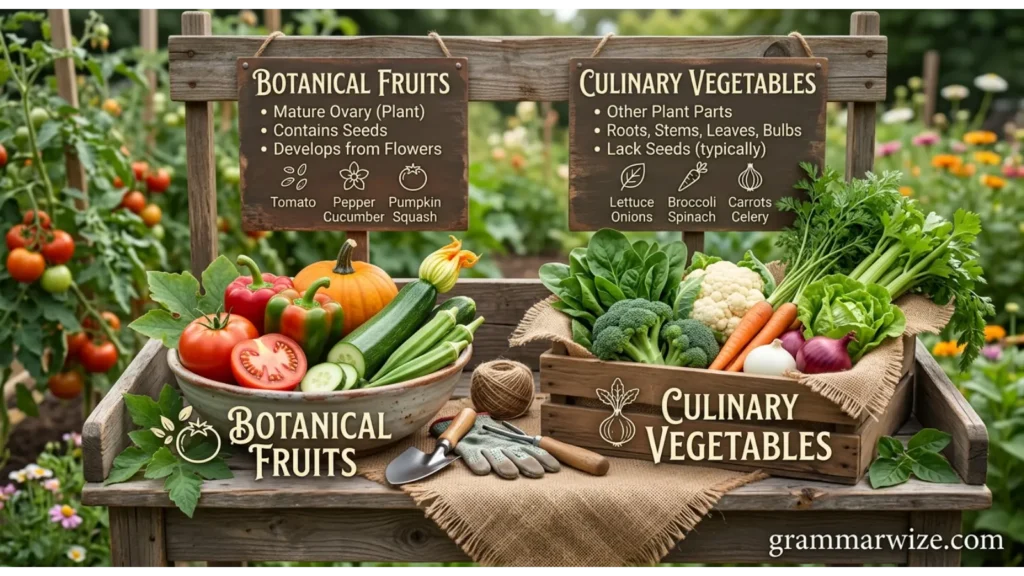
Botanical Fruit vs Culinary Vegetable
| Classification | Tomato |
|---|---|
| Botanical classification | Fruit |
| Botanical type | Berry |
| Culinary classification | Vegetable |
| Contains seeds | Yes |
| Develops from a flower | Yes |
| Common taste | Savory or slightly sweet |
| Common uses | Salads, sauces, soups, meals |
The key difference is the classification system.
Botany focuses on how the plant develops. Culinary usage focuses on how people prepare and eat the food.
What Makes a Fruit a Fruit?
In botanical terms, a fruit is part of a flowering plant that develops from the ovary after flowering.
This means many foods that people call vegetables are actually botanical fruits.
Examples include:
- Tomatoes
- Cucumbers
- Peppers
- Pumpkins
- Squash
- Eggplants
The USDA also includes several of these foods in vegetable categories for agricultural and culinary purposes.
Tomatoes Are Not the Only Vegetable That Is Botanically a Fruit
Tomatoes are part of a larger group of foods with this classification difference.
Cucumbers
Cucumbers develop from flowers and contain seeds, so they are botanical fruits. They are usually treated as vegetables in meals.
Peppers
Bell peppers and chili peppers are also fruits botanically. Their common culinary role is usually as vegetables.
Eggplants
Eggplants develop from the flower of the plant and contain seeds. Botanically, they are fruits.
Pumpkins
Pumpkins are also botanical fruits, even though they are commonly grouped with vegetables in cooking.
This shows why botanical and culinary classifications can produce different answers.
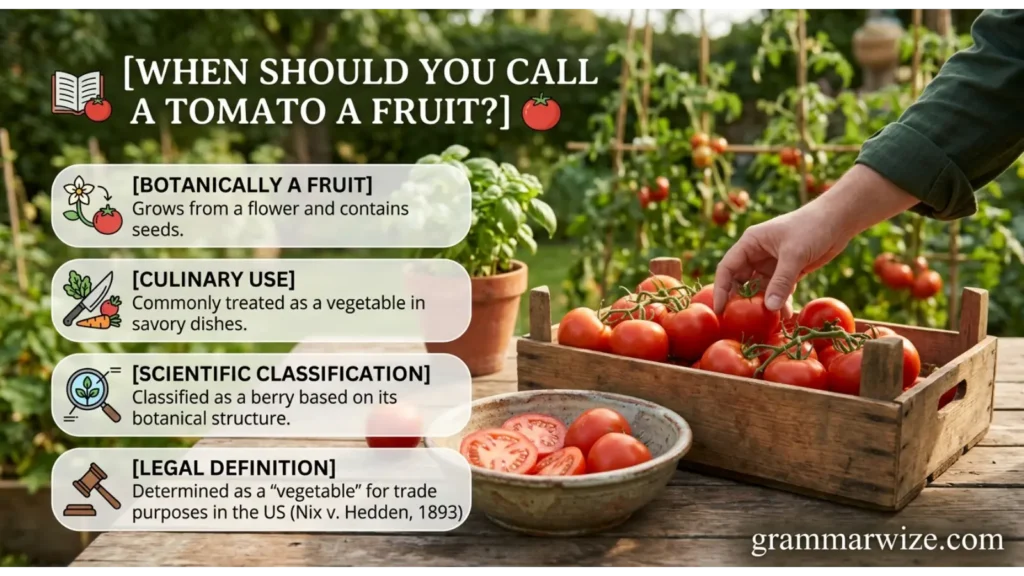
When Should You Call a Tomato a Fruit?
Use fruit when discussing botanical classification, plant science, or biology.
For example:
A tomato is a fruit that develops from the ovary of a flower.
A science textbook, biology lesson, or botanical discussion would normally use this classification.
When Should You Call a Tomato a Vegetable?
Use vegetable when discussing cooking, food preparation, agriculture, or everyday meals.
For example:
Add two chopped tomatoes to the vegetable salad.
This usage is completely normal.
The USDA itself lists tomatoes among vegetables in its agricultural materials, showing that the culinary and agricultural classification can differ from botanical terminology.
Why Do People Get Confused?
The confusion comes from using two different definitions.
Most people learn that fruits are sweet foods such as apples, oranges, and grapes. They also learn that vegetables are savory foods used in meals.
Botanical classification works differently.
A fruit does not have to be sweet. Its classification depends mainly on how it develops from the plant.
That is why a tomato can be a fruit scientifically while still being called a vegetable at the dinner table.
The Historical Tomato Debate
The fruit and vegetable distinction has also appeared in U.S. legal history.
In the late nineteenth century, tomatoes became involved in a U.S. Supreme Court case concerning tariff treatment. The case was Nix v. Hedden, decided in 1893.
The legal issue was not a scientific attempt to redefine the tomato. It concerned how the product was treated under customs law.
This historical episode helped make the tomato’s fruit-versus-vegetable classification famous.
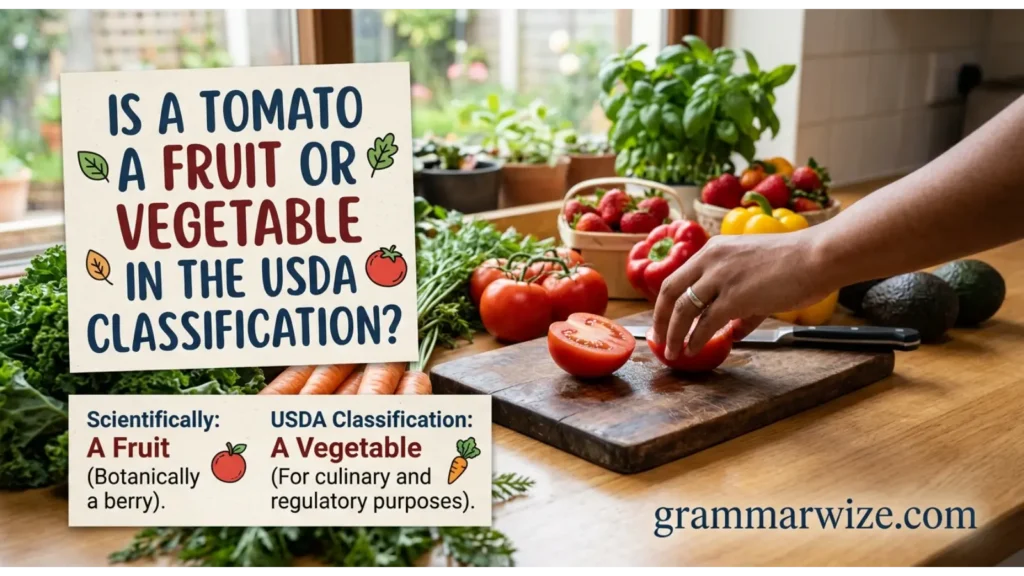
Is a Tomato a Fruit or Vegetable in the USDA Classification?
The answer depends on which USDA context you are looking at.
USDA agricultural materials describe tomatoes as botanically fruits while also treating them as vegetables in culinary and agricultural contexts.
The USDA Agricultural Marketing Service also includes tomatoes in its vegetable list.
So there is no real contradiction.
Botanical answer: fruit.
Culinary and agricultural answer: vegetable.
Are Tomatoes Fruits or Vegetables in Cooking?
In cooking, tomatoes are generally treated as vegetables.
They appear in savory dishes far more often than in traditional sweet desserts. Their flavor and preparation style make them similar to other culinary vegetables.
You can use tomatoes in:
- Salads
- Soups
- Stews
- Pasta
- Pizza
- Sandwiches
- Sauces
- Salsas
So if someone asks you to buy vegetables for dinner, bringing tomatoes would be perfectly normal.
Are Tomatoes Fruits or Vegetables for Nutrition?
For nutrition and dietary planning, the distinction is usually less important than the food itself.
Tomatoes provide nutrients and are widely included in healthy eating patterns. USDA research describes tomatoes as an important vegetable crop while also recognizing their botanical status as fruits.
The word fruit in botanical science does not automatically mean a food must be eaten as a dessert.
Common Mistakes
Mistake 1: Saying tomatoes cannot be fruits
Tomatoes are fruits botanically. Their savory taste does not change their botanical classification.
Mistake 2: Saying vegetables cannot contain seeds
Some foods commonly called vegetables are botanical fruits and contain seeds.
Mistake 3: Assuming all fruits are sweet
Sweetness is not the scientific definition of a fruit.
Mistake 4: Saying culinary and botanical classifications must match
They serve different purposes, so the same food can have different classifications.
Mistake 5: Calling the scientific classification a cooking rule
Botanical terminology and culinary terminology answer different questions.
Easy Memory Trick
Remember this:
Fruit comes from the flower. Vegetable comes from the kitchen.
A tomato comes from the flowering part of the plant, so it is a fruit botanically.
It is commonly prepared as a savory food, so it is a vegetable culinarily.
Are Tomatoes Fruits or Vegetables? Final Verdict
Tomatoes are both, depending on the context.
From a botanical perspective, a tomato is a fruit, specifically a type of berry. It develops from a flower and contains seeds.
From a culinary and agricultural perspective, tomatoes are commonly treated as vegetables. The USDA includes tomatoes in its vegetable classification while also recognizing their botanical fruit status.
So the simplest answer is:
Tomatoes are fruits scientifically and vegetables in everyday cooking.
FAQs:
Are tomatoes technically fruits?
Yes. Botanically, tomatoes are fruits because they develop from the ovary of a flower and contain seeds.
Why are tomatoes called vegetables?
They are called vegetables because they are commonly prepared and eaten as savory foods.
Are tomatoes berries?
Yes. Botanically, tomatoes are classified as berries.
Are cucumbers fruits too?
Yes. Cucumbers are botanical fruits even though they are commonly used as vegetables in cooking.
Is it wrong to call a tomato a vegetable?
No. Calling a tomato a vegetable is normal in culinary and agricultural contexts. Calling it a fruit is correct in botanical terms.
Conclusion
The question are tomatoes fruits or vegetables has two valid answers.
Botanically, tomatoes are fruits because they develop from flowers and contain seeds. In the kitchen, they are vegetables because people commonly use them in savory dishes.
Understanding the difference between botanical and culinary classification removes the confusion. Tomato is a fruit by science and a vegetable by common culinary use.

Olivia Bennett is a grammar expert and language content writer at GrammarWize.com. She specializes in English grammar, word usage, spelling differences, and writing improvement. Through clear explanations and practical examples, Olivia helps students, professionals, and language learners communicate more effectively. Her goal is to make English grammar simple, accessible, and easy to apply in everyday writing.