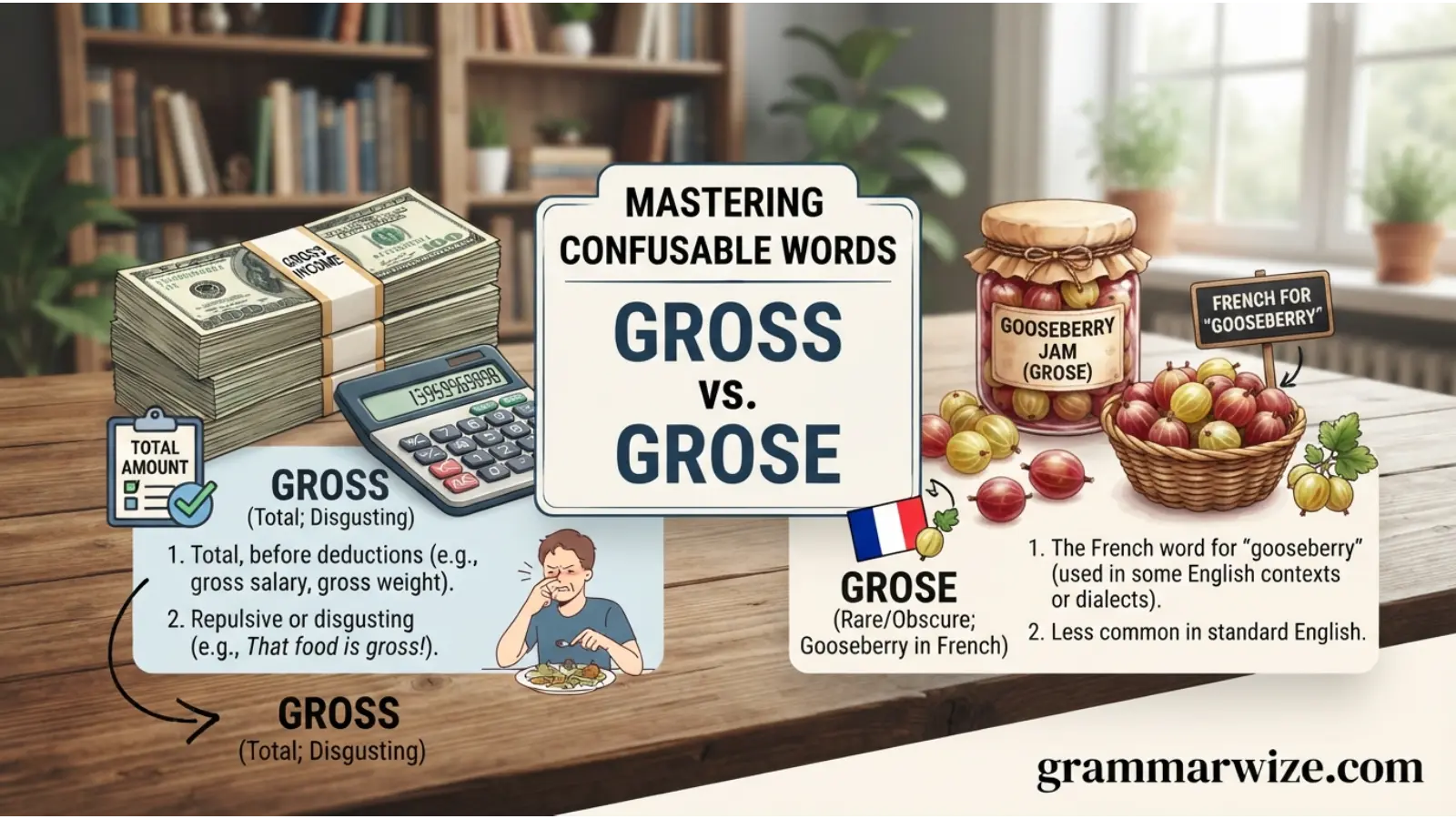
Grose or gross is a common spelling confusion because both words contain the same letters with a small difference. Many writers wonder if one spelling is incorrect or if both words have different meanings.
Grose or Gross is a common spelling confusion that makes many people wonder which word is correct. The correct spelling depends on the meaning you want to express. Gross is the standard English word used for something unpleasant, disgusting, total amount before deductions, or a group of twelve dozen items.
Understanding the difference between Grose or Gross helps you avoid spelling mistakes and use the right word in writing. In this guide, you will learn their meanings, examples, and the simple reason why “Grose” is usually considered incorrect in modern English.
The correct choice depends on the context. Gross is the standard and widely used English word today, while grose is an uncommon historical term that appears rarely in modern language. Understanding their meanings helps you avoid spelling mistakes.
Quick Answer
Gross is the correct spelling for almost all modern situations. It can mean disgusting, total amount before deductions, or a group of twelve dozen items.
Grose is a rare old spelling connected to historical names and terms. It is not normally used in everyday English.
Meaning of Gross
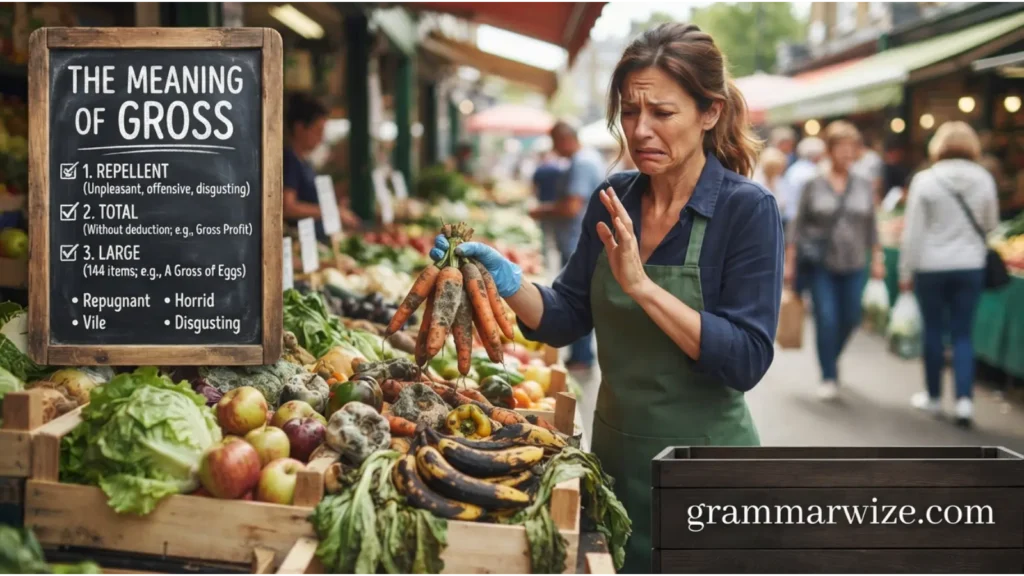
The word gross has several common meanings.
Gross meaning disgusting or unpleasant
Gross describes something that causes dislike or disgust.
Examples:
- The smell from the trash was gross.
- That movie scene was too gross for me.
Gross meaning total amount
In business and finance, gross means the complete amount before deductions.
Examples:
- The company reported gross sales of one million dollars.
- Gross income is calculated before taxes and expenses.
Gross meaning a group of items
A gross can also mean twelve dozen items, which equals 144 pieces.
Example:
- The store ordered a gross of pencils.

Meaning of Grose
Grose is a very uncommon word in modern English. It appears mainly in historical contexts, old texts, or as a surname.
It is not used as a replacement for gross.
Example:
- Grose appears in some historical records as a family name.
Using grose when you mean gross is usually considered a spelling mistake.
Grose vs Gross Comparison Table
| Word | Correct Usage | Meaning | Modern Use |
|---|---|---|---|
| Gross | Standard English word | Disgusting, total amount, or 144 items | Very common |
| Grose | Rare historical term | Mostly found in old references or names | Extremely uncommon |
Origin of Gross
The word gross comes from Old French gros, meaning large, thick, or great. It entered English during the Middle Ages and developed several meanings over time.
The financial meaning of gross developed from the idea of something being the complete or large amount before reductions.
Origin of Grose
The word grose has historical connections but does not have the same everyday development as gross. It is mostly found in older records and proper names.
Because it looks similar to gross, many people mistakenly use it in modern writing.
Why Confusion Exists Between Grose and Gross
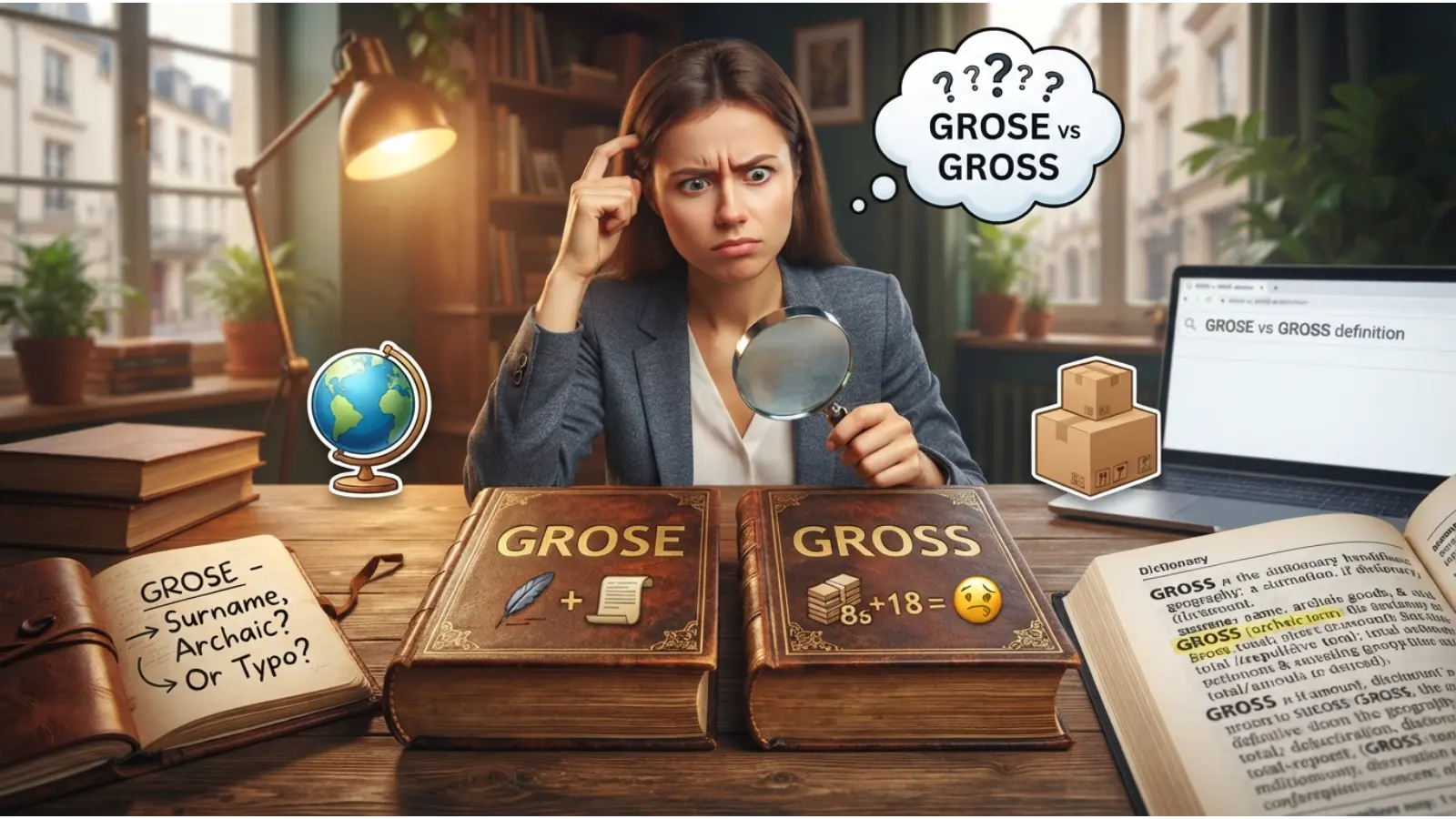
The confusion happens because:
- Both words have almost identical spelling.
- They sound similar in some accents.
- Many people are familiar with gross but rarely see grose.
- Autocorrect and spelling mistakes can create uncertainty.
The extra “e” in grose makes it look like a possible spelling variation, but it changes the word completely.
Dictionary Recommendations
Major English dictionaries recognize gross as a standard English word with multiple meanings.
Most dictionaries do not list grose as a commonly used vocabulary word. When writing professionally, readers expect gross in normal contexts.
For everyday communication, academic writing, business documents, and online content, use gross.
Real-Life Examples
Using Gross Correctly
- The food had a gross smell after being left outside.
- The company’s gross profit increased this year.
- The factory shipped a gross of products.
Incorrect Use of Grose
Incorrect:
- The garbage looked grose.
Correct:
- The garbage looked gross.
Incorrect:
- The business earned a grose profit.
Correct:
- The business earned a gross profit.
Common Mistakes
Using Grose Instead of Gross
Many writers add an extra “e” because they think it is another spelling form. In modern English, this is usually incorrect.
Confusing Gross With Net
Gross means the total amount before deductions, while net means the amount left after deductions.
Example:
- Gross salary is before taxes.
- Net salary is after taxes.
Using Gross Only for Disgusting Things
Some people think gross only means something unpleasant, but it also has financial and measurement meanings.
Memory Trick
Remember:
Gross has “ss” because it is the standard spelling you see in most situations.
Think:
Gross = Big, Total, or Disgusting.
If you are describing something unpleasant or talking about money, choose gross.
Professional Writing Recommendation
For professional writing, always use gross unless you are specifically discussing a historical reference, surname, or rare term.
Using grose in place of gross can make your writing appear incorrect because modern readers recognize gross as the accepted spelling.
FAQ
Is grose a correct word?
Yes, grose exists as a rare historical term and surname, but it is not commonly used in modern English.
Is gross the correct spelling?
Yes, gross is the correct spelling for common meanings such as disgusting, total amount, and twelve dozen items.
Are grose and gross interchangeable?
No, they have different uses. Gross is the modern English word, while grose is rarely used.
How do I remember gross spelling?
Remember that the common word has double “s” and is used for everyday meanings.
Conclusion
Grose and gross may look similar, but they are not the same word. Gross is the correct spelling for almost every modern English situation, including describing something unpleasant, discussing finances, or counting large quantities.
Grose is a rare historical form and should not replace gross in normal writing. Choosing the correct spelling makes your communication clearer and more professional.

Olivia Bennett is a grammar expert and language content writer at GrammarWize.com. She specializes in English grammar, word usage, spelling differences, and writing improvement. Through clear explanations and practical examples, Olivia helps students, professionals, and language learners communicate more effectively. Her goal is to make English grammar simple, accessible, and easy to apply in everyday writing.