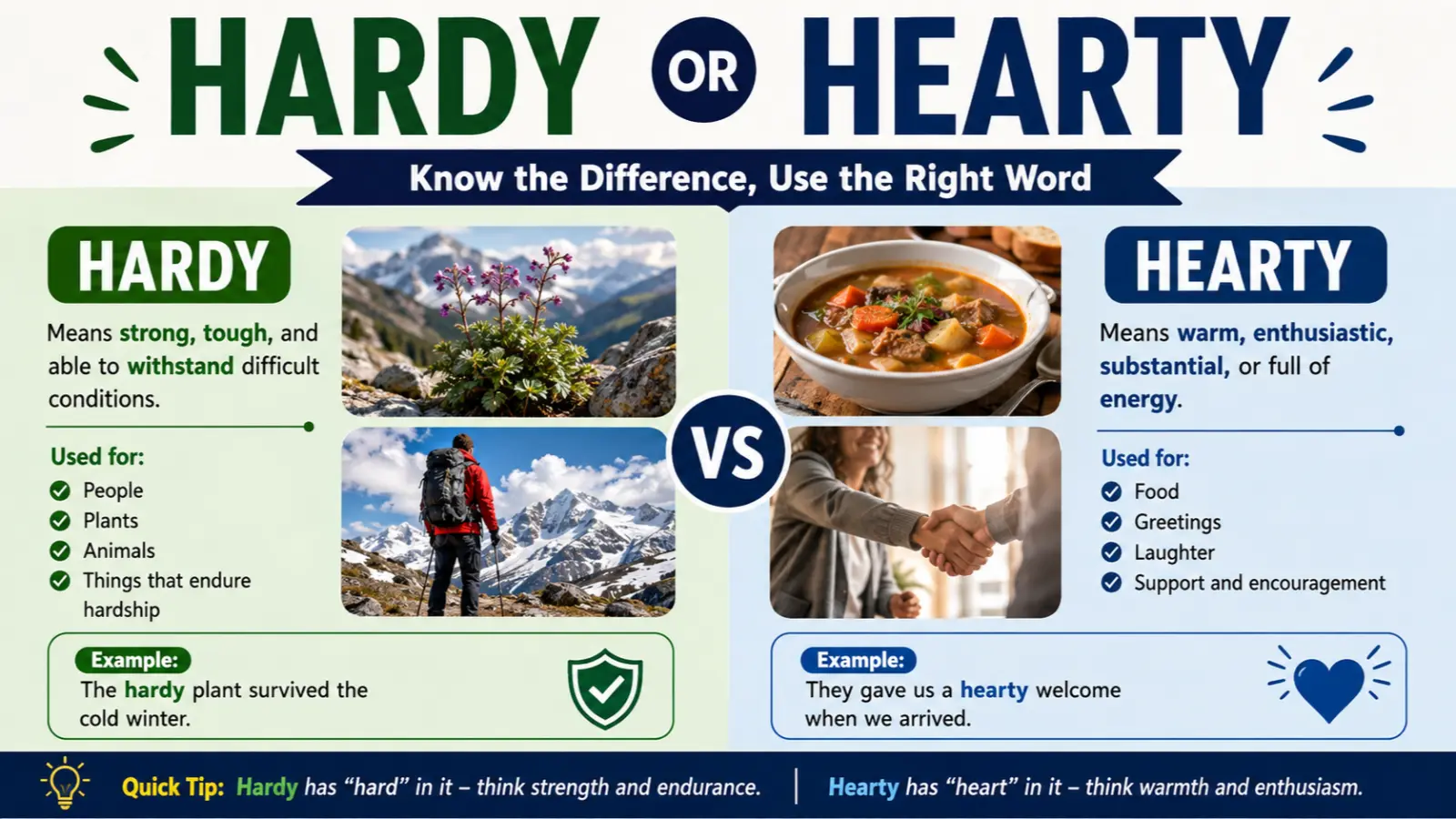
Hardy or Hearty can be confusing because these words look and sound quite similar. However, they have different meanings and uses. Hardy describes someone or something strong, healthy, and able to handle difficult conditions. Hearty usually describes something warm, enthusiastic, plentiful, or satisfying, especially food.
Knowing the difference between Hardy and Hearty helps you choose the right word in everyday writing. For example, you can describe a plant as hardy because it survives harsh weather. You can also describe a meal as hearty because it is filling and satisfying. This guide explains their meanings, differences, examples, and common mistakes in simple English.
Hardy usually describes someone or something that is strong, tough, and able to survive difficult conditions. Hearty often describes something warm, enthusiastic, healthy, substantial, or full of energy.
Hardy or Hearty: The Quick Answer
Both hardy and hearty are correct English words.
Use hardy when you mean strong, durable, or able to withstand difficult conditions.
Use hearty when you mean warm, enthusiastic, healthy, substantial, or strongly expressed.
Examples:
- The hardy plant survived the cold winter.
- We enjoyed a hearty breakfast.
- She is a hardy traveler who enjoys difficult trails.
- He gave us a hearty welcome.
A simple way to remember them is this:
Hardy = strong enough to endure.
Hearty = full of warmth, energy, or substance.

What Does Hardy Mean?
Hardy is an adjective that describes someone or something strong enough to handle difficult conditions.
It can describe people, animals, plants, and other things that can survive hardship.
Examples:
- Hardy plants can survive extreme weather.
- The hikers were hardy enough to continue through the snow.
- This breed of dog is hardy and adaptable.
- The hardy explorers faced the rough conditions.
The word often suggests strength, toughness, endurance, or resilience.
Hardy in a Sentence
Here are some natural examples:
- These flowers are hardy enough to grow in cold climates.
- He is a hardy worker who rarely complains.
- The hardy little plant survived the drought.
- Experienced hikers need to be hardy and prepared.
- This hardy material can withstand heavy use.

What Does Hearty Mean?
Hearty is also an adjective, but it has several related meanings.
It can describe something generous, warm, enthusiastic, substantial, or healthy.
For food, hearty usually means filling and satisfying.
Examples:
- We had a hearty soup for dinner.
- She prepared a hearty breakfast.
- He gave his friend a hearty handshake.
- Everyone offered a hearty welcome.
- They shared a hearty laugh.
The meaning depends on the sentence.
Hardy vs Hearty Meaning
The easiest distinction is based on the quality being described.
| Word | Main Meaning | Common Uses |
|---|---|---|
| Hardy | Strong and able to endure | People, plants, animals, materials |
| Hearty | Warm, enthusiastic, substantial, or healthy | Food, greetings, laughs, support |
Consider these examples:
A hardy person is someone who can handle difficult conditions.
A hearty meal is a filling and satisfying meal.
A hearty welcome is a warm and enthusiastic welcome.
A hardy plant can survive harsh weather.
These meanings make the difference much easier to understand.

Grammar Rules for Hardy and Hearty
Both hardy and hearty are adjectives.
They normally come before a noun or after a linking verb.
Hardy Before a Noun
- a hardy plant
- a hardy traveler
- a hardy animal
- a hardy material
Hardy After a Linking Verb
- The plant is hardy.
- The hikers are hardy.
- This species is extremely hardy.
Hearty Before a Noun
- a hearty meal
- a hearty laugh
- a hearty welcome
- a hearty breakfast
Hearty After a Linking Verb
- The meal was hearty.
- His welcome was hearty.
- Their laughter was hearty.
The basic sentence structure is:
Subject + linking verb + adjective
For example:
The plant is hardy.
Or:
Subject + verb + adjective + noun
For example:
She prepared a hearty meal.
Hardy or Hearty for Food?
Use hearty for food.
A hearty meal is filling, satisfying, and often rich or substantial.
Correct:
- We enjoyed a hearty dinner.
- She made a hearty vegetable soup.
- I need a hearty breakfast before the hike.
Incorrect:
- We enjoyed a hardy dinner.
Hardy does not normally describe food.
Hardy or Hearty for a Person?
Both words can describe a person, but the meanings differ.
Use hardy for someone who is tough and able to handle difficult conditions.
Example:
- The hardy climber reached the summit despite the cold.
Use hearty when describing someone’s warm, enthusiastic, or vigorous behavior.
Example:
- She gave me a hearty welcome.
So, hardy person focuses on endurance, while hearty welcome focuses on warmth and enthusiasm.
Hardy or Hearty for Plants?
Use hardy for plants that can survive difficult environmental conditions.
Examples:
- Roses can be hardy plants.
- This variety is hardy in cold climates.
- Gardeners often choose hardy flowers for winter gardens.
Hearty plant is generally not the normal expression.
Hardy or Hearty for Greetings?
Use hearty for warm and enthusiastic greetings.
Examples:
- They gave us a hearty welcome.
- He received a hearty greeting from his old friends.
- Everyone offered her a hearty congratulations.
Here, hearty suggests genuine warmth and enthusiasm.
Common Mistakes With Hardy and Hearty
The most common mistake is choosing the word based only on its similar spelling.
Mistake 1: Using Hardy for Food
Incorrect:
- We had a hardy breakfast.
Better:
- We had a hearty breakfast.
A meal can be filling and substantial, so hearty is the correct choice.
Mistake 2: Using Hearty for Tough Plants
Incorrect:
- This is a hearty plant that survives freezing temperatures.
Better:
- This is a hardy plant that survives freezing temperatures.
The plant’s ability to survive harsh conditions makes hardy appropriate.
Mistake 3: Using Hardy for a Warm Welcome
Incorrect:
- They gave me a hardy welcome.
Better:
- They gave me a hearty welcome.
A warm and enthusiastic welcome is hearty.
Hardy and Hearty in Professional Writing
Both words are appropriate in professional writing when they match the intended meaning.
Hardy works well in writing about:
- Agriculture
- Gardening
- Outdoor activities
- Construction
- Manufacturing
- Biology
- Animal breeds
- Climate resistance
Examples:
- The company selected hardy materials for outdoor equipment.
- This hardy plant performs well in cold environments.
Hearty works well in writing about:
- Food
- Hospitality
- Social interactions
- Celebrations
- Emotional expressions
Examples:
- The restaurant serves hearty meals throughout the winter.
- The team received a hearty welcome from the community.
Neither word is automatically formal or informal. The context determines the appropriate choice.
Hardy vs Hearty in Real Life
Here is how these words might appear in everyday conversation.
Person 1: How did your camping trip go?
Person 2: It was freezing, but we were hardy enough to stay another night.
Here, hardy means tough enough to handle the conditions.
Another conversation:
Person 1: Did you enjoy the dinner?
Person 2: Absolutely. It was a hearty meal.
Here, hearty means filling and satisfying.
One more example:
Person 1: How did everyone greet you?
Person 2: They gave me a hearty welcome.
Here, hearty means warm and enthusiastic.
Memory Trick for Hardy or Hearty
Use the letters in each word to remember the difference.
Hardy has “hard” inside it.
Think:
Hardy = hard to defeat or endure hardship.
Example:
- A hardy plant survives harsh weather.
Hearty contains “heart.”
Think:
Hearty = warmth, enthusiasm, or something satisfying.
Examples:
- A hearty welcome comes from the heart.
- A hearty meal satisfies you.
This simple memory trick can help you choose the correct word quickly.
Hardy or Hearty Examples
Here are more examples to make the difference clear.
Hardy Examples
- The hardy plants survived the winter.
- He is a hardy traveler.
- This animal is hardy and adaptable.
- The farmers selected hardy crops.
- These boots are made for hardy outdoor use.
Hearty Examples
- We ate a hearty lunch.
- She gave him a hearty hug.
- They shared a hearty laugh.
- The guests received a hearty welcome.
- He offered his hearty support.
Hardy and Hearty Word Forms
Hardy can change forms in normal grammatical use.
Examples:
- hardy
- hardier
- hardiest
Example:
- This plant is hardy.
- This variety is hardier.
- This is the hardiest plant in the garden.
Hearty also has comparative and superlative forms.
Examples:
- hearty
- heartier
- heartiest
Example:
- This soup is hearty.
- The second meal was heartier.
- That was the heartiest breakfast I have ever eaten.
Is Hardy a Correct Word?
Yes. Hardy is a standard English adjective.
It describes strength, toughness, or the ability to survive difficult conditions.
Example:
- The hardy plants survived the harsh winter.
Is Hearty a Correct Word?
Yes. Hearty is also a standard English adjective.
It commonly describes food, greetings, laughter, support, and other expressions that are warm, vigorous, substantial, or enthusiastic.
Example:
- They gave us a hearty welcome.
Hardy or Hearty: Which One Should You Use?
Choose hardy when your sentence involves strength, toughness, survival, or endurance.
Choose hearty when your sentence involves food, warmth, enthusiasm, laughter, greetings, or strong support.
Compare:
- Hardy plant = a plant that survives difficult conditions.
- Hearty meal = a filling and satisfying meal.
- Hardy traveler = someone who handles difficult conditions well.
- Hearty welcome = a warm and enthusiastic welcome.
The words are both correct. The important point is choosing the word that matches your meaning.
Frequently Asked Questions
Is hardy or hearty correct?
Both hardy and hearty are correct words. They have different meanings and are used in different contexts.
What is the difference between hardy and hearty?
Hardy means strong, tough, or able to withstand difficult conditions. Hearty usually means warm, enthusiastic, substantial, or satisfying.
Is it a hardy meal or a hearty meal?
The correct expression is hearty meal. It describes a filling and satisfying meal.
Is it a hardy plant or a hearty plant?
The usual expression is hardy plant. It describes a plant that can survive difficult weather or growing conditions.
Is it a hearty welcome or a hardy welcome?
The correct expression is hearty welcome. It means a warm and enthusiastic welcome.
Are hardy and hearty homophones?
No. They are not exact homophones. Their spelling and pronunciation differ slightly, although they can sound similar in some accents.
Can hardy describe a person?
Yes. Hardy can describe a person who is strong, tough, or able to tolerate difficult conditions.
Can hearty describe a person?
Yes, but it usually describes a person’s behavior, expression, or manner. For example, someone can give a hearty laugh or a hearty welcome.
Conclusion
Hardy and hearty are both correct English words, but they are not interchangeable. Hardy describes strength, toughness, and the ability to endure difficult conditions. Hearty describes warmth, enthusiasm, satisfying food, or vigorous expression.
Remember the easiest trick: hardy contains “hard,” while hearty contains “heart.” If you mean toughness or survival, choose hardy. If you mean warmth, enthusiasm, or a satisfying meal, choose hearty.

Olivia Bennett is a grammar expert and language content writer at GrammarWize.com. She specializes in English grammar, word usage, spelling differences, and writing improvement. Through clear explanations and practical examples, Olivia helps students, professionals, and language learners communicate more effectively. Her goal is to make English grammar simple, accessible, and easy to apply in everyday writing.