Many people confuse insuring and ensuring because they sound similar. However, they have different meanings and are used in different situations. Choosing the correct word makes your writing clearer and more professional.
Insuring or Ensuring is a common word comparison that confuses many English learners and writers. Although these words look similar and sound alike, they have very different meanings. Insuring relates to insurance and financial protection, while ensuring means making certain that something happens. Using the correct word makes your writing clearer and more accurate.
In this guide, you’ll learn the difference between insuring and ensuring, their meanings, correct usage, examples, and simple tips to remember each word. By the end, you’ll know exactly when to use each one and avoid one of the most common English writing mistakes.
This guide explains the difference in simple English with examples, grammar tips, common mistakes, and easy memory tricks.
What Is the Difference Between Insuring and Ensuring?
The biggest difference is their purpose.
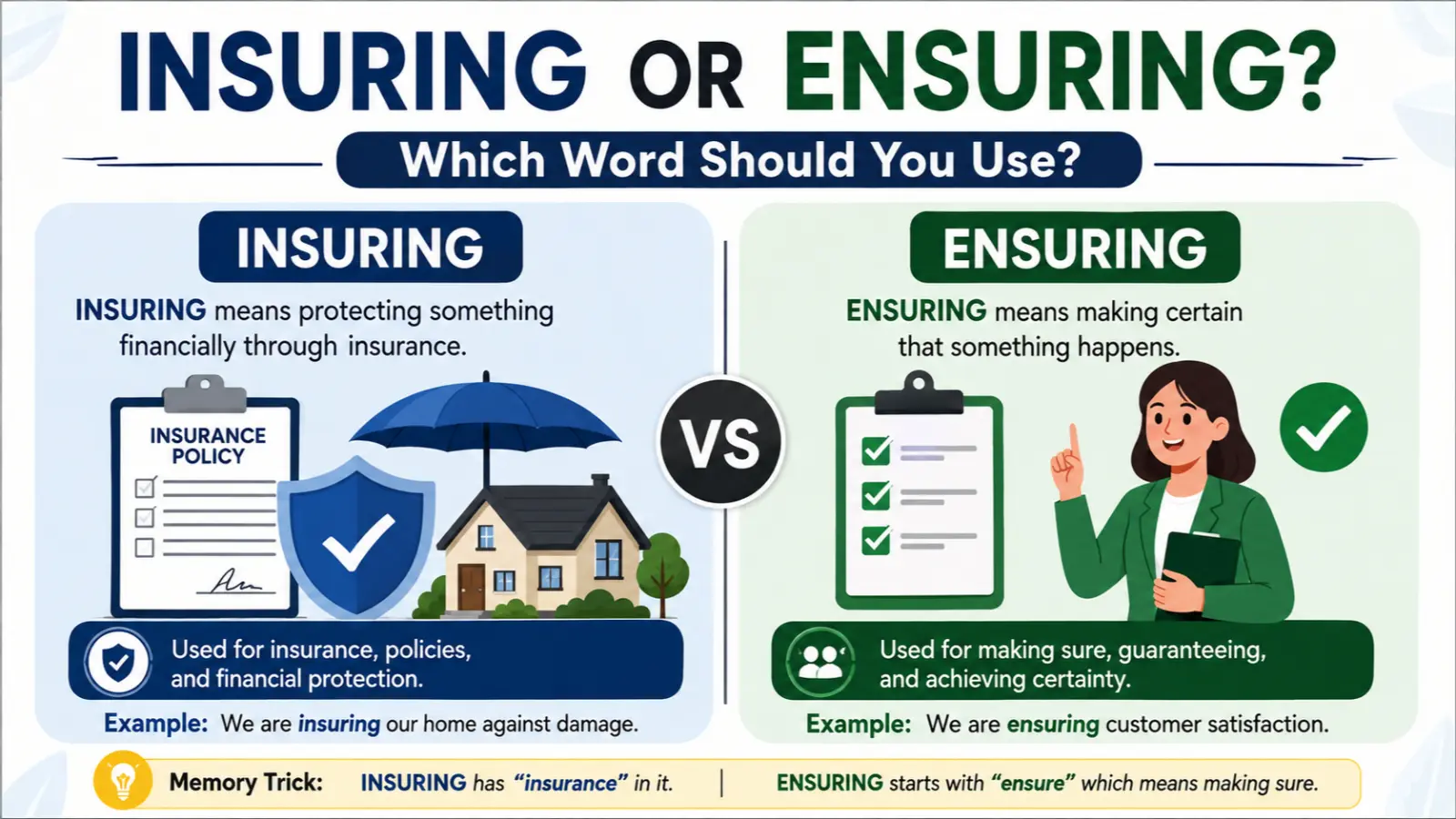
- Insuring means protecting something financially through insurance.
- Ensuring means making certain that something happens.
Both words are correct, but they are not interchangeable.

Meaning of Insuring
Insuring comes from the verb insure.
It refers to buying or providing insurance against loss, damage, or risk.
Examples
- She is insuring her new car against theft.
- The company is insuring all employees during business trips.
- We recommend insuring expensive equipment.
In every example, the meaning relates to insurance coverage.

Meaning of Ensuring
Ensuring comes from the verb ensure.
It means making sure that something happens or is guaranteed.
Examples
- She is ensuring everyone understands the instructions.
- Good planning is ensuring the project stays on schedule.
- Double checking your work is ensuring better results.
Here, the meaning is making certain, not buying insurance.
Quick Comparison
| Insuring | Ensuring |
|---|---|
| Related to insurance | Related to certainty |
| Protects against financial loss | Makes something happen |
| Used in finance and insurance | Used in everyday English |
| Refers to insurance policies | Refers to guarantees and outcomes |
Grammar Rule You Should Remember
Although both words end with ing, they come from different base verbs.
- Insure → Insuring
- Ensure → Ensuring
Their grammar is the same because both are present participles or gerunds. Only their meanings differ.
Sentence Structure
Using Insuring
Subject + is/are + insuring + object
Examples
- They are insuring the building.
- The business is insuring its equipment.
Using Ensuring
Subject + is/are + ensuring + clause or object
Examples
- She is ensuring everyone arrives on time.
- We are ensuring customer satisfaction.
When Should You Use Each Word?
Use insuring when talking about insurance, financial protection, or insurance policies.
Use ensuring when talking about making something certain, guaranteed, or successful.
Common Mistakes Writers Make
Many writers replace one word with the other because they sound alike.
Incorrect
- The manager is insuring everyone follows the rules.
Correct
- The manager is ensuring everyone follows the rules.
Incorrect
- We are ensuring the house against flood damage.
Correct
- We are insuring the house against flood damage.

Which Word Is Better in Professional Writing?
Both are appropriate in professional writing when used correctly.
Business reports, academic papers, and workplace emails often use ensuring because it describes responsibility and quality.
Insurance companies, financial documents, and legal contracts commonly use insuring because they refer to insurance coverage.
Formal and Informal Usage
Both words work in formal and informal English.
The difference is not formality but meaning.
| Situation | Correct Word |
|---|---|
| Buying insurance | Insuring |
| Protecting a vehicle with a policy | Insuring |
| Making sure a task is completed | Ensuring |
| Guaranteeing customer satisfaction | Ensuring |
Side by Side Examples
| Insuring | Ensuring |
|---|---|
| We are insuring the office building. | We are ensuring workplace safety. |
| She is insuring her jewelry. | She is ensuring every guest feels welcome. |
| The company is insuring its fleet. | The company is ensuring high quality service. |
| They are insuring valuable artwork. | They are ensuring accurate information. |
Easy Memory Trick
Remember this simple tip.
Insuring contains “insurance.”
If you are talking about an insurance policy or financial protection, use insuring.
Ensuring starts with “ensure.”
If you mean making sure, use ensuring.
Real Life Conversations
Conversation One
A: Did you insure your new laptop?
B: Yes, I’m insuring it this week.
Conversation Two
Manager: Are we ensuring every customer receives an update?
Employee: Yes, every customer gets an email confirmation.
Conversation Three
Friend: Why are you insuring your bike?
You: Because I want protection if it’s stolen.
How Native English Speakers Use Them
Native speakers naturally separate these words by context.
They use insuring almost exclusively when discussing insurance.
They use ensuring much more frequently because it applies to everyday situations involving certainty, planning, quality, and responsibility.
Frequently Asked Questions
Is insuring the same as ensuring?
No. Insuring relates to insurance, while ensuring means making something certain.
Can I use insuring instead of ensuring?
No. They have different meanings and cannot replace each other in most sentences.
Which word is more common?
Ensuring is more common in general English because people often talk about making sure something happens.
Is insuring only used for insurance?
Yes. It specifically refers to providing or obtaining insurance coverage.
Are both words grammatically correct?
Yes. Both are correct when used in the appropriate context.
Conclusion
Insuring and ensuring may look and sound similar, but they serve different purposes.
Use insuring when discussing insurance policies or financial protection. Use ensuring when talking about making something certain or guaranteed. Understanding this simple distinction will improve your grammar, strengthen your writing, and help you communicate with confidence in both professional and everyday English.

Olivia Bennett is a grammar expert and language content writer at GrammarWize.com. She specializes in English grammar, word usage, spelling differences, and writing improvement. Through clear explanations and practical examples, Olivia helps students, professionals, and language learners communicate more effectively. Her goal is to make English grammar simple, accessible, and easy to apply in everyday writing.