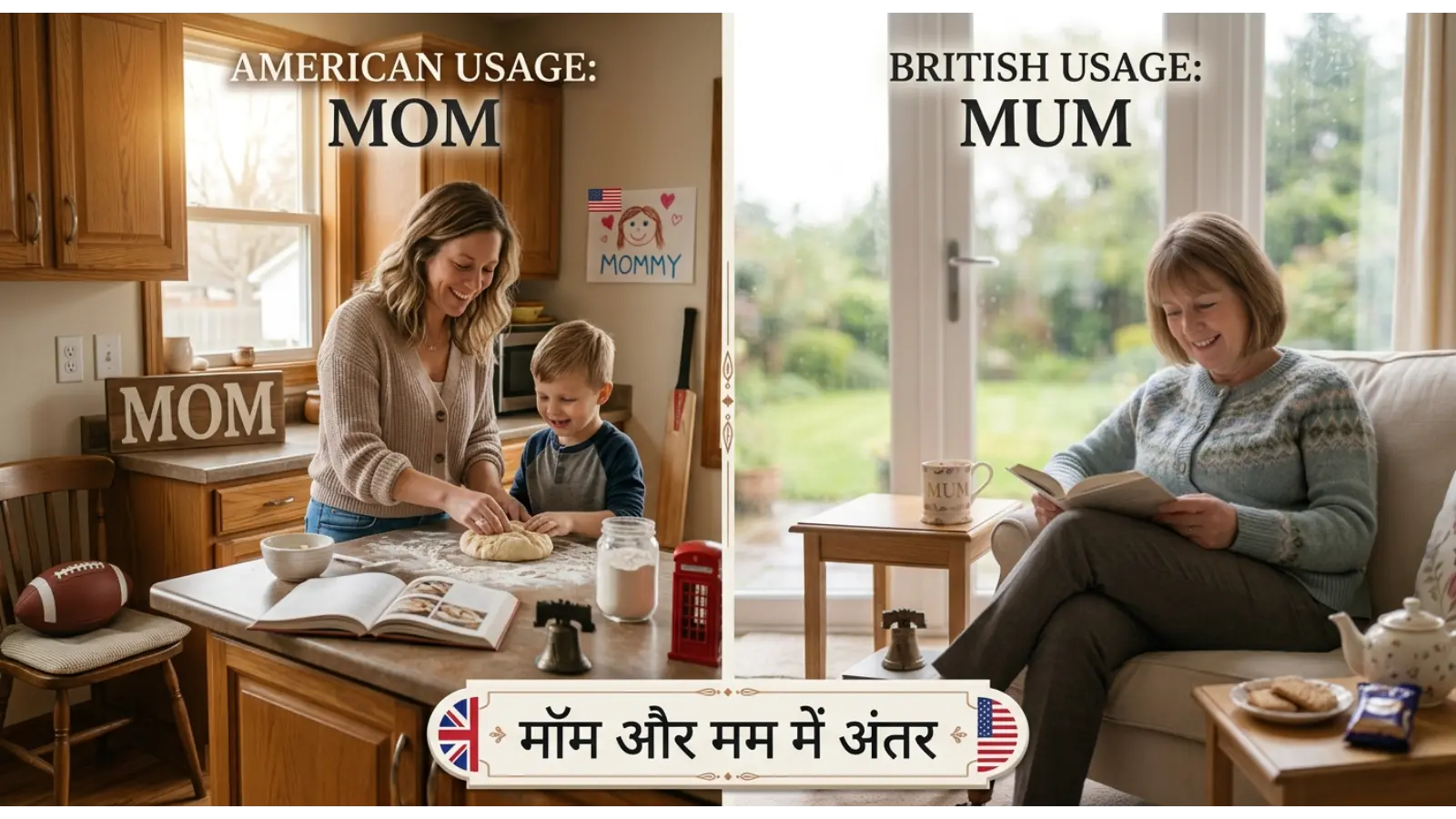
“Mom” and “mum” are both correct words for a mother. The main difference is regional usage. Mom is the standard informal term in American English, while mum is the standard informal term in British English. Major dictionaries such as Oxford and Cambridge identify this regional distinction.
Mom or Mum is a common English spelling difference that often confuses writers and learners. Both words mean the same thing, but their use depends mainly on the English variety and region.
Mom is widely used in American English, while Mum is more common in British English and many other countries. This guide explains the difference between Mom or Mum, where each form is used, and which spelling fits your audience. If you are writing for a US audience, Mom is usually the natural choice. For UK audiences, Mum is generally preferred.
Quick Answer
Use mom when writing for an American audience.
Use mum when writing for a British audience.
- American English: My mom is coming tomorrow.
- British English: My mum is coming tomorrow.
Neither spelling is incorrect. The choice depends mainly on the variety of English you are using.

What Does Mom Mean?
Mom is an informal word meaning mother. It is especially associated with American English.
Oxford lists mom as North American English and defines it as a mother. Cambridge also labels it as US informal and gives mum as the UK equivalent.
Examples of Mom
- My mom made dinner for us.
- I called my mom after work.
When used as a direct form of address, it is normally capitalized.
Example:
Thanks, Mom.
What Does Mum Mean?
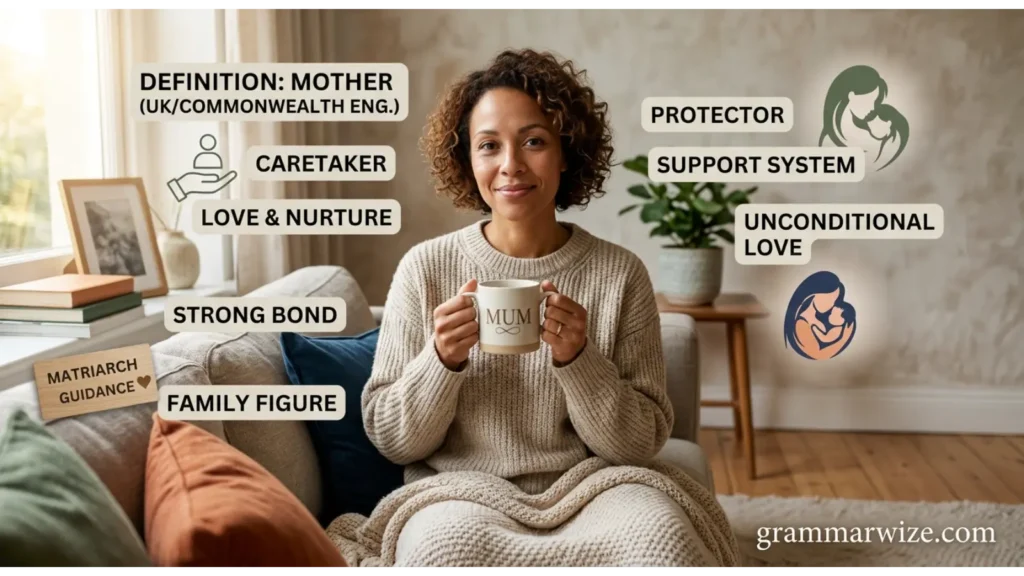
Mum is an informal word meaning mother. It is the usual form in British English.
Oxford identifies mum as British English and gives mom as its North American equivalent. Cambridge likewise labels mum as UK informal.
Examples of Mum
- My mum works at a local school.
- I asked my mum for advice.
As a direct form of address, it can be capitalized.
Example:
Thanks, Mum.
Mom vs Mum
| Feature | Mom | Mum |
|---|---|---|
| Meaning | Mother | Mother |
| Main variety | American English | British English |
| Register | Informal | Informal |
| Formal equivalent | Mother | Mother |
| Example | My mom is here. | My mum is here. |
| Direct address | Mom | Mum |
Both words have the same basic meaning. The difference is primarily regional.
Where Is Mom Used?
Mom is strongly associated with American English.
It is common in everyday American speech and writing. Canadian English can also use mom, although regional vocabulary can vary.
Examples include:
- Mom and Dad
- My mom called me.
- I love my mom.
- Mom, can you help me?
Oxford specifically labels mom as North American English, while Cambridge identifies it as US informal.
Where Is Mum Used?
Mum is strongly associated with British English.
It is common in everyday British speech and writing.
Examples include:
- Mum and Dad
- My mum called me.
- I love my mum.
- Mum, can you help me?
Cambridge identifies mum as UK informal, and Oxford identifies it as British English.
Dictionary Recommendations
Major dictionaries agree that mom and mum are regional forms rather than a correct versus incorrect pair.
Oxford Advanced Learner’s Dictionary lists mom as North American English and mum as British English.
Cambridge Dictionary labels mom as US informal and mum as UK informal.
This makes both spellings appropriate when used in the correct regional context.
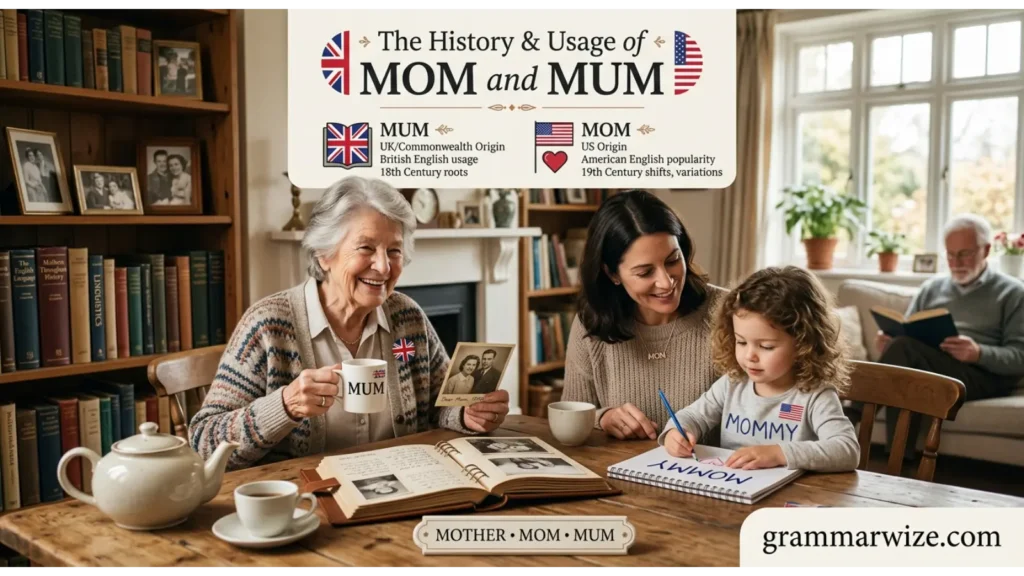
History of Mom and Mum
Both forms developed from informal words used for mother.
Oxford traces mum in this sense to the mid 17th century as an abbreviation of mummy.
Related forms such as mama and mam have also developed in English and other varieties. Oxford notes that mama has a long history connected with child speech.
The modern difference between mom and mum became established as American and British varieties of English developed their own vocabulary and pronunciation patterns.
Mom or Mum in Publishing
Publishers should normally follow the English variety required by their audience or publication.
An American publication may use:
My mom lives in Chicago.
A British publication may use:
My mum lives in London.
The important point is consistency. If your article uses American English, use mom throughout. If it follows British English, use mum throughout.
The Chicago Manual of Style also discusses maintaining the appropriate spelling style while preserving wording in quoted material.
Mom or Mum in Academic Writing
For formal academic writing, mother is usually more appropriate than either informal form when the meaning is simply a female parent.
For example:
Informal:
My mum helped me with the project.
More formal:
My mother helped me with the project.
However, if you are quoting someone or discussing regional language, mom or mum may be exactly the right form.
Mom or Mum in Business Writing
Business writing generally favors mother when a formal tone is required.
For example:
The employee requested leave to care for her mother.
In an informal message, however, the regional form can sound natural:
I need to take my mom to an appointment.
I need to take my mum to an appointment.
Choose the form that matches your audience and the tone of the communication.
International Communication
For an international audience, mother is usually the clearest choice when you need a formal and broadly understood term.
If your content targets a specific English-speaking market, follow that market’s normal usage.
- United States: mom
- United Kingdom: mum
- Formal international writing: mother
This approach helps readers understand both the meaning and the intended regional style.
Common Mistakes
Using Mum in American English
Applying mum in an American-focused article can make the writing appear British.
Using Mom in British English
Using mom in British-focused content can make the writing appear American.
Treating Mum as Incorrect
Mum is not a misspelling of mom. It is the normal British English form.
Treating Mom as Incorrect
Mom is not a misspelling of mum. It is the normal American English form.
Mixing Regional Styles
Avoid switching between mom and mum without a reason.
For example, an article written in American English should normally use mom consistently.
Real World Examples
American English
My mom is visiting us this weekend.
British English
My mum is visiting us this weekend.
American Direct Address
Mom, can you pick me up?
British Direct Address
Mum, can you pick me up?
Formal English
My mother lives nearby.
What About Mommy and Mummy?
The same regional distinction appears in related words.
Mommy is primarily North American English, while mummy is the British English equivalent when referring to a child’s word for mother.
Examples:
- American English: Mommy, I am hungry.
- British English: Mummy, I am hungry.
These forms are more strongly associated with children’s speech.
Memory Trick
Think of the o in mom as belonging to American English.
Think of mum as the form commonly used in British English.
America → Mom
Britain → Mum
Professional Writing Recommendation
Use mom when your content follows American English.
for mum when your content follows British English.
Use mother when you want a more formal and internationally clear term.
For SEO content, match the spelling to your target audience rather than mixing both forms unnecessarily.
Frequently Asked Questions
Is Mom or Mum correct?
Both are correct. Mom is the usual American English form, while mum is the usual British English form.
Is Mum British or American?
Mum is primarily British English when it means mother. Cambridge labels it UK informal.
Is Mom American or British?
Mom is primarily American English. Cambridge labels it US informal.
Can I use Mum in American English?
You can, but it may sound British to an American reader. For standard American English, mom is the expected informal form.
Is Mother more formal than Mom and Mum?
Yes. Mother is the more formal term. Cambridge describes it as a term that can be used more formally than mum.
Conclusion
Mom and mum are both correct. The difference is mainly regional.
Use mom for American English and mum for British English. Use mother when a more formal style is appropriate.
The key is to match your spelling to your target audience and keep your English style consistent throughout the article.

Olivia Bennett is a grammar expert and language content writer at GrammarWize.com. She specializes in English grammar, word usage, spelling differences, and writing improvement. Through clear explanations and practical examples, Olivia helps students, professionals, and language learners communicate more effectively. Her goal is to make English grammar simple, accessible, and easy to apply in everyday writing.