Plum or plumb are homophones, which means they sound alike but have different meanings, spellings, and uses. The word plum usually refers to a fruit, while plumb is connected with measuring vertical accuracy, pipes, or being completely straight.
Plum or Plumb can be confusing because these words sound exactly alike but have completely different meanings. Plum usually refers to a sweet, juicy fruit or something especially desirable. Plumb, on the other hand, can mean completely or exactly, and it can also relate to measuring depth or checking if something is perfectly vertical.
Knowing the difference helps you choose the right word in writing. For example, you might eat a ripe plum, but you could say something is plumb wrong. This guide explains the meanings, differences, and correct uses of Plum or Plumb with simple examples. By the end, you will know when to use each word and avoid this common homophone mistake.
Plum or Plumb: Which One Is Correct?
Both plum and plumb are correct English words. The right choice depends on what you mean.
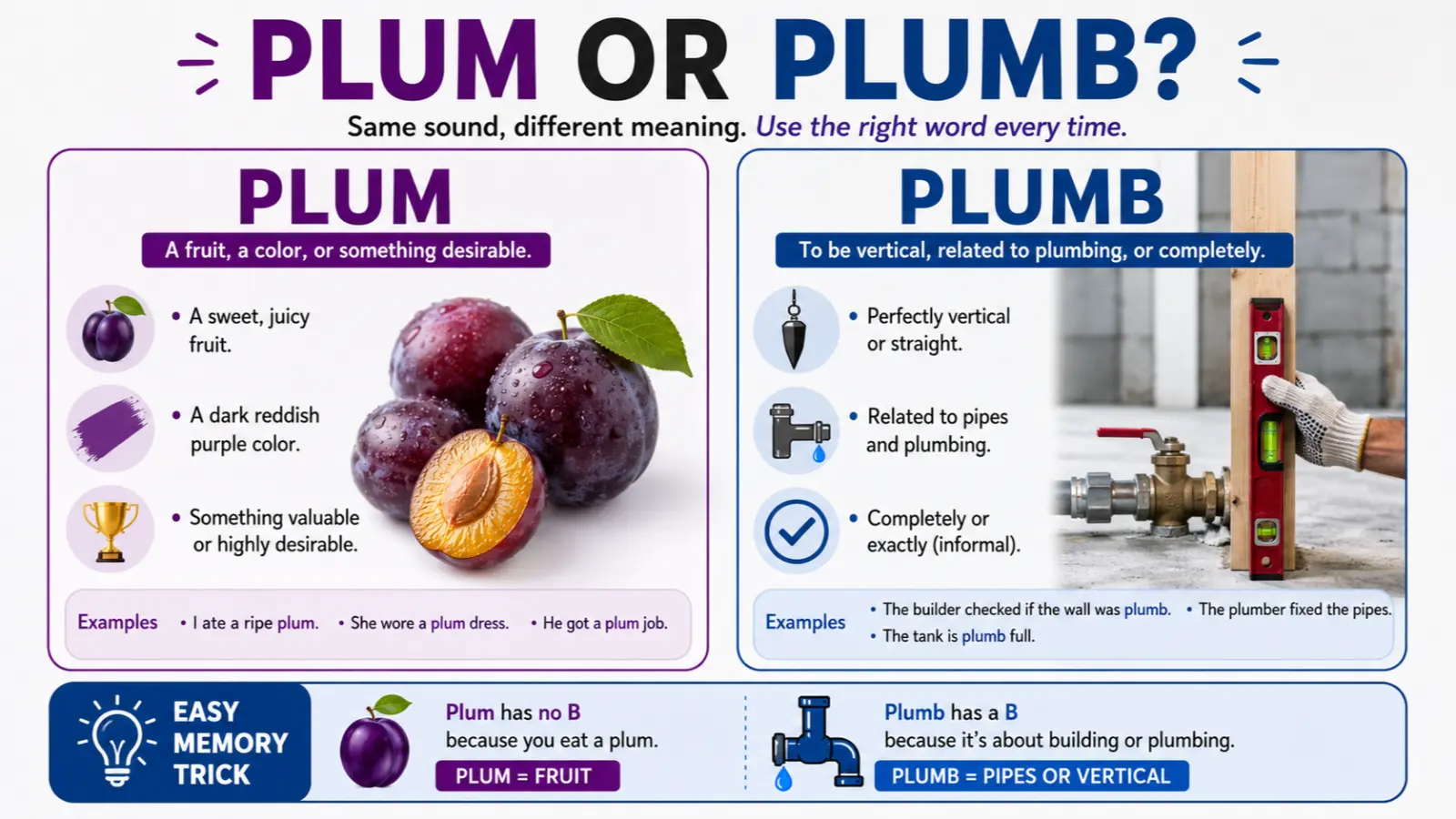
Plum is commonly used for:
- A type of fruit.
- A dark reddish purple color.
- Something especially desirable or valuable.
Plumb is commonly used for:
- Checking if something is perfectly vertical.
- Plumbing and water pipe systems.
- Meaning completely or exactly in some expressions.
So, neither spelling is wrong. You simply need to choose the word that matches your meaning.
What Does Plum Mean?
Plum is mainly a noun that names a small, round fruit with smooth skin and a stone inside.
For example:
- I ate a ripe plum after lunch.
- The plum tree is full of fruit.
- She bought fresh plums at the market.
Plum can also describe a purple color.
For example:
- She wore a plum dress.
- The room has plum colored curtains.
It can also describe something highly desirable.
For example:
- He landed a plum job at a major company.
What Does Plumb Mean?
Plumb has several meanings, but its most common uses relate to construction, pipes, and exact vertical alignment.
As a verb, plumb can mean to check if something is perfectly vertical.
For example:
- The builder used a tool to plumb the wall.
- The carpenter checked if the post was plumb.
In plumbing, plumb appears in words such as plumber and plumbing.
It can also mean completely or exactly in informal expressions.
For example:
- The water tank is plumb full.
- He was plumb exhausted.
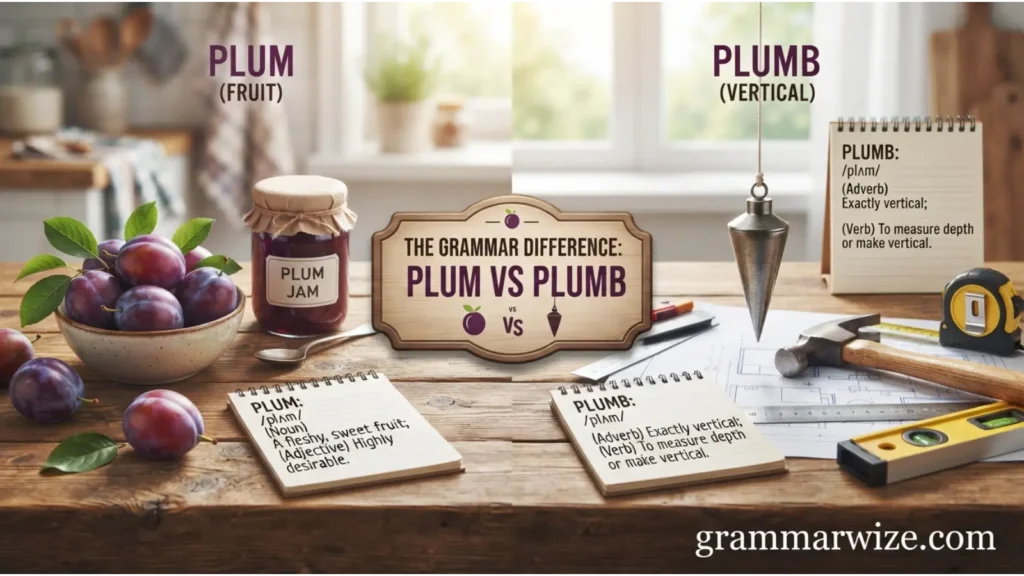
The Grammar Difference Between Plum and Plumb
The two words have different grammatical roles and meanings.
Plum is most often a noun or adjective.
As a noun:
The plum was sweet.
As an adjective:
She chose a plum sweater.
Plumb can work as a noun, verb, adjective, or adverb depending on the sentence.
a verb:
Workers will plumb the new building.
As an adjective:
The wall is plumb.
As an adverb:
The container was plumb full.
This difference makes context especially important.

Plum vs Plumb in Sentence Structure
Look at how each word works in a sentence.
Plum as a noun:
The plum fell from the tree.
Here, plum names a fruit.
Plum as an adjective:
She bought a plum jacket.
Here, plum describes the color of the jacket.
Plumb as a verb:
The worker will plumb the wall.
Here, plumb describes an action.
Plumb as an adjective:
The door frame is plumb.
Here, plumb describes the position of the frame.
Common Mistakes With Plum and Plumb
The biggest mistake is using plum when the sentence needs plumb, or using plumb when the sentence refers to the fruit.
Incorrect:
The builder checked if the wall was plum.
Correct:
The builder checked if the wall was plumb.
Incorrect:
I ate a juicy plumb.
Correct:
I ate a juicy plum.
Another common mistake happens when people hear these words but do not see them written. Their pronunciation is almost identical, so spelling depends on the meaning.

Plum and Plumb in Professional Writing
In professional writing, context should guide your spelling.
Use plum when discussing:
- Food.
- Fruit.
- Colors.
- Desirable opportunities.
Use plumb when discussing:
- Construction.
- Vertical alignment.
- Pipes.
- Plumbing work.
- Exactness or completeness in certain expressions.
For example:
The contractor confirmed that the wall was plumb.
But:
The restaurant served a fresh plum dessert.
Using the wrong word can change the meaning of your sentence.
Is Plumb Formal or Informal?
Plumb is perfectly legitimate in formal English when it refers to construction or technical work.
For example:
The technician confirmed that the pipe was properly plumb.
However, the use of plumb to mean “completely” can sound informal or regional.
For example:
He was plumb worn out.
In formal writing, completely or extremely may sound more natural.
Easy Examples to Remember the Difference
Here are some simple examples.
- The plum was sweet.
- The tree produced many plums.
- She wore a plum shirt.
- The builder made sure the wall was plumb.
- The plumber checked the pipes.
- The post must remain plumb.
- The tank was plumb full.
The subject of the sentence usually gives you the clue.
Plum or Plumb in Real Life Conversations
Here is how these words can appear in everyday speech.
Conversation about food
“What fruit did you buy?”
“I bought some plums.”
Conversation about construction
“Is the wall straight?”
“Yes, I checked it. It’s plumb.”
Discussion about clothing
“What color is that dress?”
“It’s a dark plum color.”
Conversation about plumbing
“Who fixed the pipes?”
“The plumber came this morning.”
These examples show why pronunciation alone cannot tell you which spelling to use.
A Simple Memory Trick
Use this quick trick:
Plum has no B because you eat a plum.
Think of plum as the fruit.
Plumb has a B because it is connected to building and plumbing.
You can remember:
Plum = fruit.
Plumb = pipes or perfectly vertical.
This simple association makes the spelling easier to remember.
Plum and Plumb Comparison Examples
Compare these sentences:
I packed a plum for lunch.
The carpenter made sure the post was plumb.
The plum tree grows in our backyard.
The plumber checked whether the pipe was plumb.
She chose a plum colored dress.
The wall is perfectly plumb.
The pronunciation may sound the same, but the meanings are completely different.
Quick Rule to Remember
When you mean fruit or a purple color, use plum.
When you mean vertical alignment, plumbing, or completely in certain expressions, use plumb.
Think:
Plum = fruit.
Plumb = building and pipes.
Frequently Asked Questions
Is plum or plumb correct?
Both are correct words. Plum usually refers to a fruit, color, or desirable thing. Plumb relates to vertical alignment, plumbing, or complete exactness in some expressions.
Are plum and plumb homophones?
Yes. Plum and plumb are homophones because they have the same pronunciation but different spellings and meanings.
Is a plum a fruit?
Yes. A plum is a stone fruit that grows on plum trees.
What does plumb mean in construction?
In construction, plumb means perfectly vertical or straight up and down.
Is plumb related to plumbing?
Yes. The words are historically connected. Plumb relates to tools and methods used to determine vertical alignment, while plumbing refers to systems that carry water and other fluids.
Can plumb mean completely?
Yes. Plumb can mean completely or entirely in some informal expressions, such as “plumb exhausted.”
What is the easiest way to remember plum and plumb?
Remember plum = fruit and plumb = pipes or vertical alignment.
Conclusion
Plum and plumb are both correct, but they have different meanings. Use plum for the fruit, purple color, or something highly desirable. Use plumb for vertical alignment, plumbing, and certain expressions meaning completely.
The easiest rule is simple: if you can eat it, spell it plum. If it relates to pipes or being perfectly vertical, spell it plumb.

Olivia Bennett is a grammar expert and language content writer at GrammarWize.com. She specializes in English grammar, word usage, spelling differences, and writing improvement. Through clear explanations and practical examples, Olivia helps students, professionals, and language learners communicate more effectively. Her goal is to make English grammar simple, accessible, and easy to apply in everyday writing.