Toilette or parfum is a common comparison people make when shopping for fragrances. The confusion comes from seeing both terms on perfume bottles and assuming one is better than the other. In reality, both are correct, but they describe different fragrance strengths rather than different spellings.
Toilette or Parfum is a common comparison for anyone shopping for fragrances. Many people wonder which one lasts longer, smells stronger, and offers better value. Understanding the difference between these two fragrance types can help you choose the right option for your lifestyle, budget, and personal preferences.
The main difference comes down to fragrance oil concentration, longevity, and intensity. Choosing the right fragrance becomes much easier once you understand how Toilette and Parfum perform in everyday use. This guide explains the key differences, clears up common confusion, and helps you decide which fragrance is the best fit for you.
Understanding the difference helps you choose a scent that matches your lifestyle, budget, and the amount of time you want the fragrance to last. Knowing these terms also makes buying perfumes much easier.
Quick Answer
Both toilette and parfum are correct.
- Eau de Toilette (EDT) contains a lower concentration of fragrance oils, making it lighter and fresher.
- Parfum contains the highest concentration of fragrance oils, making it richer and much longer lasting.
Neither word is incorrect. They simply refer to different fragrance categories.

What Do Toilette and Parfum Mean?
Toilette
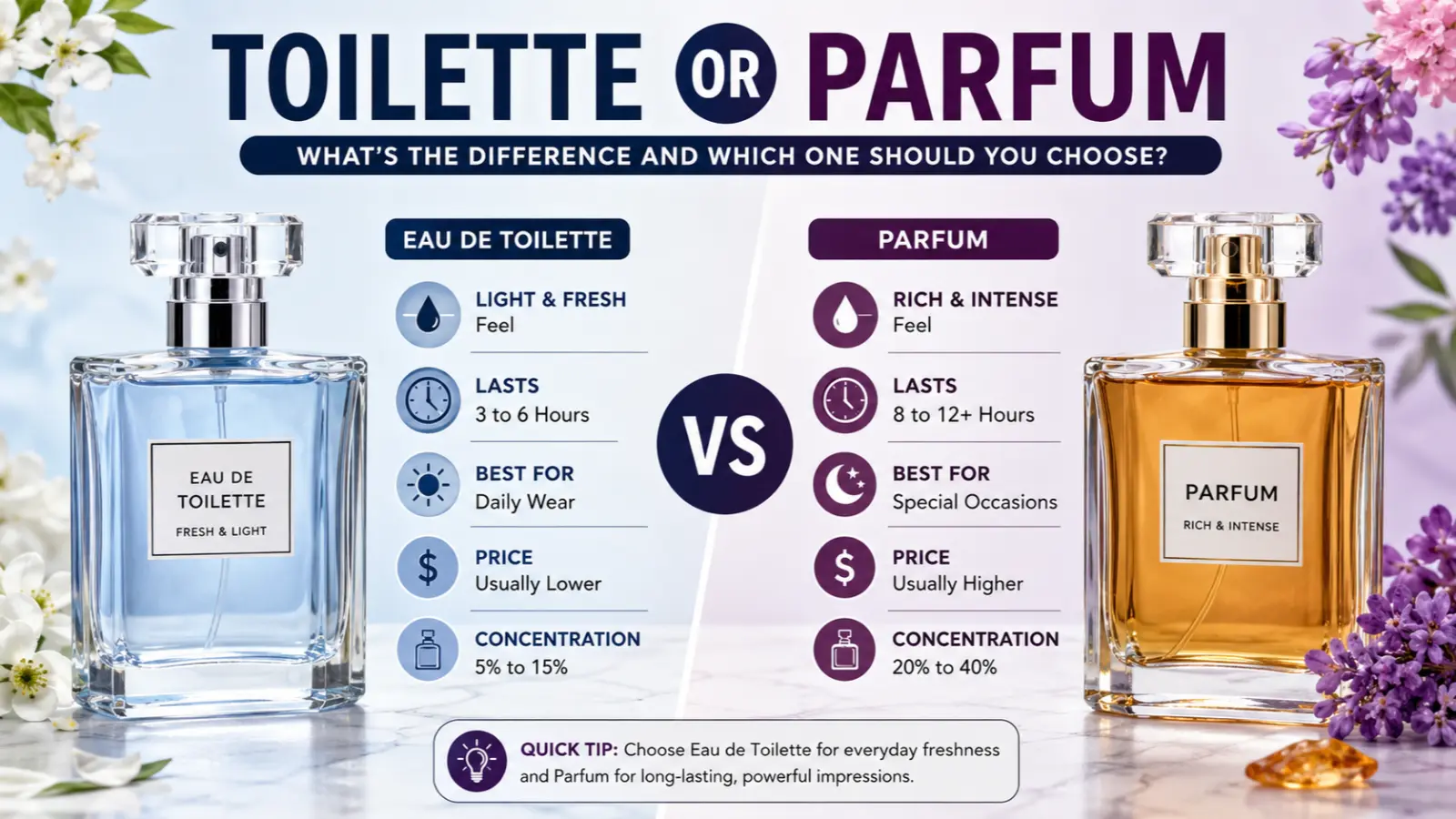
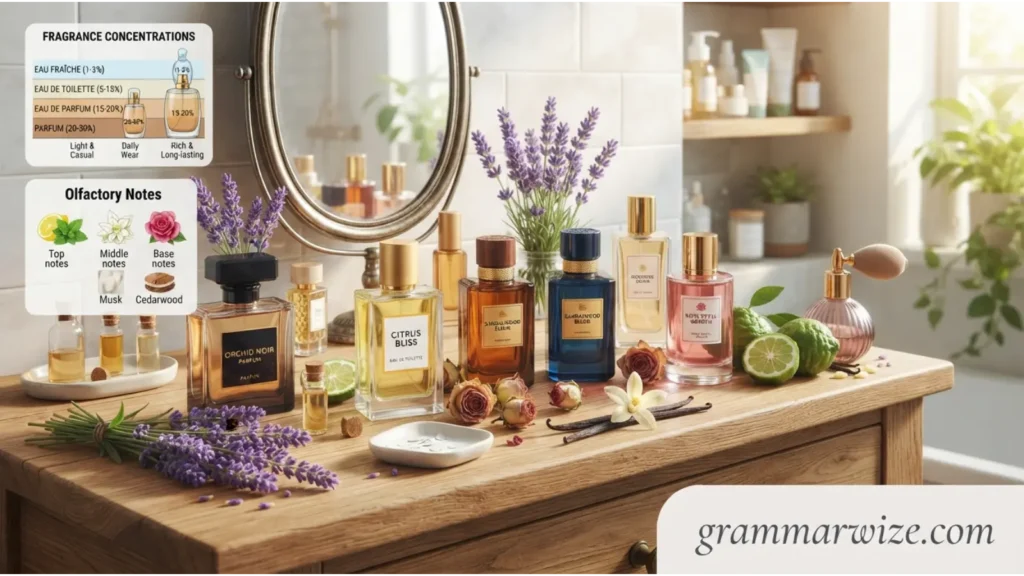
The word appears as part of Eau de Toilette, a French fragrance term. It refers to a lighter perfume designed for everyday wear. Eau de Toilette usually contains around 5% to 15% fragrance oil.
It feels fresh, less intense, and is often preferred during warm weather or daytime activities.
Parfum
Parfum is the French word for perfume and represents the strongest standard fragrance concentration. It generally contains 20% to 40% fragrance oil.
Because of its richness, only a small amount is needed, and the scent usually remains noticeable for many hours.
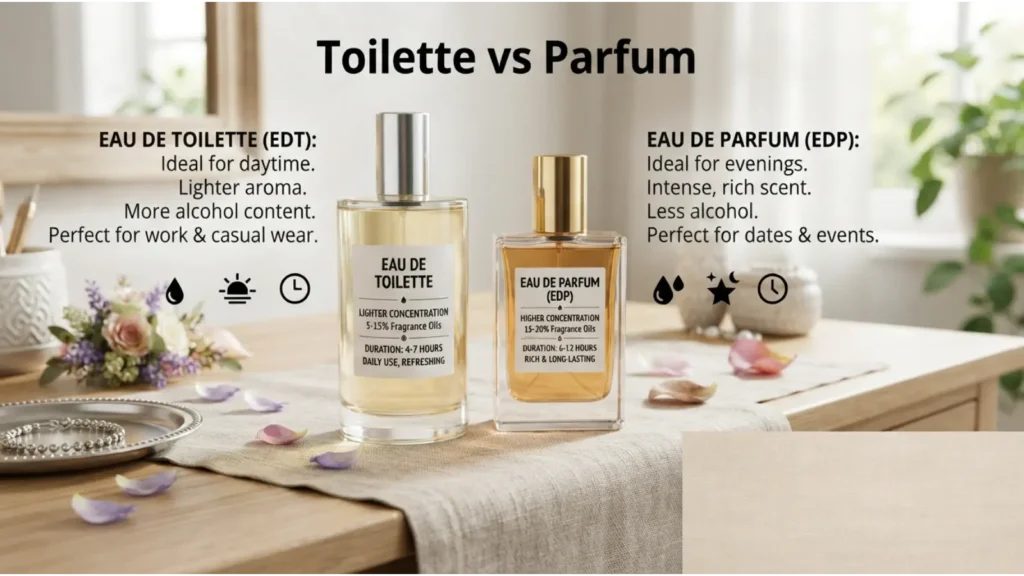
Toilette vs Parfum Comparison
| Feature | Eau de Toilette | Parfum |
|---|---|---|
| Fragrance strength | Light | Very strong |
| Oil concentration | About 5% to 15% | About 20% to 40% |
| Lasting time | Around 3 to 6 hours | Around 8 to 12 hours or longer |
| Best for | Daily wear | Special occasions and long days |
| Price | Usually lower | Usually higher |
| Number of sprays | More may be needed | Fewer are needed |
Origin of the Terms
Both words come from French perfume terminology.
Eau de Toilette originally referred to scented water used during personal grooming.
Parfum simply means perfume and has become the international term for the highest fragrance concentration available in most perfume collections.
These names are recognized worldwide and appear on fragrance packaging regardless of the country where the perfume is sold.
Why Does the Confusion Exist?
Many people think toilette and parfum are competing names for the same product.
The confusion increases because perfume brands often release the same fragrance in several versions, such as Eau de Toilette, Eau de Parfum, and Parfum. Although the scent profile is similar, the concentration, intensity, longevity, and price differ.
Dictionary Recommendations
Major English dictionaries recognize parfum as a French noun used in English, especially in the fragrance industry.
The term toilette is also recognized, primarily within the expression Eau de Toilette, which is the accepted name for this fragrance concentration.
Both terms are standard and widely accepted in professional perfume labeling.
Real-Life Examples
- I wear an Eau de Toilette to work because it feels light and refreshing.
- She chose the Parfum version for her wedding because it lasts all day.
- The Parfum costs more because it contains a higher concentration of fragrance oils.
- During summer, many people prefer an Eau de Toilette instead of a stronger fragrance.
- Luxury brands often sell the same scent in both Eau de Toilette and Parfum.
Common Mistakes
- Thinking Parfum is simply another spelling of Toilette.
- Assuming the stronger version always smells different.
- Buying Parfum without considering its higher intensity.
- Believing Eau de Toilette is low quality because it is lighter.
- Ignoring fragrance concentration before making a purchase.
Memory Trick
Remember this simple tip:
Toilette = Think “light and fresh.”
Parfum = Think “powerful and long lasting.”
If you want a fragrance for everyday use, choose Eau de Toilette.
If you want maximum longevity, choose Parfum.
Professional Writing Recommendation
Use the official fragrance names exactly as they appear on the product label.
Examples include:
- Eau de Toilette
- Eau de Parfum
- Parfum
Avoid shortening or changing these industry terms in professional writing, product descriptions, reviews, or fragrance guides.
Frequently Asked Questions
Is toilette better than parfum?
No. They serve different purposes. Eau de Toilette is lighter, while Parfum is stronger and lasts longer.
Does parfum always last longer?
Yes. Because it contains a higher concentration of fragrance oils, Parfum usually stays on the skin much longer than Eau de Toilette.
Is Eau de Toilette cheaper?
In most cases, yes. It generally costs less because it contains a lower percentage of fragrance oil.
Can the same fragrance come in both versions?
Yes. Many perfume brands release the same scent as Eau de Toilette, Eau de Parfum, and Parfum.
Which one should I buy?
Choose Eau de Toilette for everyday use and warm weather. Choose Parfum if you want a richer scent that lasts throughout the day or evening.
Conclusion
The comparison between toilette and parfum is not about choosing the correct word because both are correct. They identify different fragrance strengths used throughout the perfume industry. Eau de Toilette offers a lighter, fresher experience that works well for daily wear, while Parfum provides a richer scent with exceptional longevity. Understanding these labels helps you select the fragrance that best matches your needs instead of assuming one is simply a different spelling of the other.

Olivia Bennett is a grammar expert and language content writer at GrammarWize.com. She specializes in English grammar, word usage, spelling differences, and writing improvement. Through clear explanations and practical examples, Olivia helps students, professionals, and language learners communicate more effectively. Her goal is to make English grammar simple, accessible, and easy to apply in everyday writing.